
Winery Story
Vangone
Napa Valley’s founding myths tend to follow a familiar script—a pioneer, a vision, a dusty pickup truck, and a vineyard hacked out of the scrub. Vangone’s story begins with a van and the kind of phone call no landowner wants.
The Long Haul
“In 2003 we received a phone call from the CA Highway Patrol confirming the parcel #, ownership, etc.,” Mark Davidowski told me. “When we asked why they needed this information, they simply said, ‘We’re citing you for growing marijuana on your property.’”
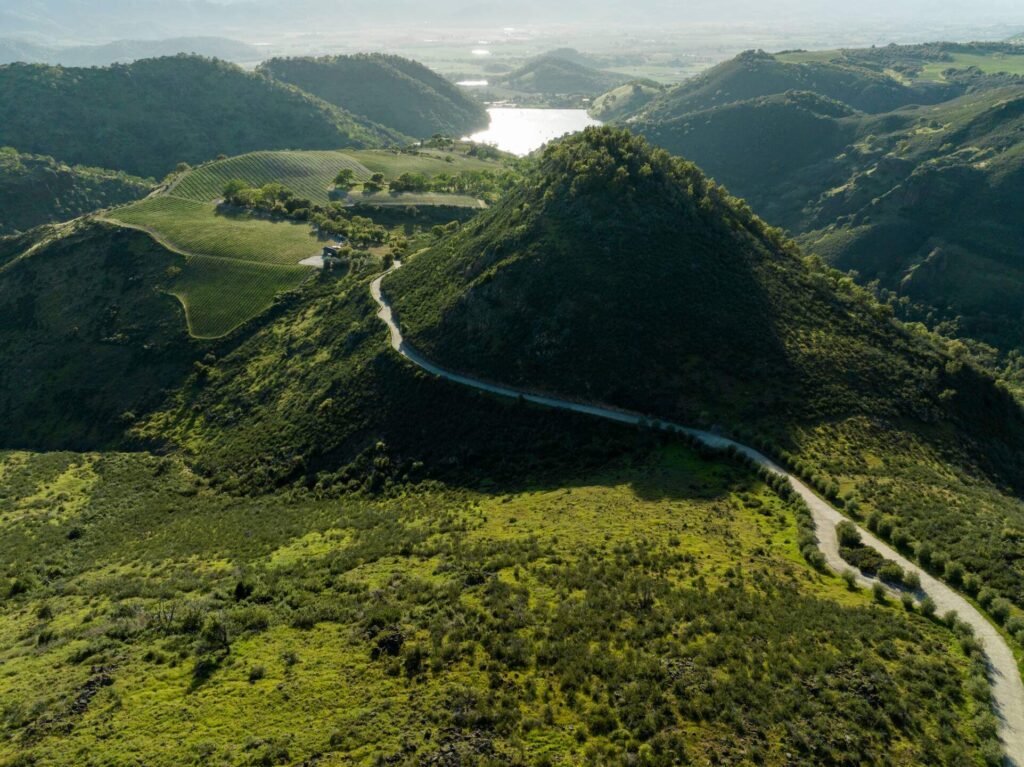
At that time, the Davidowski family were absentee owners who had yet to plant a single vine. After making this clear to the police, they drove up to see for themselves. The upper plateau was clean. Then an officer pointed out “something shiny on the lower plateau.” Down the slope sat a Volkswagen Bulli van, “stripped down to nothing but a shell,” its interior lined with Home Depot “Homer” buckets of cannabis plants.
The patrol hauled away the plants but not the van. Its VIN had been ground off, so the Davidowskis couldn’t claim it was theirs, and the Napa County Sheriff, the City of Napa and a handful of wrecking companies all declined to touch it. “We decided to deal with it later,” Mark said, “and quickly 2011 rolls around and we’re blasting, popping volcanic caps, putting in the wells, pump houses, roads, grading the vineyard site for planting.” On a call with vineyard manager Mario Bazan, Mark’s father, Ron, put it plainly: “I just want the van gone.” Two weeks later, Bazan rang back. “He said ‘Van gone.’ Then hung up.”
“Ron and I started jokingly calling it Vangone Vineyard and the name stuck,” Mark said. Ron eventually made it the company name, and when Mark and his wife, Patty, launched their own label from the estate, “we just had to call it Vangone.” An abstract icon of the van now adorns both capsule and label, “along with a certain something hidden on the back label for those with good eyesight.”
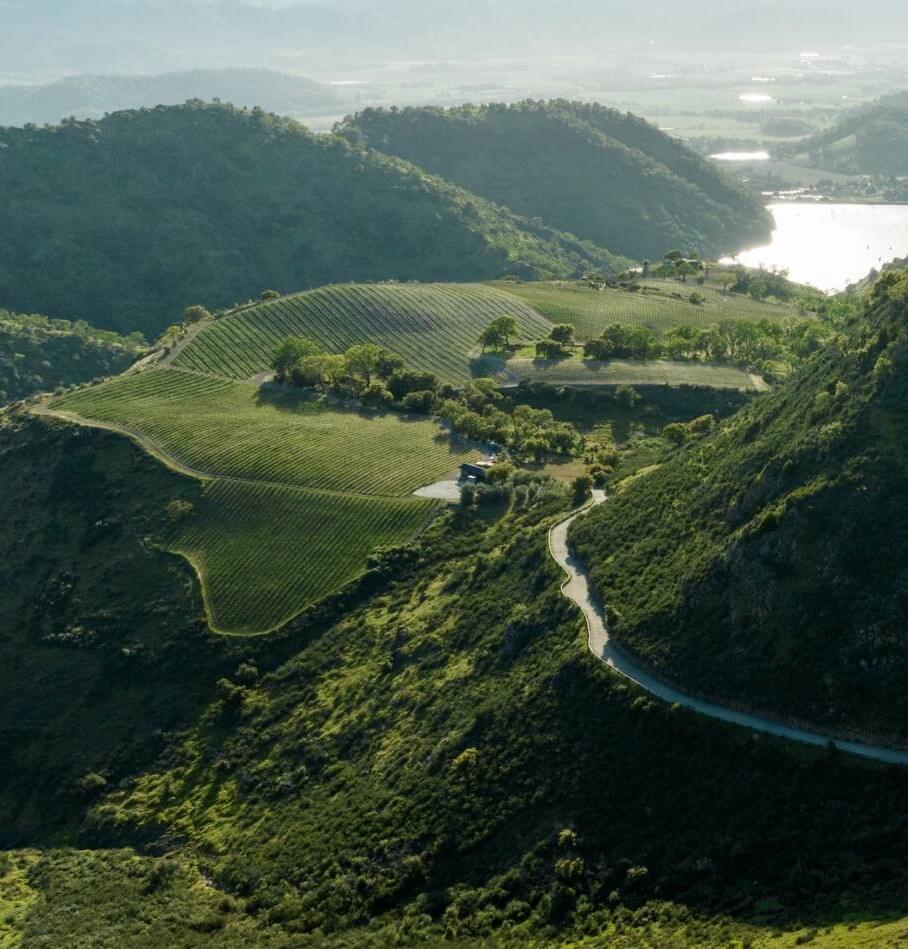
Vangone sits on the eastern flank of the valley, on two rocky plateaus at the foot of Haystack Mountain, a 1,672-foot knob in the Vaca Range that is among the most recognizable from the valley floor. Below lies Rector Reservoir, Yountville’s water supply; on a clear day, the view reaches San Francisco. The site rises above Oakville yet is not Oakville; it shares a ridgeline sensibility with Pritchard Hill yet is not Pritchard Hill; and it lies just beyond the boundaries of the Atlas Peak AVA. The wines are therefore labeled simply Napa Valley, and the vineyard, though close to the Silverado Trail as the crow flies, is reached only by winding up Soda Canyon Road through the gated Soda Canyon Ranch.
Ron and Karen Davidowski bought the land in 1993 after a multi-year search. “We had this vision in 1991,” Mark said, “but this was never about ego; it was always about quality. It was always about doing it the absolutely best way possible.” At the time, only one other vineyard had been developed in this corner of the hills; even nearby Stagecoach had yet to be planted. Ron, co-founder of DPR Construction, brought a builder’s eye, working with neighbors to pave the dirt access road.
The original plan was modest: “building a home on the upper plateau and planting a small vineyard on the lower plateau.” Then Bob Gallagher of Crop Care Associates sampled soils across the site and, as Mark recalls, “insisted we should consider planting ‘every inch’ we could due to the land’s exposure and rich volcanic Hambright soils.” Rather than rush, the family chose to wait. “We decided to take the slow measured approach to learn the business, find the best partners then eventually create what we hope to become a legacy property for the family.”
Mark’s education in wine had begun long before. Born at Travis Air Force Base and raised in Northern California, he tagged along on his father’s trips to Napa in the early 1980s, when Ron’s curiosity brought him into the company of Justin Meyer and André Tchelistcheff. “I was too young to remember specific conversations but clearly remember the joy and passion with which they discussed every little detail of their wines,” he said. “I recall the laughter coming from my father as he both soaked up the information and relished the wines.” What lingers most, he told me, “was the thrill of being able to share that joy with my father, learn alongside him and create shared cherished memories.… Wine to me has always been about the people I’m sharing it with in that moment.”
After stints at IBM and a Toronto dot-com, Mark founded The Meritage Wine Market in Encinitas in 2001—a shop installed in a former toy store, whose resident giant giraffe was eventually dispatched to the San Diego Zoo. Retail taught him how collectors think: “this shared interest bonded collectors, while individual tastes set them apart.” A decade of cultivating those relationships now shapes the Vangone mailing list. “Each member’s favorite might vary, but all share an enthusiasm for our vision at Vangone,” he said. “For us, it’s about genuine connection in that moment, not pomp and circumstance.” Asked whether the family ever thought of selling, Mark was unequivocal. “Never did we consider selling or giving up, rather we relished the opportunity to work together on something special we could cherish as a family for generations to come.”
He sold his share in 2011, the year the bulldozers arrived. It was at one of the shop’s charity events—Roll Out the Barrel, which at its peak drew more than 1,500 people—that he had met the man who would make his wine.
That man is Sam Kaplan. Raised in Oklahoma, where his physician father made wine in the family garage, Kaplan studied religion before a 1998 internship at Pine Ridge set him on course, leading through ZD Wines to the founding winemaker post at Arkenstone on Howell Mountain in 2006. Vangone, he notes, “is the latest of sites that I work with.”
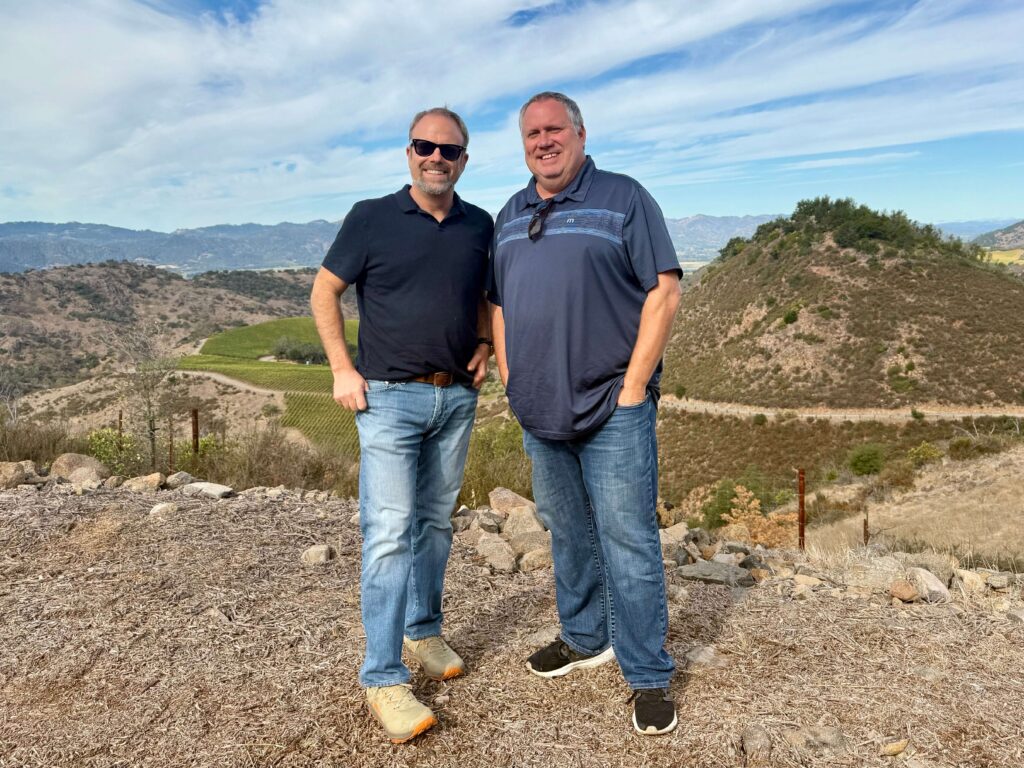
Sam Kaplan (left) and Mark Davidowski (right)
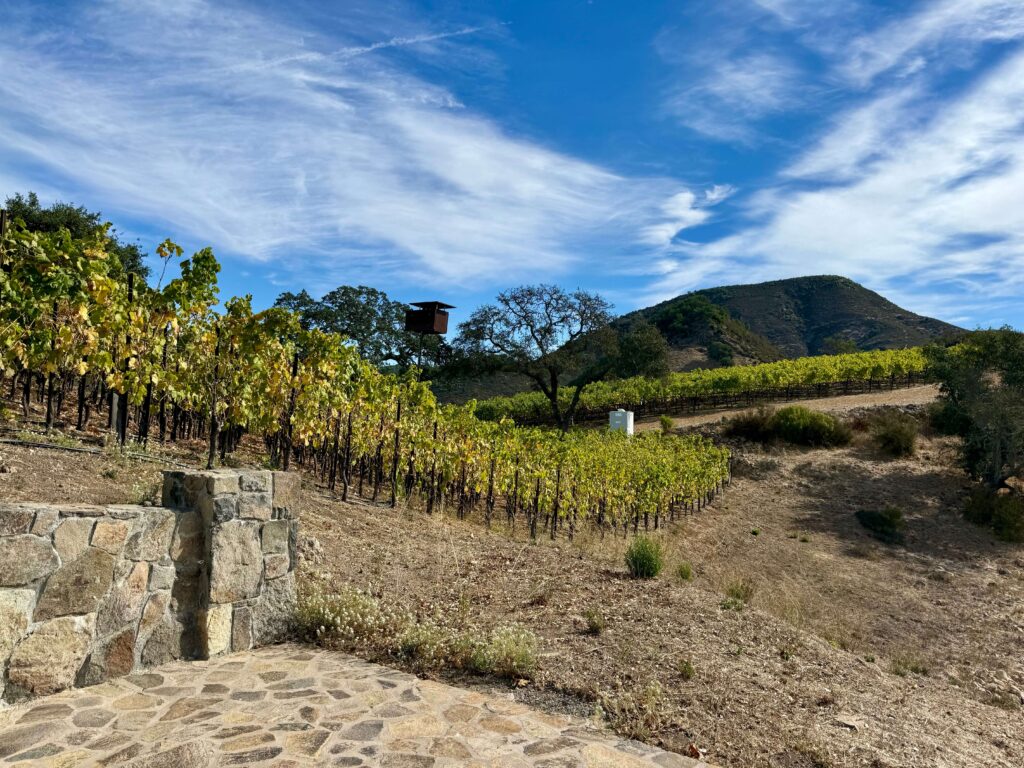
He was there for the ripping. “Developing the rocky plateau was intense in terms of ripping and digging given the site has slopes of 14% to more than 24% in certain areas,” he said. The soils are “a great mix of very rocky, extremely well-drained Hambright soil series,” and they never let up: “There is no question of commitment when trying to develop and farm a site like Vangone—the varying exposures, shallow rocky soils, keep you on your toes throughout the growing season.”
Bazan, with a full-time crew of three, oversaw the first plantings. Today the estate spans 108 acres, about 20 of them planted—almost entirely to Cabernet Sauvignon, with a little Cabernet Franc—at elevations of roughly 730 to 1,080 feet. The vines are farmed organically, and the vineyard is Napa Green certified. This is ground that rations water and vigor, yielding small, thick-skinned berries, deep color and a formidable tannic frame. Summers are genuinely warm, but the reservoir tempers them. Rector Reservoir “acts almost as a natural air conditioner,” Kaplan explained. “When the weather heats up the warm air is cooled as it crosses the water.” Heat for ripeness, wind for freshness: the push and pull that gives mountain Cabernet its reason for being.
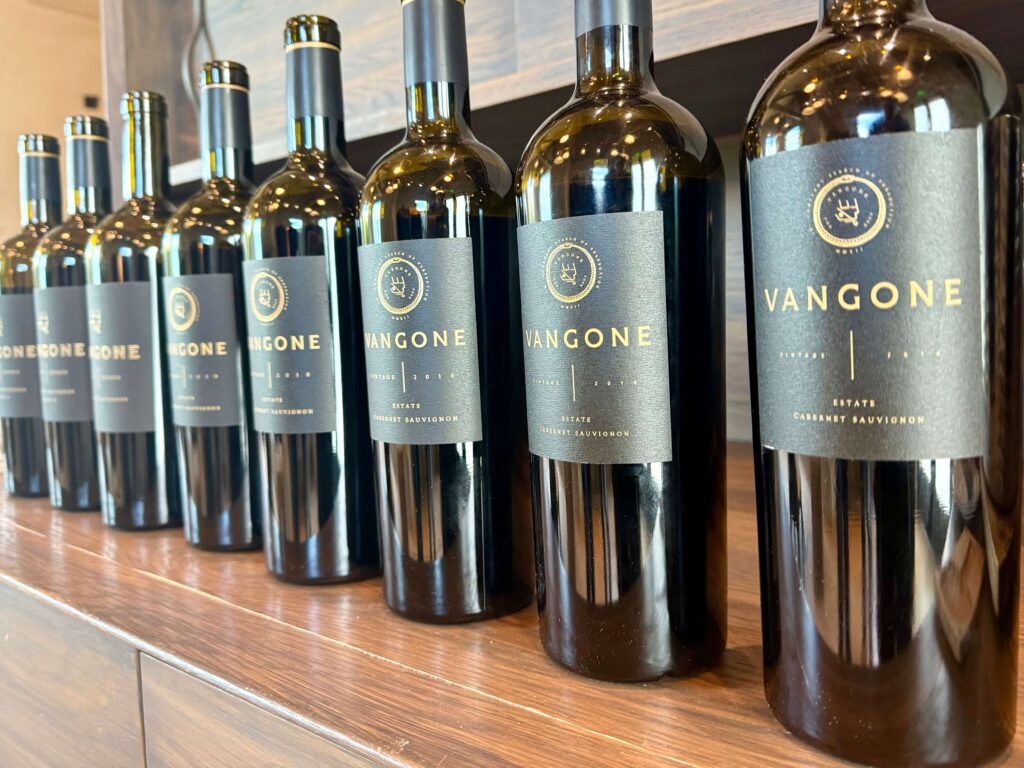
The vineyard is organized into lettered blocks. Block A, just over an acre of clone 338, produced the 2014 Limited Reserve—a mere 50 cases, picked in part by Mark and Patty’s two sons, then aged eight and eleven. It “can truly stand on its own as a wine, given how well 338 performs at elevation,” Kaplan said, though “we don’t work with this block anymore, it is one of the clients’ blocks.”
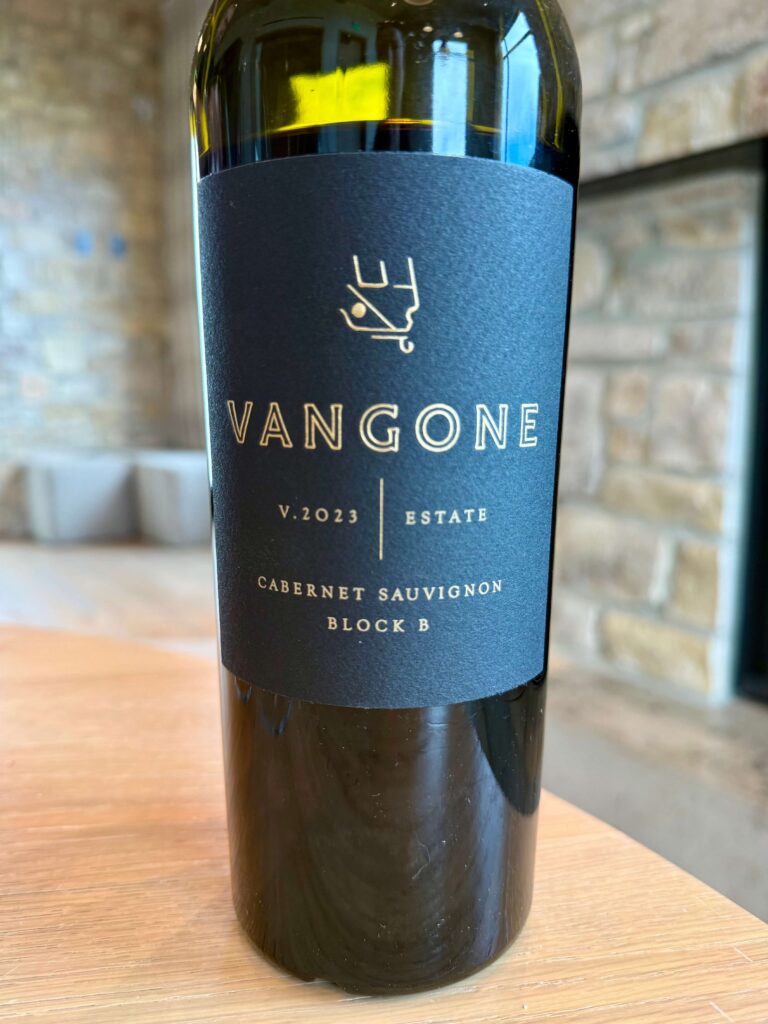
Blocks B and D, both clone 412, are where rootstock and exposure do the talking. “Block B is on 101-14 rootstock, a south facing vein of rock, so it develops much earlier than the Block D,” Kaplan explained. “Block B is always the higher-tone Santa Rosa plum, picked weeks before Block D, where the 420A rootstock is much deeper and slower to ripen. Block D produces the backbone to the Estate wine, packing intense tannins, dark fruit and incredible texture and weight.”
That backbone sets the pace. Where many Napa Cabernets see 18 to 22 months in barrel, the Estate spends 30 to 36 in French oak and roughly another year in bottle. “From the first wines of 2014, we knew that the tannins and intensity wanted to be aged longer in barrel, well at least we wanted to try it out and see how it showed,” Kaplan said. “The results were incredible, and I created the Estate blend with this extended aging in mind, knowing that the extra year in barrel not only softens these tannins, but the richness and concentration is just incredible.” The single-block wines are now bottled after 22 months, which, he said, “has created a fun way to evaluate each block, and watch them age in comparison to the Estate.”
What makes a Vangone a Vangone? “Vangone is always jet black in color and packed with dark fruit and intensity,” Kaplan said. He singles out the 2021 and 2023 Estate wines as “so incredible and very expressive of the site, they will age for an incredibly long time.” The 2023 was also the most demanding, with its “long cooler growing season.” “The vineyard was very fruitful that year,” he said, “so having a constant eye on yields was so critical to make sure everything ripened the way we wanted it to.”
Not everything here is Cabernet. Unwilling to add another Sauvignon Blanc to the valley’s ample supply, Mark planted two tiny blocks of Marsanne—0.14 and 0.22 of an acre—goblet-trained on single stakes in the northern Rhône manner. He and Kaplan studied the grape in Rhône cellars, including M. Chapoutier, down to the choice of yeasts. The wine is typically fermented in puncheons and aged for about 14 months; production is, unsurprisingly, minuscule.
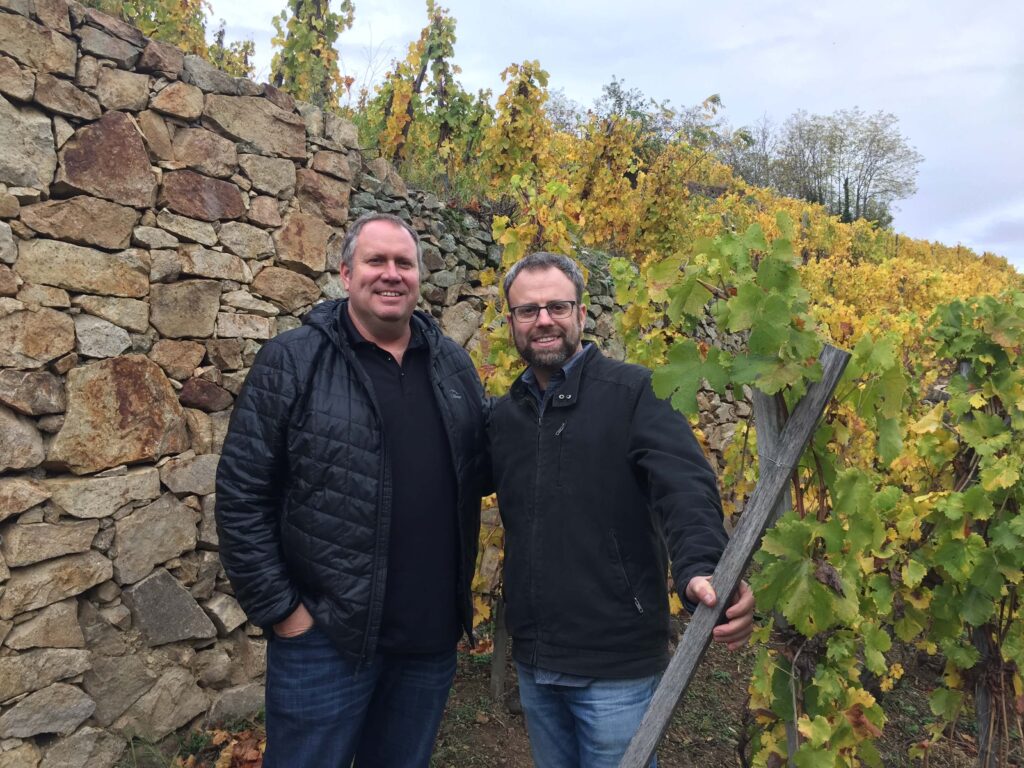
Sam & Mark Doing Rhône Research
Vangone began with 150 cases and now produces roughly 600 to 1,000 cases per vintage, sold mainly through the mailing list, with small allocations abroad. The slow, measured growth was intentional.
“We developed a long-term plan to develop the vineyard in phases and for us to grow the Vangone Estate brand organically,” Mark said. Fruit not destined for the estate label goes to long-term partners including Pahlmeyer, Frias Family, Memento Mori and Parable—several of whom bottle it under the Vangone Vineyard name—an arrangement that, in Mark’s words, allows “extensive sharing of data and collaboration to help us maximize the quality of fruit we grow for everyone.”
In the end, the van is the least important thing about Vangone—a humorous story that became a memorable name. What remains is everything that wasn’t hauled away, not least of all a family that bought a hill more than thirty years ago and was content to wait.
“Napa Valley Cabernet has been permanently woven into the fabric of our lives together,” Mark said, “binding both joys and challenges into indelible memories we’ll share forever.”
Vans can vanish in a fortnight. The best vineyards are for the long haul.
Winery Information
Region: USA, California, Napa Valley
Address: NA
Open for Tastings: No
Major Grapes: Cabernet Sauvignon, Marsanne
Vineyard Size: 20 acres
Own Winery: No
DTC Mailing List: Yes
Vineyard Sustainability: NA
Year Established: 2014
Owner: The Davidowski Family
Winemaker: Sam Kaplan
Website: https://www.vangoneestate.com/
Most Recent Reviews for this Winery
Published: November 2026