
Winery Story
BRION
From a Washington orchard to a volcanic ridge above Oakville, Brion Wise has spent a quarter-century pursuing a single conviction — that the vineyard speaks first. With winemakers Julien Fayard, Mark Herald, and Massimo Monticelli, matched to his diverse terroirs, he is now bringing BRION home to the mountain.
The Fruit Whisperer
Brion Wise grew up in the fields of his family’s orchard in Washington State, among stone fruit, from about age five. His grandfather was active in budding and grafting, and the boy learned early that peaches were not simply peaches.
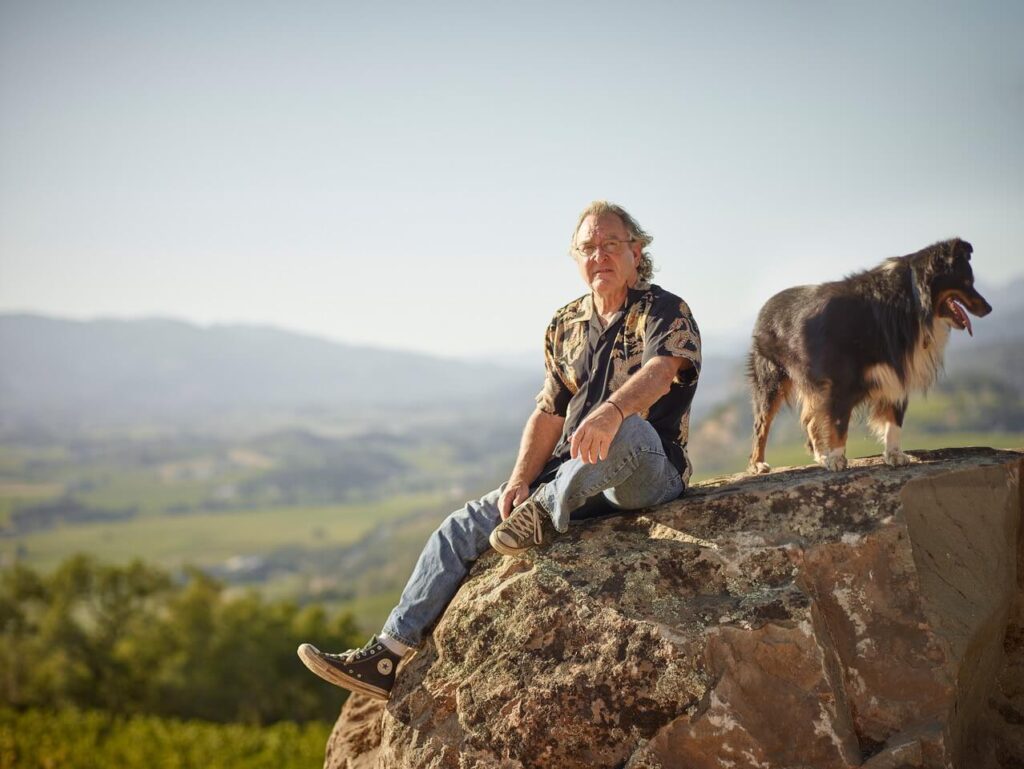
Brion Wise
“Tasting many varieties of peaches taught me to notice very distinct flavors, profiles, and characteristics,” he told me. “Many of the principles are the same with grapevines, including how clones can be changed and how growing and grafting decisions affect the fruit.”
Watching the orchards return each spring and following his brother’s horticultural studies gave him what he calls “a fundamental understanding of cultivation.” It is not a bad first lesson for a future Cabernet grower, and I suspect it explains much of his later obsession with blocks and clones.
Wine arrived early, too, if humbly. At season’s end, the family would harvest Concord grapes and make a little wine of their own, “using bedsheets as a press.”
But Wise was already drawn to chemistry. “Winemaking felt natural to me,” he says.
The family also grew hops, leading him to become a serious home brewer. “I became familiar with extracting beautiful aromatics in beer,” he recalls. “There was a great deal of crossover between those experiences and wine.”
The non-agricultural detour that followed was long. Wise earned a degree in chemical engineering from Washington State University and entered the oil and gas industry, founding his own company at 26. The business took him across Europe, Russia, Australia, and South America. Along the way, he grew cotton in Australia and developed a titanium bicycle chain. Those years of travel brought, as he puts it, “wonderful hospitality and wine.”
Later, working at a restaurant in Boulder, Colorado, he met many winemakers and “became deeply involved in wine culture.” Cooking classes in Italy sealed it. “I specifically fell in love with Italy’s approach to wine—the intensity of the love people have for it, the good and the great wines, having it with meals, sharing it with loved ones,” he says. “What drew me in was not to make money or receive high scores, but the relationships and the people who make it. There is so much love and romance in wine.”
When Wise came to California in 1993 in search of a vineyard, he knew what he did not want: anything already planted. After nearly seven years of searching, he bought a former cattle ranch high in the Mayacamas, in what would become the Moon Mountain District, its boundary brushing the historic Monte Rosso Vineyard. A well had to be dug; the early operation ran on generators. B. Wise Vineyards released its first wine — just one — in 2002, from Caldwell Vineyard in Coombsville. The first BRION Cabernet Sauvignon, a best-of-the-best selection, followed in 2009 from Moon Mountain.
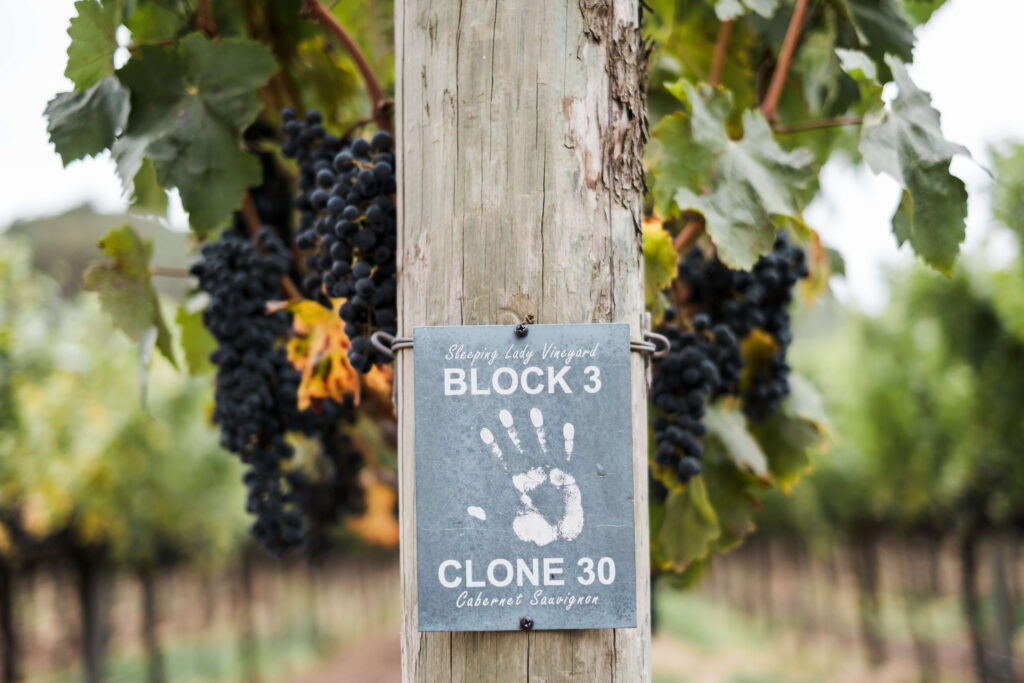
BRION stepped out on its own with the 2014 vintage, released in 2018 as four single-vineyard Cabernets: Moon Mountain, Sleeping Lady, Caldwell, and Oakville Ranch. The principle has not changed since: 100 percent Cabernet Sauvignon from single vineyards. The cut for this label is rigorous; across all the vineyards Wise works with, only about 10 percent of the fruit and barrel selection goes into BRION.
What makes the structure unusual is the way Wise assigns people to places.
“I like to make wines that match the style the vineyard wants to give,” he says, “and to put a winemaker on it who likes that style.”
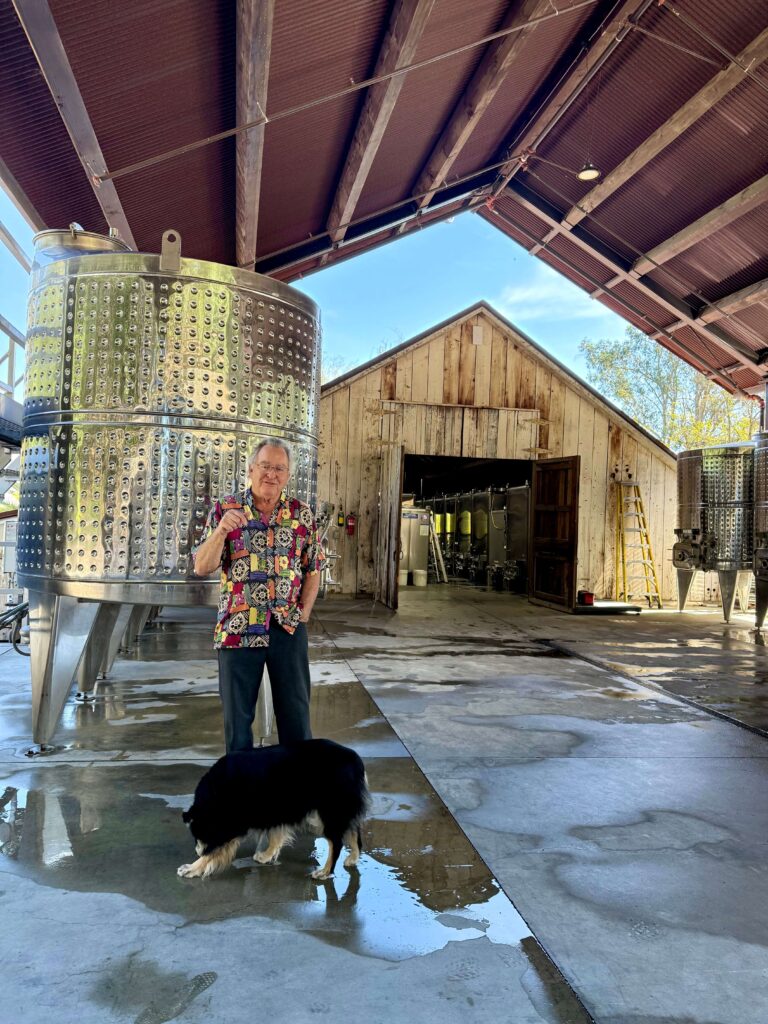
Rather than one winemaker interpreting every site, BRION employs three — Julien Fayard, Mark Herold, and Massimo Monticelli — each paired with the vineyards that best suit his hand. Loosely, Fayard has taken the Napa sites, Monticelli the Sonoma ground, and Herold, who has consulted for Wise for more than fifteen years, works across both. Since 2020, the wines have been made in a gravity-flow cellar inside a 19th-century bank barn on the Sleeping Lady property, which Wise spent four years restoring, numbering each old timber and returning it to its original place.
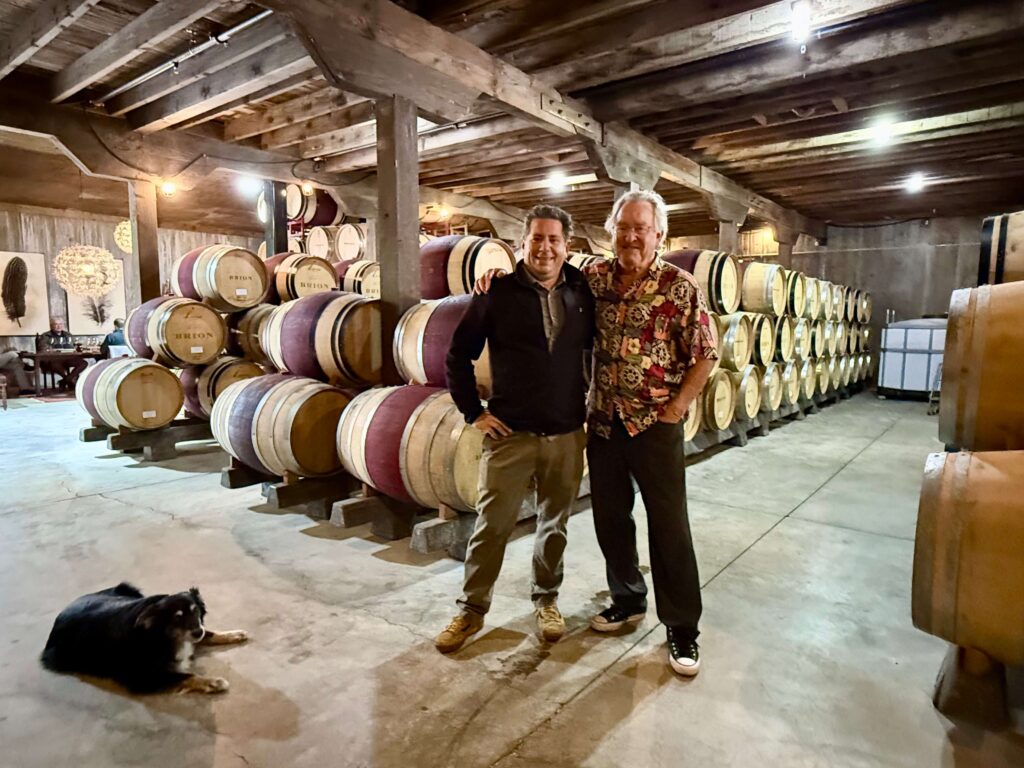
Julien Fayard (left) and Brion Wise (right)
BRION draws on Caldwell in Coombsville, Sleeping Lady in Yountville, Ecotone at the foot of Howell Mountain, Upper Range between the Silverado Trail and Pritchard Hill, Montagna on Pritchard Hill, Oakville Ranch, and, outside Napa, Moon Mountain in Sonoma. Wise owns all of Moon Mountain and Montagna, and half of Caldwell, Sleeping Lady, and Upper Range.
“The only vineyard we buy from is Oakville Ranch,” he says—a deliberate exception, because “we love varied terroirs and how they contribute to the finished wine.”
Ownership, for Wise, is quality control. “Having ownership and long-term control allows me to protect the quality of the wine, which is critical,” he explains. “It is also important to be financially invested, so I do not get priced out, pushed out, or become vulnerable to losing a contract.”
Caldwell, in Coombsville, is where the whole enterprise began. Sleeping Lady, by contrast with the mountain sites, is almost pastoral: a gently sloping west-side bench at 50 to 200 feet, its alluvial soils studded with cobble and threaded by a streak of gravel that winemaker Julien Fayard credits with lending tension while keeping the tannins polished. Its wines trade the mountain’s grip for perfume and depth.
Upper Range is a mile-long run of Vaca Range hillside that Wise owns with the Bettinelli family — “a great family and team of viticulturalists,” he says, and his partners at Sleeping Lady too. “I was looking for a long-term project with extraordinary grapes, and Upper Range has remarkable geography,” Wise told me. The project began in 2013 on virgin land. The first harvest came in 2016, and they now have around 125 acres planted. The development has left about 80 percent of the native oak forest and grasses intact.
BRION favors Upper Range’s ridgeline blocks for their steady breeze, strong sunlight, rocky soil, and ample winter rain. “The fruit is among the best we have worked with,” he says, “and it continues to improve every year.”
With Upper Range, the BRION method is laid bare, yielding three single-block labels: Romeo Mike, Reflector, and Longhorn. Romeo Mike, on porous rhyolite ash at a natural air funnel toward Lake Hennessey, is made by Mark Herold. Reflector, the highest block at up to 920 feet and ringed with truck-sized boulders of red andesite, went to Monticelli. Longhorn, just over 13 acres of west-facing slope on mixed rhyolite and andesite, is Fayard’s. The inaugural 2021 bottlings, released in September 2025, make a compelling argument that this site encompasses a myriad of terroirs.
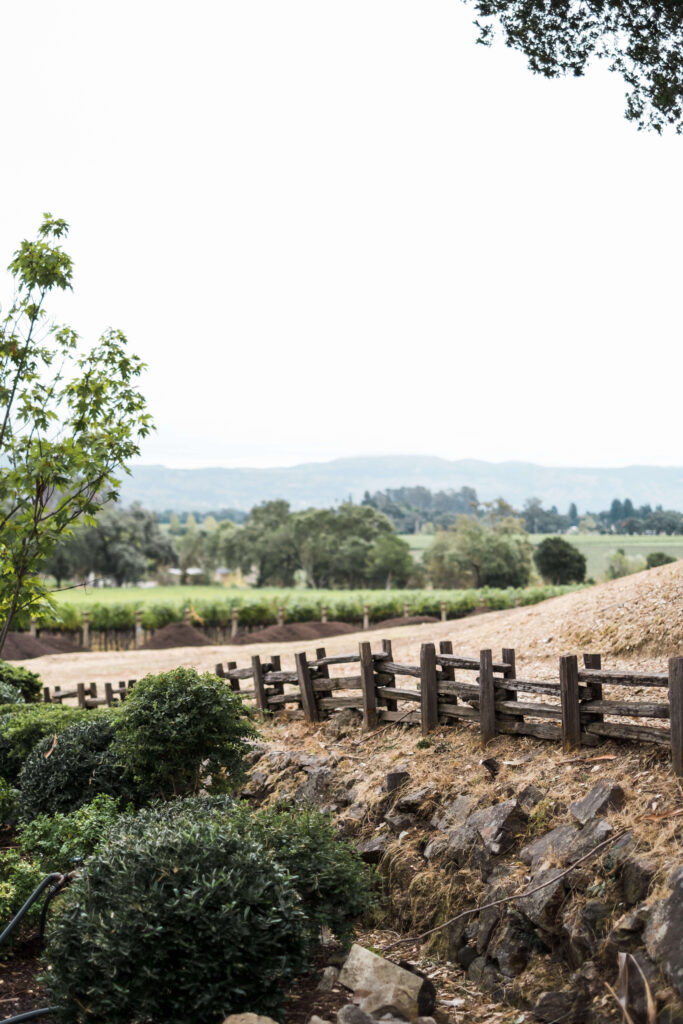
There is a point on Pritchard Hill where the Vaca Range seems to give up and fall away. The old Montagna property on Long Ranch Road sits there, on a ridge corner some 1,200 feet up, with a view from San Pablo Bay north to Mount St. Helena. Most of the valley’s mountain perches are set back from the drop; this one leans out over it, like a balcony built for watching the weather arrive.
In August 2023, the 128-acre estate — 42 acres under vine and a 20,000-square-foot cave — changed hands for the first time in more than half a century of Long family stewardship. Don Long, a Peninsula grocer, began buying ranchland on the hill in 1956, when the road was still dirt. His son Bob developed Montagna, releasing his first commercial vintage in 2006. Wise renamed it BRION Estate and announced that it would become the permanent home of his flagship label. On a hill where land almost never comes to market, it was a rare transaction.
The appeal begins with the rocks: iron-rich, rust-red volcanic clay loams, thin and brutally stony, where water is scarce and vigor naturally checked. The vineyards sit largely above the fog line, bathed in morning light, then cooled by afternoon air pulled up the slopes. The result, in the best hands, is Cabernet of dense color, firm but fine-grained tannin, and an almost ferrous edge.
In the winery, the watchwords are restraint and patience. Each vineyard, and often each block and clone, is handled separately; Fayard says he has now worked with every clone at Sleeping Lady. Fruit moves by gravity, and oak is measured to the wine rather than applied as a house signature. Of the young Longhorn vines, Fayard has said, “we don’t do too much magic; we’re very classic.” The volumes make that possible: by Wise’s count, each BRION bottling amounts to just three to eight barrels.
The wider Wise enterprise has grown into something close to a small wine-country empire. “I currently have four labels — BRION, B. Wise Vineyards, Amapola Creek, and Mark Herold — with the possibility of producing more in the future,” Brion says.
Amapola Creek, bought from Richard Arrowood, is part of a contiguous 240-acre Moon Mountain holding. In Fort Ross-Seaview, Wise controls 42 acres of Pinot Noir and Chardonnay through a 35-year lease on a vineyard called Sharkstooth, which he is developing with Charlie Chenoweth. There is also Constable whiskey and tequila, made with John Caldwell, and a stake in the new Elene Hotel south of Yountville. He holds an interest in close to 2,000 acres of Napa Valley land, plus, he adds, several other sites he can’t yet divulge.
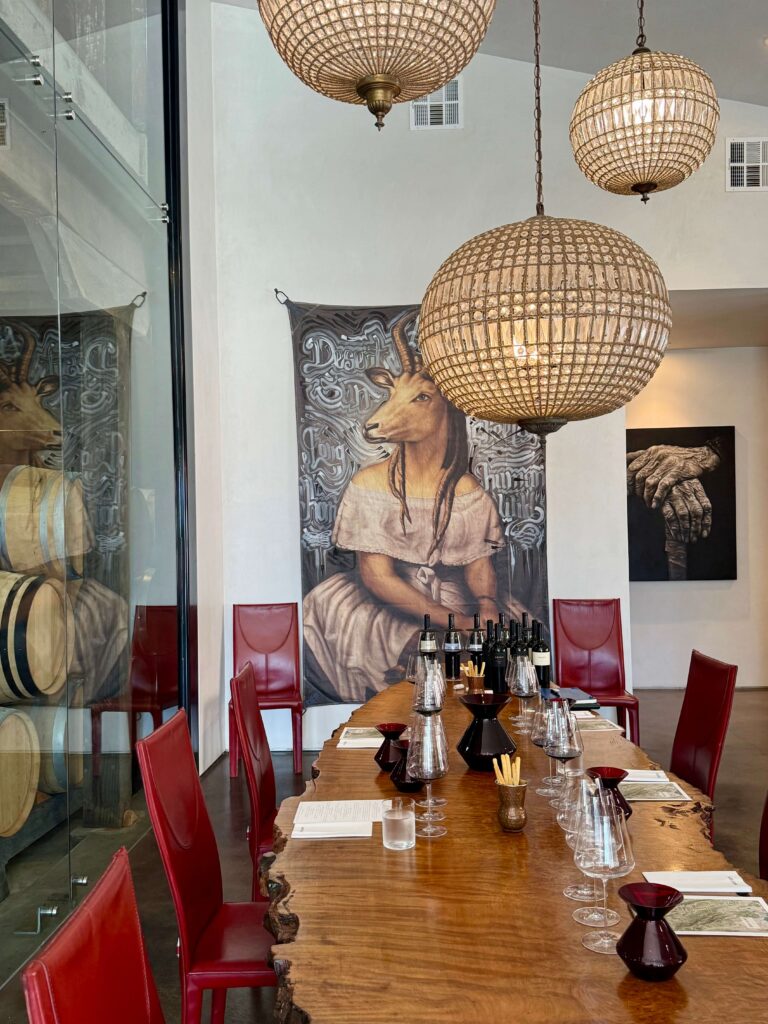
None of that alters the core of BRION, which remains a tiny, idiosyncratic, profoundly site-driven project.
“I love how every vineyard tastes different because of its clone, microclimate, pruning, and other growing decisions,” Wise says. “That complexity is fascinating to me.”
Winery Information
Region: USA, California, Napa Valley
Address: 5537 Solano Ave., Napa, CA 94558
Open for Tastings: By Appointment Only
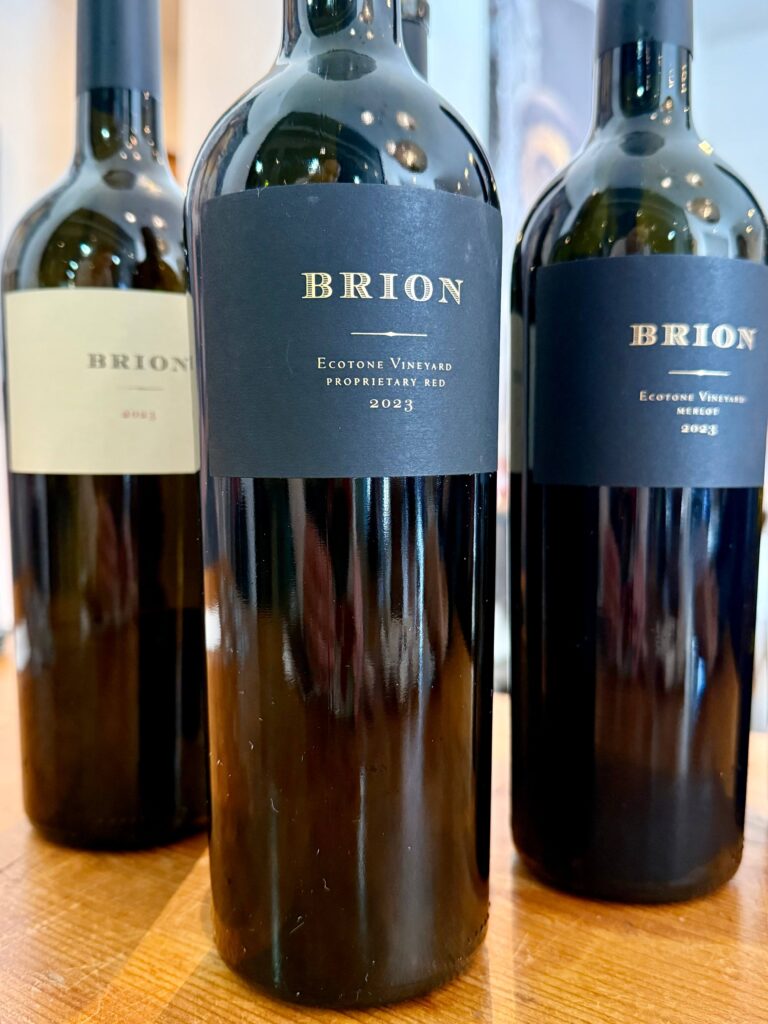
Major Grapes: Cabernet Sauvignon, Merlot
Vineyard Size: 2000 acres
Own Winery: Yes
DTC Mailing List: Yes
Vineyard Sustainability: NA
Year Established: 2014
Owner: Brion Wise
Winemaker: Julien Fayard, Mark Herold, and Massimo Monticelli
Website: https://brionwines.com/
Most Recent Reviews for this Winery
Published: October 2026