
Winery Story
Arkenstone
In Tolkien’s story, the Arkenstone is the great white gem at the heart of the mountain, discovered by dwarves who had to break the rock to find it. The rocky land Ron and Susan Krausz bought on the western shoulder of Howell Mountain in 1988 was not originally intended as a vineyard but as a home. A decade later, they broke through a considerable amount of volcanic rock to reveal a vineyard. Twenty harvests later, it is among the most compelling boutique estates on the mountain.
The Heart of the Mountain
When the Krauszes were in their early thirties, they were looking for a home in the country. Ron was an attorney, and Susan was a marriage counselor from Minnesota. Forty-two acres above Angwin came up at the right moment — an old cattle pasture, thick with volcanic rock. At that time, a vineyard was not in the plan.
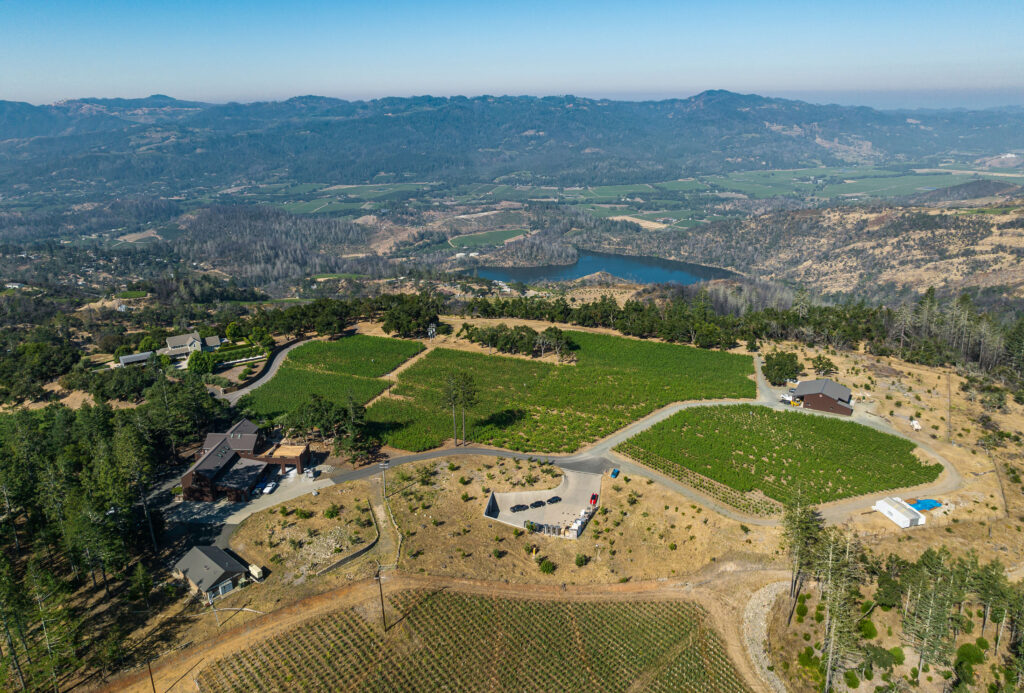
Photo by Jak Wonderly
“My parents were both drawn to what is now Arkenstone instantly, but they were young and not in a position to simply purchase land they loved,” their son Jake told me. Susan got cold feet at the final paperwork. A Minnesota native, she had always imagined going home one day with children of her own. “On one winter day, when it was time to make a decision, Susan stood on what is now their home site on Howell Mountain and told Ron that she didn’t think she could live somewhere it didn’t snow,” Jake says. “At that very moment, the sky turned gray, and it began to dump snow on the mountain.” Ron asked whether there were any further questions.
The intention, once they had the deed, was stewardship, not viticulture. “Growing grapes turned out to be that path — something they were passionate about, but above all, they wanted to do what was best for the land and the ecology on the mountain,” Jake says. A friend pushed them in the early nineties to have the soils examined. The verdict came back in one sentence: “This has to be a vineyard.”
Their viticulturist, Philippe Melka, matched varieties, rootstocks, and clones to compatible soils. The first vines, Sauvignon Blanc, were planted in 1997 — nine years after the purchase — with the remainder planted in 1998. Only cleared ground was planted, so the woods stayed; where the rock was too dense to rip, dozers broke it.
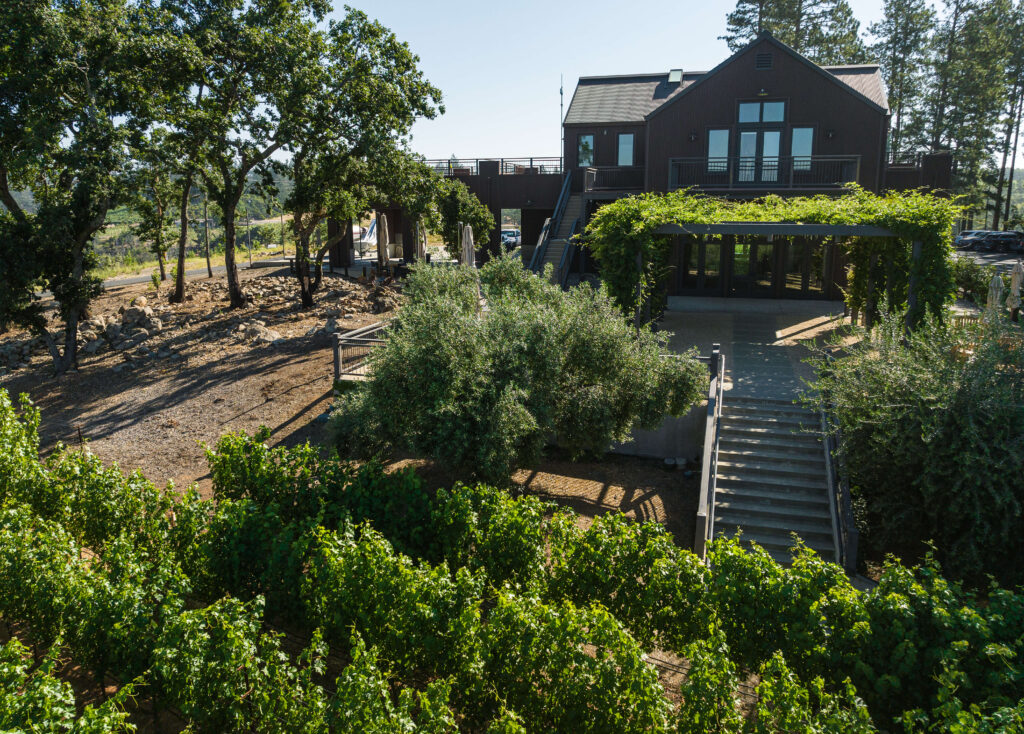
Photo by Jak Wonderly
Jake was thirteen when planting began. “This meant weekends and summers spent digging the dirt with a rock bar, hauling stone, and slowly learning what it takes to coax a vineyard from a mountainside,” he says. “Howell Mountain doesn’t give up its ground easily — the soil is full of rock, and we earned every row we planted.” He confesses that his thirteen-year-old self resented that summer of hard labor. “But looking back, I truly appreciate the history and connection I have with this land. It’s one thing to inherit a piece of property; it’s another to have literally broken ground on it yourself.” He intends for his own children to earn that same connection with the land.
Early crops were sold off while the team learned where the sweet spots were. The first experimental Estate Blanc was pressed the autumn after Jake’s freshman year of college. The inaugural commercial vintage, a Sauvignon Blanc, was 2006, eighteen years after the purchase.
When Jake turned 18, he left to make his own way in the music industry.
“To be honest, I had no intention of returning when I left Saint Helena as a rowdy 18-year-old,” he says. “I just assumed I’d become a rockstar and that this little agricultural town would be a thing of my past.”
He studied music at Berklee, then worked in the industry in the Bay Area and Los Angeles.
“But as real life goes, the wine bug had been planted and was growing.” He took wine classes wherever he landed and came home for the experimental harvests. “The magic of turning these tiny grapes into amazing wine is very real.”
After years of offering opinions from afar, he was handed an ultimatum: “Join us or let us do this in peace.” The decision came during a tasting at the Petersen Automotive Museum in Los Angeles, where Susan flew down to pour for a room of early Howell Mountain adopters. By the end of dinner, he announced he was coming back — determined not to arrive merely as the founders’ son. In early 2010, he passed the Court of Master Sommeliers’ Introductory and Certified exams back-to-back, completed UC Davis extension coursework, and joined the cellar for harvest under winemaker Sam Kaplan and assistant winemaker Roberto Alfaro. “I wasn’t expecting the serious ass-kicking I received working that cool fall harvest. It’s a season I wouldn’t trade for anything.”
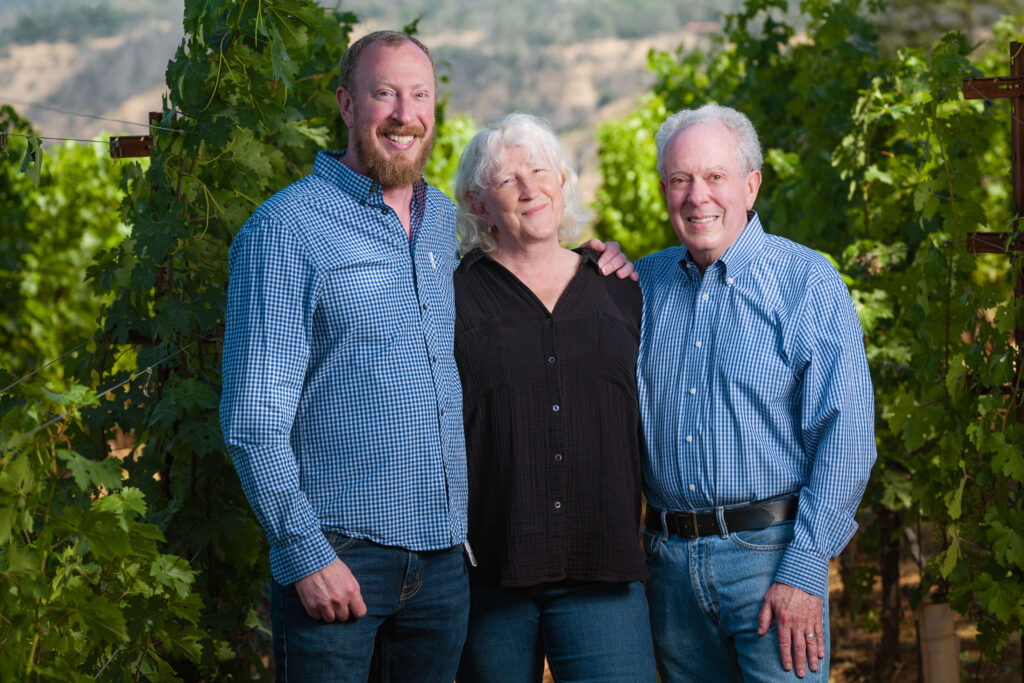
Jake, Susan, & Ron Krausz (Photo by Jak Wonderly)
Jake is now Arkenstone’s Estate Director.
The Terroir
Howell Mountain, an AVA since 1983, is bounded not by a creek or road but by the 1,400-foot elevation — roughly where the marine fog crests — one of the few appellations defined solely by altitude. Arkenstone begins at that line and climbs to a little over 1,650 feet.
Sam Kaplan — winemaker here since 2006, as well as the general manager and vineyard manager — describes the unique layout.
“I always refer to the Estate as a knuckle on the edge of the mountain, with our upper plateau dropping off 200 feet to our steeper lower blocks,” he says. “The airflow and exposures allow for very early ripening and fruit development. Not only do you get that incredible moment driving up the mountain, breaking through a socked-in valley floor into beautiful sunshine, but our grapes just eat up that extra light at cooler temperatures — the acidity holds beautifully until the flavors come into alignment.”
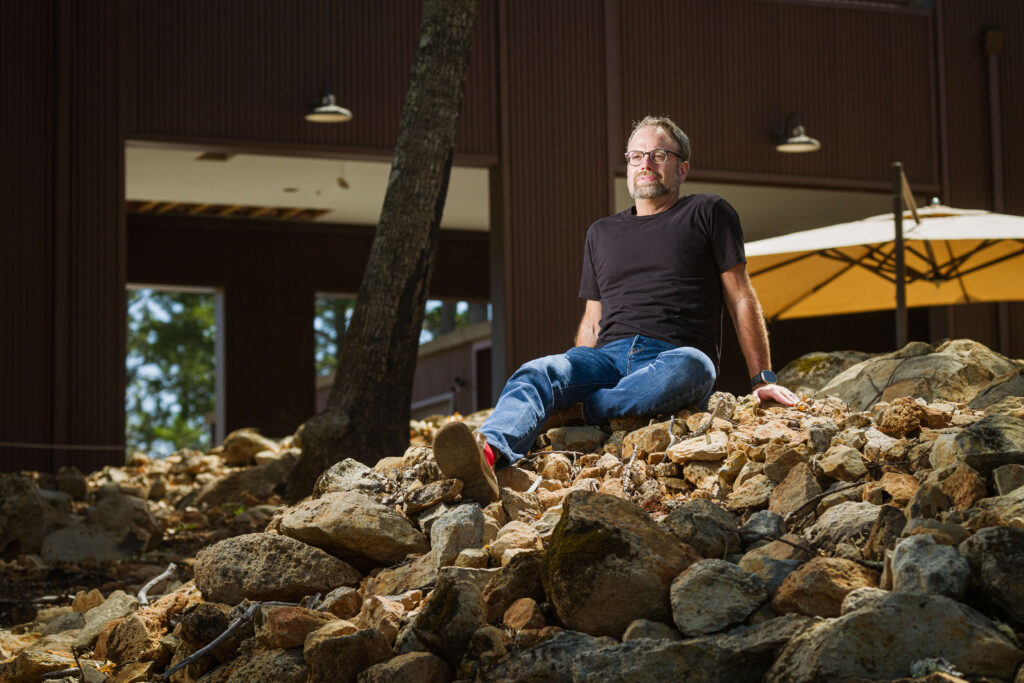
Sam Kaplan (Photo by Jak Wonderly)
The soils equally shape the style and quality of the wines. Here we find decomposed volcanic ash, locally called tufa, and iron-rich red clay, both shallow and nutrient-poor. This means the vines struggle, producing small, thick-skinned, concentrated berries. Arkenstone’s wines capture the apex of that Howell Mountain signature — deep color, serious tannin, pronounced earthiness, and acidity that holds even at full ripeness.
“The volcanic soils are incredibly diverse,” Kaplan says, “and the vineyard was developed to match rootstock and varietal to the patchwork of volcanics — resulting in 22 distinct blocks across the Estate.” Cabernet Sauvignon leads, with Cabernet Franc, Merlot, Petit Verdot and Malbec; Sauvignon Blanc and Sémillon hold the white tufa, Syrah the western shoulder.
The vineyard is farmed by the estate’s own full-time crew, which is somewhat unusual for a vineyard this small and in a valley that has largely outsourced its viticulture. “Having our own farming team is critical,” Kaplan says. “Staying ahead of whatever a growing season throws at you is where a dedicated team that has worked this property every single day for years really makes the difference.”
Organic farming was not fashionable in the mid-1990s, but Arkenstone has never been managed any other way.
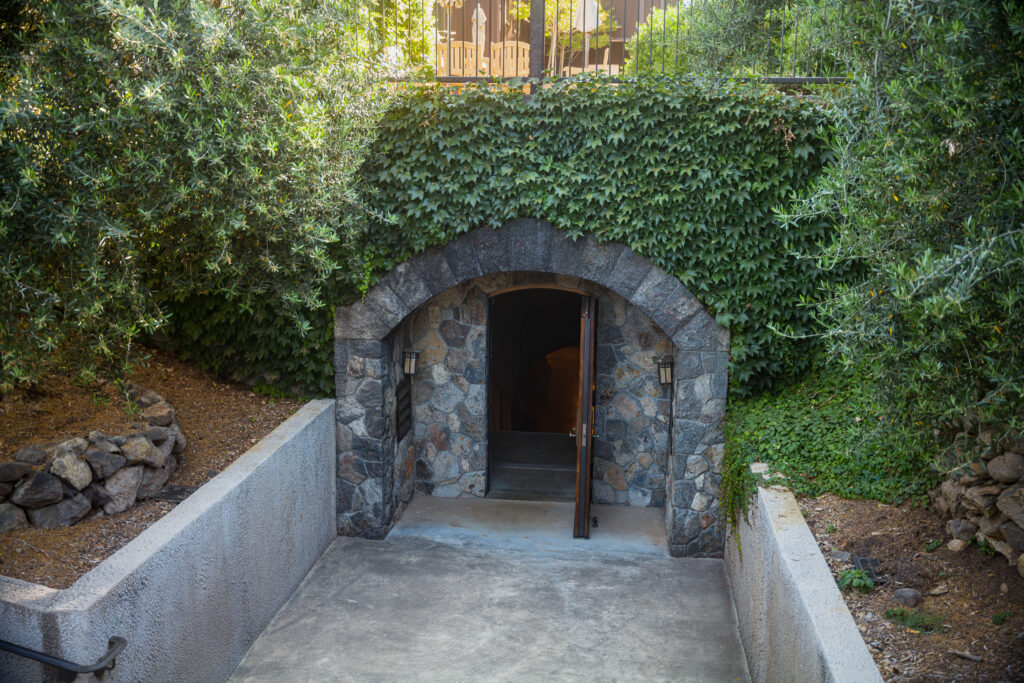
“We decided to farm only the open areas of our land, keeping every patch of wooded land intact,” Jake says. “We also decided to do all of this completely organically — not a popular option at the time. But because of that, our land, our vineyard, and most importantly our ecosystem is healthy and thriving. And we’re making wines we want to drink, without worrying about any systemic poisons coming from the vines.”
The estate was among the first in Napa to run a fully electric tractor, and a recent solar array, installed against real headwinds, has made it a net energy producer. “It was important, so we’re making it work.”
The winery is entirely underground: twenty-five thousand square feet of cave, which Kaplan helped design, with temperature control in the tank floors rather than glycol jackets. Lots stay apart through fermentation and a first year in barrel; blending comes at about eleven months, then another eleven in barrel and a year in bottle.
The Wines
“What I love most about every wine we produce from the Arkenstone Estate is how they each thread the needle between power and restraint,” Kaplan says. “There is a minerality — a unique soil and earth character — that runs through every vintage here. The tannins are classic Howell Mountain, and my goal has always been to resolve them in the vineyard first, then finesse them in the winery, so the wines are genuinely enjoyable upon release.”
The Estate Blanc has done most to build the estate’s reputation with sommeliers, and planting white grapes up here was heresy.
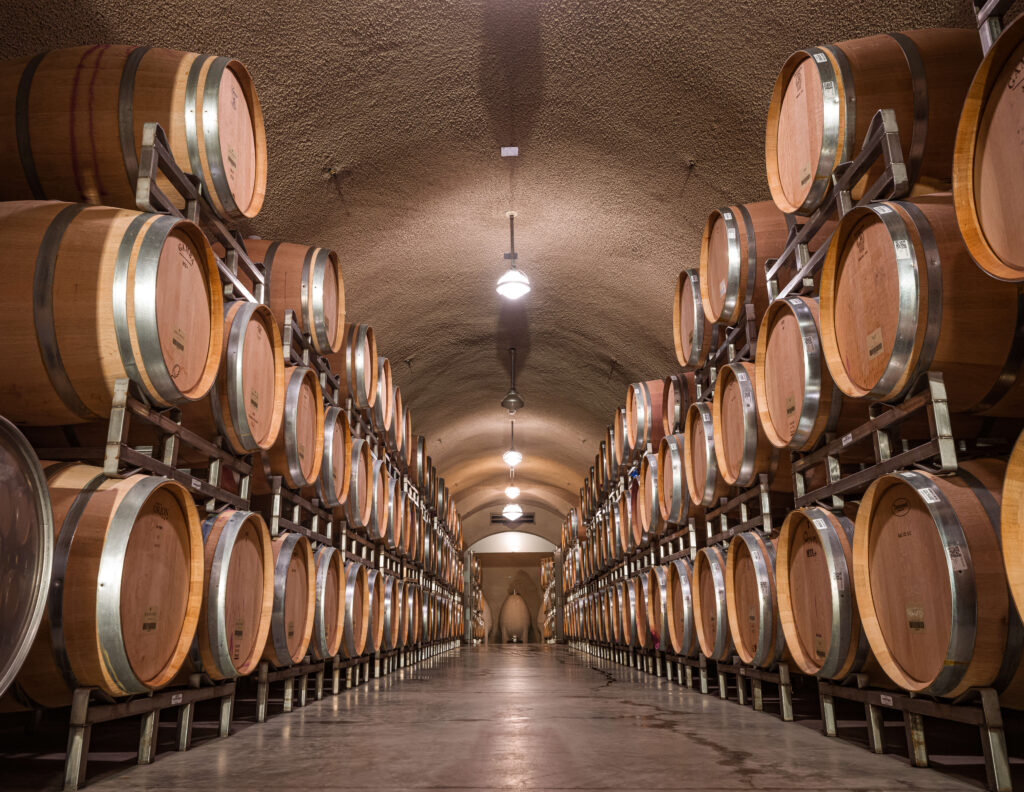
Photo by Jak Wonderly
“People didn’t understand why anyone would plant white grapes on Howell Mountain,” Jake says. “My parents believed it was the right decision, and they stuck with it. It’s been a lot of fun watching what has always been a house favorite become our fastest-selling wine.”
Kaplan is clear about why. “Those rugged, nutrient-poor conditions force the vines into naturally low yields, with intensely concentrated fruit and minerality. The cooler temperatures allow for slow, even ripening, so flavor development is gradual and the acidity holds on so beautifully that they meet at a truly optimal point of ripeness.”
The wine never sees stainless steel: barrel-fermented and aged sur lie in French oak and concrete egg. The reference point is Graves — texture and structure ahead of aromatics, real cellar life. Selected blocks are now held back for a Reserve, aged five years. “I always tell people to age them right alongside the Estate Red,” Kaplan says, “because they just keep getting better.”
The Estate Red, previously bottled as “Obsidian” after the volcanic glass carried up the mountain by the Native people who wintered here, is the flagship: Cabernet Sauvignon dominant, drawn from the best of its sixteen blocks, with a Reserve positioned above it, but only in great vintages.
The Estate Syrah is robust yet silky. There is also a Napa Valley Cabernet under the NVD label and single-vineyard bottlings from elsewhere in the valley, among them Amoenus in Calistoga.
Jake resists calling any of it a style. “We make wines we want to drink, in a way that makes us proud to share them. We are very site-driven rather than style-driven — which perhaps is a style in itself?”
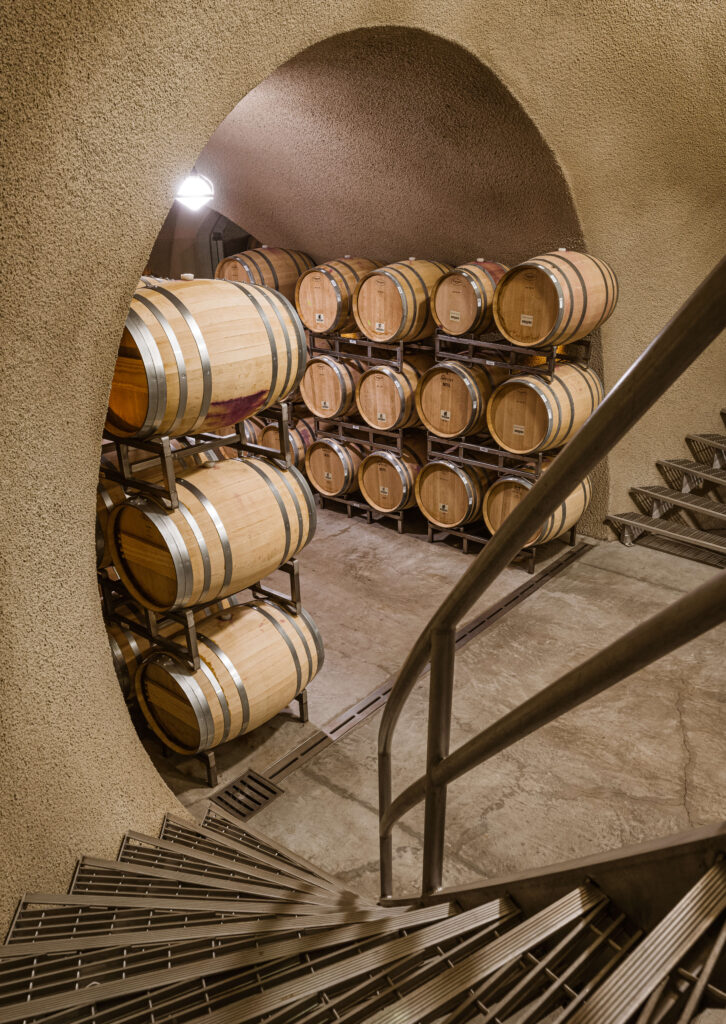
Photo by Jak Wonderly
In 2025, Arkenstone marked its twentieth harvest. Ron and Susan remain the foundation of an estate that has remained family-owned since the beginning.
In Tolkien, the Arkenstone is as much a curse as a treasure; the trouble begins the moment someone decides they must own it. The Howell Mountain version has the opposite moral — a site that paid out only after a nine-year pause, an eighteen-year wait, and a family willing to keep breaking the ground themselves. Every vintage has been earned.
Arkenstone sells most of its wine direct to collectors, with a growing sommelier following in the US, Europe, and Asia.
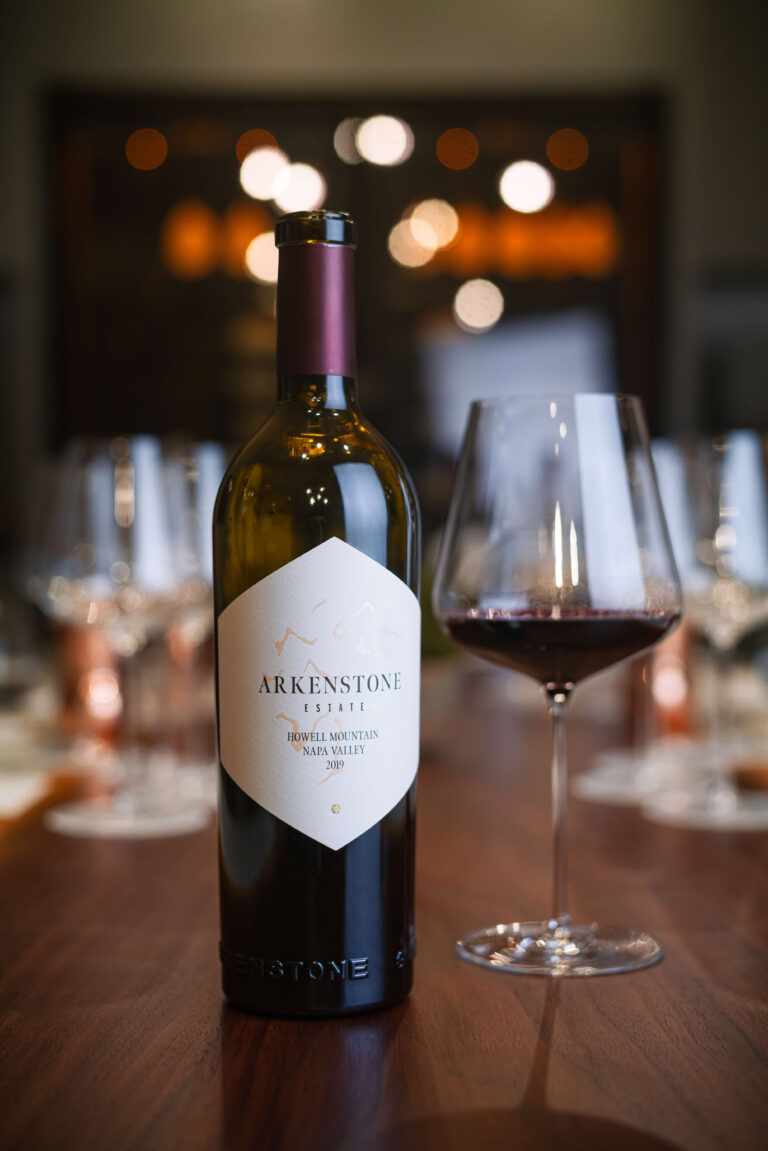
Winery Information
Region: USA, California, Napa Valley, Howell Mountain
Address: 335 West Ln, Angwin, CA 94508
Open for Tastings: By Appointment Only
Major Grapes: Cabernet Sauvignon, Sauvignon Blanc, Syrah
Vineyard Size: 12 acres
Own Winery: Yes
DTC Mailing List: Yes
Vineyard Sustainability: Organic
Year Established: 2006
Owner: Ron and Susan Krausze
Winemaker: Sam Kaplan
Website: https://arkenstone.com/
Most Recent Reviews for this Winery
Published: September 2026