
Winery Story
Lokoya
The unrestrained allure of the mountains for celebrating wine and life dates back to ancient times. Dionysus would call the maenads from Thebes, leading them high into the remote, untamed slopes of Cithaeron. The Napa version of that ascent is more civilized: paved roads, gate codes, architectural statements, and tastings by appointment only. But the instinct to seek something rawer and more soulful remains the same. Sitting down recently with Chris Carpenter, the winemaker behind Lokoya’s mountain Cabernets for the last quarter century, I was struck by how he describes his four summits as the ancient poets did those wild women reveling in the hills — unbridled forces with tempers, allure, and personalities that emerge most clearly in the mountains.
The Mountain Calling
“Mount Veeder is like Zoe Saldana in Lioness,” says Chris, “a fierce beauty, smart, sexy, and doesn’t stop.” Howell Mountain is Maureen O’Hara in The Quiet Man: “dark, red, passionate, but tough and resilient.” Spring Mountain is Michelle Pfeiffer’s Catwoman—“sleek, sexy, two-sided in its personality of fruit and floral.” And Diamond Mountain? Marilyn Monroe in Some Like It Hot: “curves, plush, subtle depth, and knocks your socks off when first tasted.”
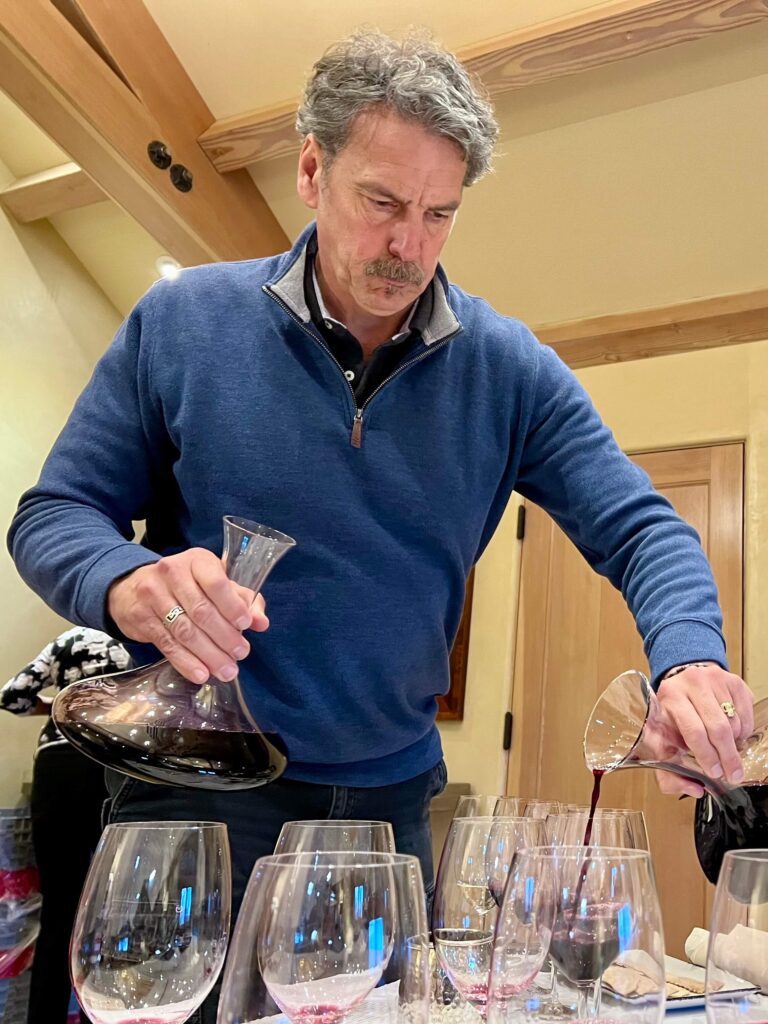
Chris Carpenter, Winemaker at Lokoya
Four leading ladies, then, and one director who has spent his career trying to stay out of the frame.
Lokoya’s origin story is one Carpenter tells with a certain tenderness because it is also the story of how he got his job. In the early 1990s, Jess Jackson hired Greg Upton as general manager of the Oakville winery that is now Cardinale’s home. Cardinale had existed since 1982 as a Kendall-Jackson blend, and in 1994, the first vintage under Upton, the focus was squarely on that wine. But while tasting through the cellar with his small team, Upton kept returning to a couple of tanks that were really, really good—too singular to vanish into an assemblage. They pitched Jackson a new, very high-end brand built around such lots. Jackson, who never met an ambitious idea he didn’t like, said yes and handed Upton the winemaking.
The first Lokoya vintage was 1995, and—in a detail that surprises even longtime followers—it included a Chardonnay. The original Cabernets came from Rutherford, Mount Veeder and Diamond Mountain. Then came tragedy. Upton was struck down by an aggressive cancer and died in October 1998, never seeing his first reds in bottle.
“I got my job because of Greg Upton’s tragedy,” Carpenter says, explaining that he arrived the same year as assistant winemaker. He took charge of Lokoya in 2000, and has made every vintage since.
The lineup soon found its altitude. The only valley floor Cabernet, from Rutherford, was sourced from Beckstoffer’s Georges III vineyard. But when Beckstoffer raised his prices, Jackson refused to renew the contract. Spring Mountain took its place, initially made from purchased fruit from the Spring Mountain Vineyard. Howell Mountain completed the lineup. Lokoya has been a purely mountain proposition, and 100% Cabernet Sauvignon, ever since.
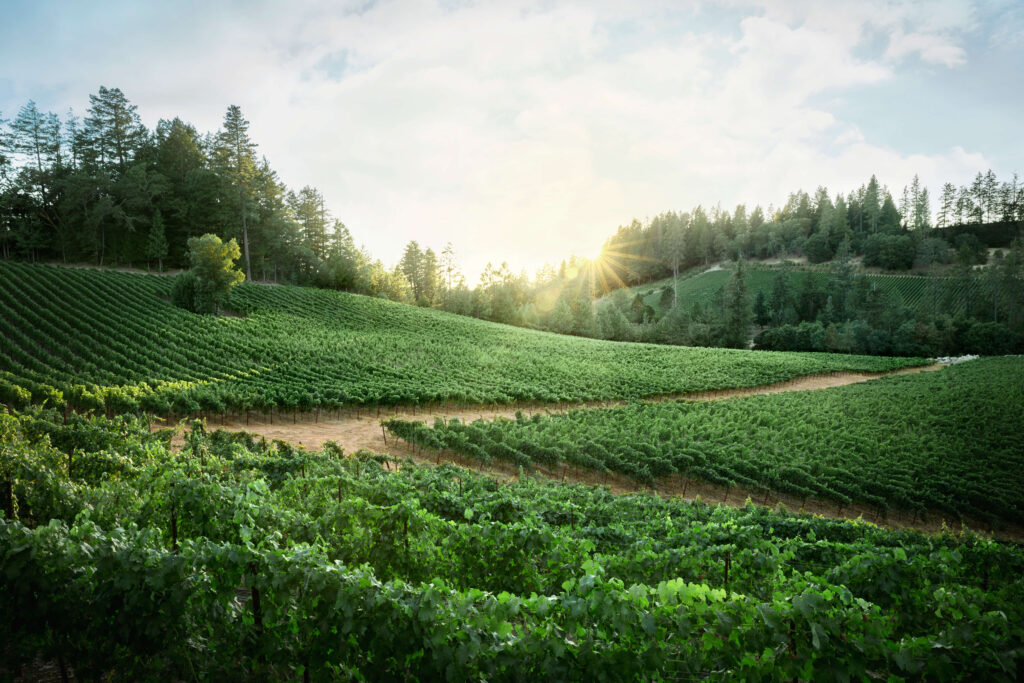
Lokoya Howell Mountain Vineyard – W.S. Keyes
The focus on wines of altitude made perfect sense. Carpenter says of Jackson, “He was keenly aware of the intensity and ageability of mountain fruit, and as someone who wanted to make a mark historically, having wines that would age and still carry energy was ideal.” Jackson also saw the mountains as a unique—and contrarian—niche. “Remember that at the time, he was planting his flags in mountain vineyards while guys like Robert Mondavi and Andy Beckstoffer were touting the valley floor.”
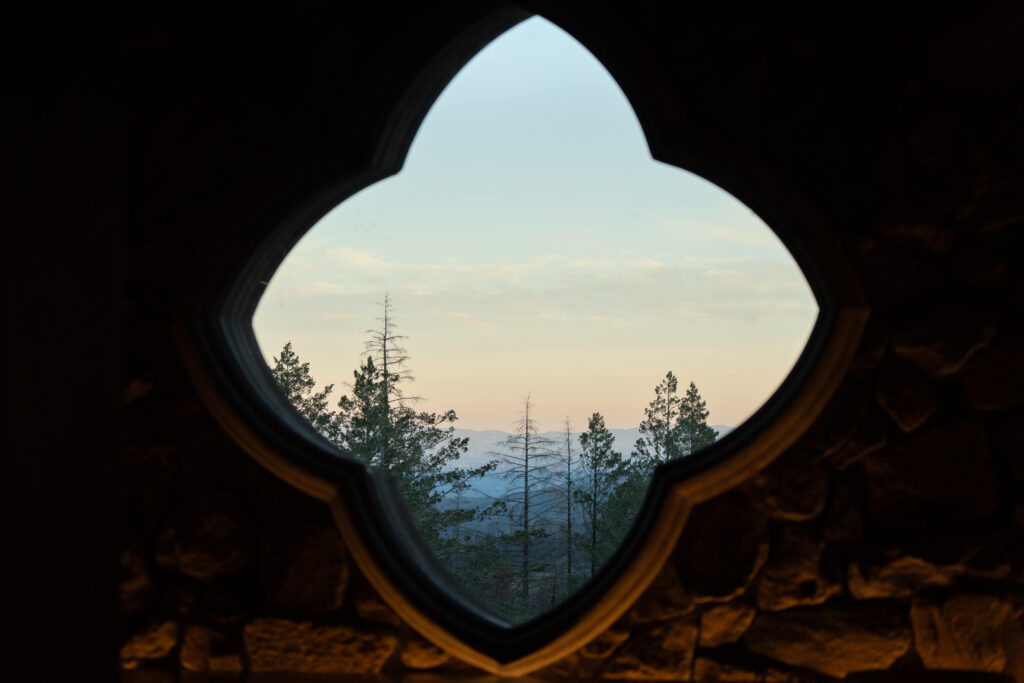
Three decades later, the bet looks prescient, and the family—led today by Barbara Banke, Chairman and Proprietor of Jackson Family Wines—has kept its flags planted. In December 2013, it bought the Yverdon estate off Spring Mountain Road: a stone “castle” winery built by hand around the turn of the 1970s by Swiss-born inventor Fred Aves, later restored by Angus and Margaret Wurtele. Lokoya opened there in November 2016, its first home after two decades without an address.
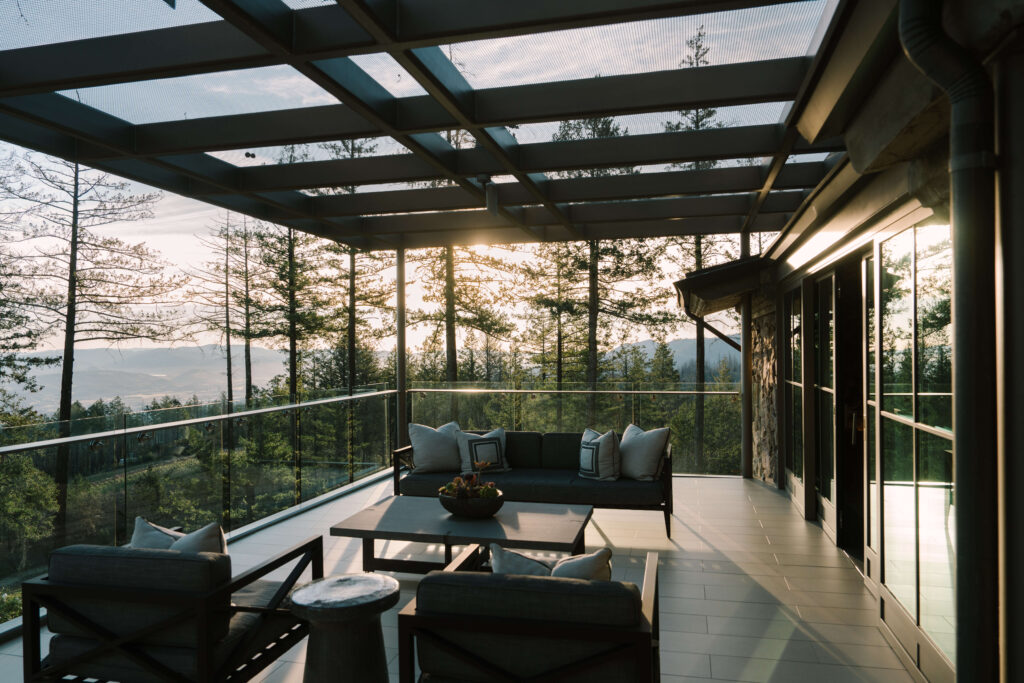
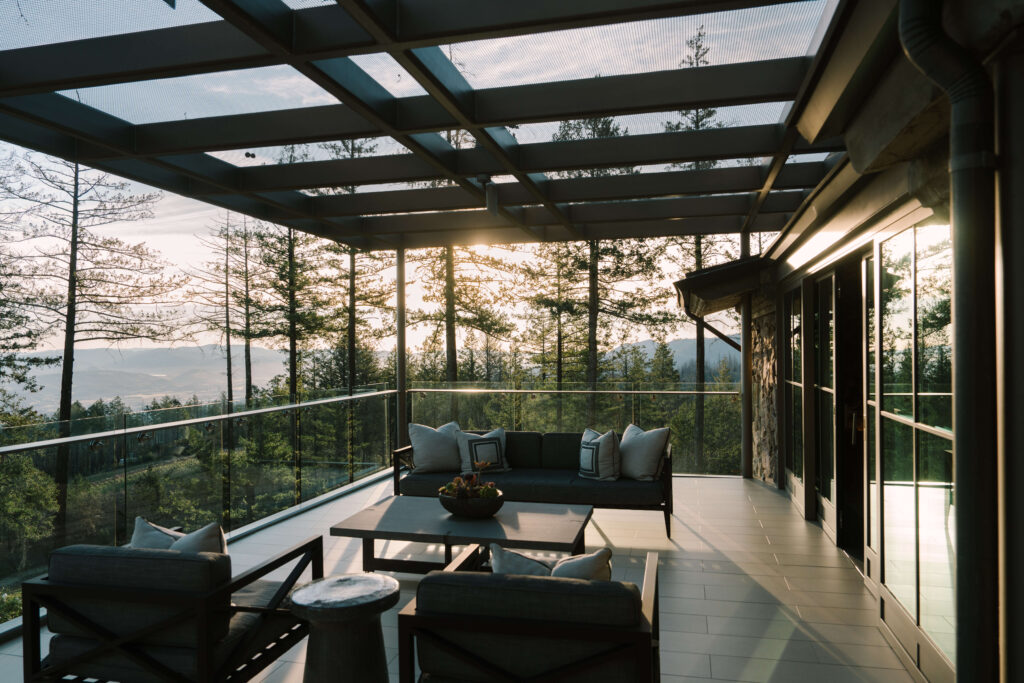
Lokoya Estate on Spring Mountain
Lokoya’s founding premise is that if you hold the grape and winemaking constant, the mountain is left to speak. Carpenter is emphatic. “All the wines are made in the same way, from picking to fermentation to aging.” The only flexibility, he explains, lies in matching each wine to its barrels. “Each tannin and flavor aspect from each mountain needs a unique support apparatus that the barrels provide. Filling those gaps or uplifting different aspects of the individual wine follows the same decision matrix; it’s just the tool used to do it that varies with the cooper choice.”
The method itself is pared back. Every fermentation uses native yeast in open-top fermenters. Carpenter is quick to distance Lokoya from the machine-driven micro-oxygenation that the documentary Mondovino made notorious: “We have never used micro-oxygenation with a machine.” Instead, oxygen—“super important with mountain tannins”—arrives more organically, mostly through splash racking during pump-overs. The wines are basket pressed, the first press fraction returned to the free run, and barreled the next day. Depending on the vintage, they spend 17 to 22 months—21 on average—in about 80% new French oak, racked two or three times “in a way that a wee bit of O2 is added.”
What has changed over three decades is not the recipe but the weather. The turning point was 2022, when a massive heat spike cost Lokoya half its crop. Carpenter responded by installing misting systems in every vineyard, which are switched on as temperatures approach 100°F. Misting keeps the fruit zone cool and uses water far more efficiently than the old habit of irrigating ahead of a heat event—which, he notes, fails exactly when it matters: “after 103°F, that effect doesn’t work anymore as the stomata… shut down, wasting all of that water that is left in the soil.”
The fire years gave Carpenter reason to reassess his picking, too. “Because of the fires, I tend to pick earlier, as I want to get the fruit off the vine and safely into the winery.” To recover concentration, he bleeds off a little more juice by saignée—a change that, he says, has “increased the vibrancy and freshness, lowered the alcohol, and further preserved the natural acidity that the mountains are known for.” Elevation, in his view, remains an advantage: with the marine layer moving in and out of the valley, the mountains enjoy “a much better equilibrium of temperature than the valley floor—which, in extreme conditions, is a much better situation to manage.”
The reward came swiftly. 2023, Carpenter told me as we tasted, “was one of those vintages that hit on all cylinders.”
Mount Veeder
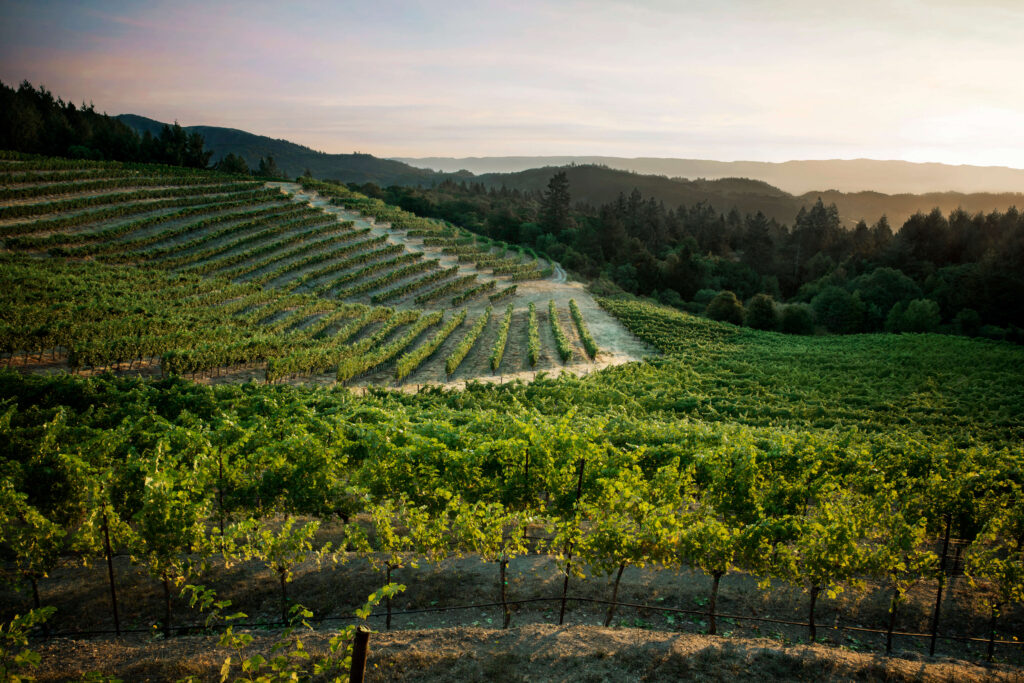
Carpenter’s “fierce beauty” happens to be the most tannic of the four. Since 2001, the fruit has come from the same estate-owned block of the Veeder Peak vineyard, located at about 1,800 feet. Thin, rocky soils of uplifted ancient seabed threaded with volcanic material give tiny crops of late-ripening, concentrated fruit. The 2023 gallops out of the glass with blackcurrant jelly, plum preserves and mulberries, laced with forest floor, black olives, pencil shavings and a waft of iris. The palate has remarkable tension, its very firm, very fine-grained tannins carrying layer upon layer of black fruit to a finish of great persistence. Beauty and ferocity in equal measure.
Howell Mountain
The outlier of the quartet, Howell Mountain is the only one on the eastern, Vaca range side of the valley. The fruit comes entirely from the estate-owned W.S. Keyes Vineyard, planted in 1888 by Winfield S. Keyes, whose Liparita claret took gold at the 1900 Paris Exposition. Lean sandstone, red clay, and volcanic tufa between roughly 1,400 and 1,900 feet give Carpenter his “dark, passionate, and resilient heroine.” The 2023 spills warm cassis, dark chocolate, and star anise from the glass, followed by violets, crushed rocks, camphor, and a hint of espresso. The palate is tightly wound, with firm, grainy tannins and seamless freshness, closing on a lingering anise note.
Diamond Mountain District
Named for the glints of volcanic glass scattered through its soils, Diamond Mountain yields the softest tannins of the four in Carpenter’s ranking—hence “Marilyn’s curves.” Yet in 2023 she plays against type. Drawn from two estate vineyards, the wine needed a good deal of shaking to wake up notes of ripe black plums, black cherries, and tar over licorice, wild sage, and tree moss. The full-bodied palate is taut and muscular, with firm, grainy tannins and just enough freshness, finishing long and earthy—a Marilyn who has been to the gym.
Spring Mountain District
Asked which mountain had surprised him most across 25-plus vintages, Carpenter didn’t hesitate. “Spring Mountain for sure.” The transformation came with the 2013 acquisition, which brought two very different sites: Yverdon, wrapped around the winery at 2,000 feet and one of the family’s coldest vineyards, and Wurtele, at 900 feet and one of its warmest. Wurtele had, in fact, been farmed under a lease the previous owners structured for tax reasons before being bought as part of the overall deal. “Wurtele is the dark fruit and textural side of Spring; Yverdon is the red fruit, floral, and fine tannin,” he explains. Blending the two in “a yin/yang kind of way” is a vintage-by-vintage puzzle. “Learning how to find the sweet spot each vintage is still an ongoing creative joy of mine.”
The two sides of “Catwoman” are on full display in the 2023, which starts shy and broody before unfurling into fresh black and red currants and boysenberries, with hints of wild thyme, pencil lead, and lavender. The palate is firm, with plentiful ripe, grainy tannins and a solid backbone of freshness framing intense black and red fruit through a long, savory finish.
The Long Game
Jackson wanted wines that would age and still carry energy, and Carpenter believes Lokoya delivers. He recently tasted the 1995s, the very first vintage, and pronounced them “still singing.” He singles out 1997, 2001, 2007, 2013 and 2021 as vintages that “are going to shine for a very long time.” Each mountain follows its own aging curve, dictated largely by tannin—climbing from Diamond, through Spring and Howell, to Veeder—but he cautions against pinning any of them down too early: “Trying to tie anything down short of at least 15 years on each isn’t fair as the fruit is showing still on a lot of the older vintages.”
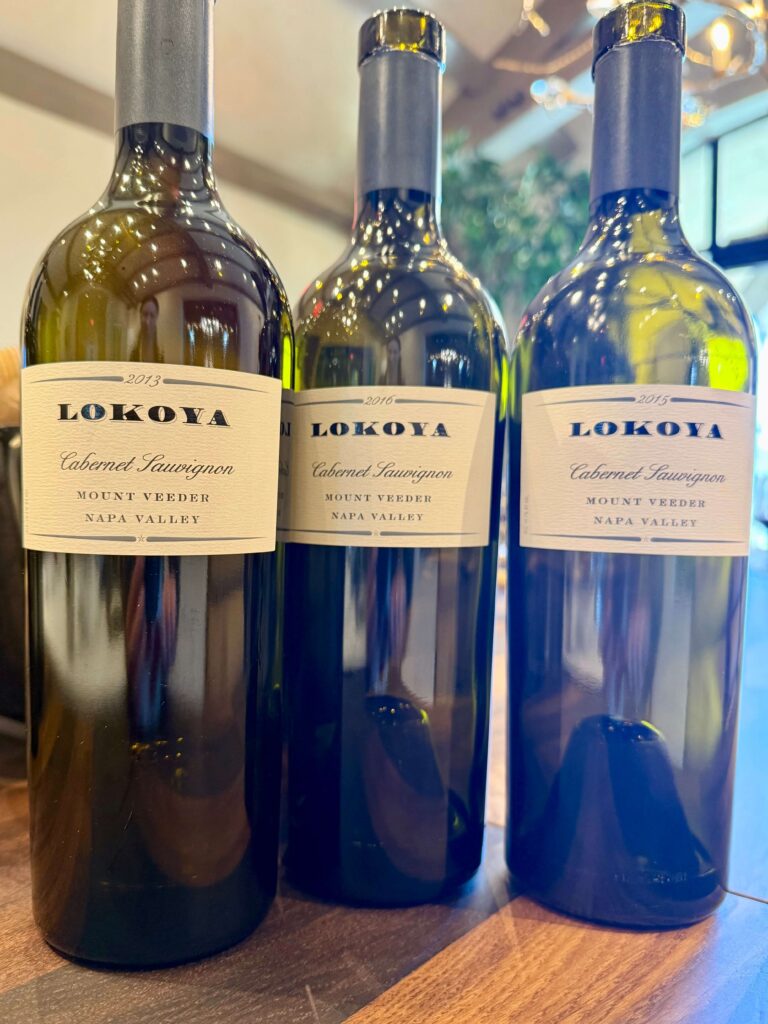
A short Mount Veeder vertical made his case for me. The 2013, one of Carpenter’s long-haul vintages, is only now swanning into maturity, with unsmoked cigars, sandalwood, dried herbs and iron ore giving way to mince pies, plum preserves, crème de cassis and espresso; the preserved black fruit and exotic spices explode on the palate, framed by velvety tannins, finishing long and mineral. The 2015 is the flamboyant one, waltzing out with evolving Indian spices, incense, tobacco and dried mint over prunes and warm cassis, its tannins already softened to an opulent finish. The 2016 prances with blueberry pie, blackcurrant preserves and Chinese five spice, plus potpourri, crushed rocks and dark chocolate—ripe and voluptuous, yet held in great tension by firm, fine-grained tannins, with beautiful purity and depth.
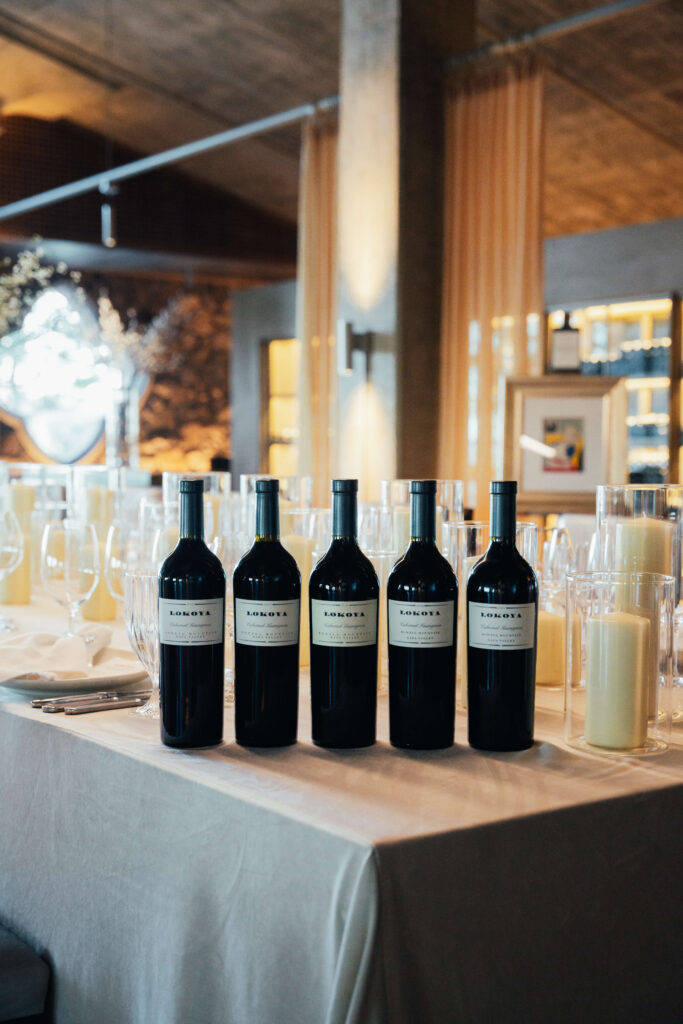
There is something elegantly radical about a winery that makes four wines the same way and asks you to listen for the differences. In a valley that has so often prized the winemaker’s signature above all else, Lokoya inverts the hierarchy: the cellar is the constant, and the mountain is the star. Carpenter, for his part, seems content to direct from the shadows, choosing the barrels as a director might choose the lighting, and letting his four leading ladies take the stage.
Winery Information
Region: USA, California, Napa Valley
Address: 3787 Spring Mountain Rd, St Helena, CA 94574
Open for Tastings: By Appointment Only
Major Grapes: Cabernet Sauvignon
Vineyard Size: 175 acres (approx)
Own Winery: Yes
DTC Mailing List: Yes
Vineyard Sustainability:
Year Established: 1995
Owner: Barbara Banke (Jackson Family Wines)
Winemaker: Christopher Carpenter
Website: https://www.lokoya.com/
Most Recent Reviews for this Winery
Published: November 2026