
Winery Story
Corison
Cathy Corison named her first estate vineyard Kronos, a name that reflects the thing she has spent her career making: wine as a record of time.
Kronos
This autumn, as the last bins roll across the crush pad of her Victorian-style barn on the St. Helena Highway, Cathy Corison is bringing in her fortieth vintage. Few Napa Valley careers have been so steadfastly unswayed by fashion. Through the decades when the valley chased ever-riper fruit, heavier oak and higher alcohol, Corison kept making the Cabernet Sauvignon she set out to make in 1987—powerful, yes, but elegant first.
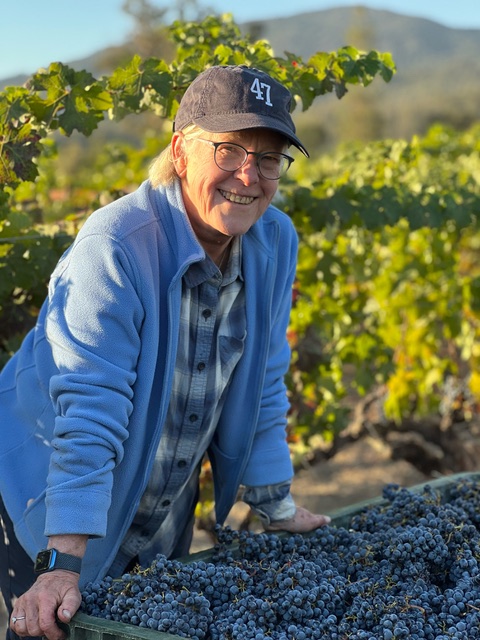
Cathy Corison
“Fashion comes, and fashion goes in wine, just like everything else,” she told me. “My Cabernet was fully formed stylistically in my mind before I started making it in 1987. Stubbornly, 40 years later, I’m still trying to do the same thing.”
Fashion has since come back around to the style Cathy Corison never left.
Corison’s path into wine began almost by accident. Studying biology at Pomona College, she signed up for a wine appreciation course on a whim and was struck less by the romance of the subject than by its science—the realization that a bottle of wine is the end product of a chain of living organisms working on one another, from vine to yeast to bacteria.
“Wine is a whole series of living systems,” she says. “It’s alchemy.”
She graduated in 1975 and found herself in Napa Valley two days later.
A master’s degree in enology at UC Davis followed, then stints at Freemark Abbey and Yverdon. It was at Chappellet, though, that she made her name, overseeing ten vintages as head winemaker on Pritchard Hill—no small thing for a young woman in a Napa cellar culture that was then overwhelmingly male. She is matter-of-fact about it.
“There were plenty of challenges, but I had a very supportive boss in Donn Chappellet and a great assistant winemaker in Phillip Titus, so it went fairly smoothly. By then I was pretty good at asserting myself.”
Chappellet taught her something more enduring than self-assertion. “I learned that I needed to make wine without compromise,” she says. “For example, that might mean that if I don’t have the budget to buy the new French oak barrels I need, I will make less wine.” It also clarified where her wine had to come from. “I had something in my mind I wanted to make, and I couldn’t make it in the mountains. I had to make it here.”
Here meant the benchlands, and in 1987 she began—in her own memorable phrasing—spending her money on grapes and barrels rather than cars and houses. There was no winery and no vineyard. She bought Cabernet from benchland growers, made the wine in borrowed cellar space, and kept the lights on by consulting. In founding Corison Winery, she became the first woman to be both winemaker and proprietor of her own label in the Napa Valley.
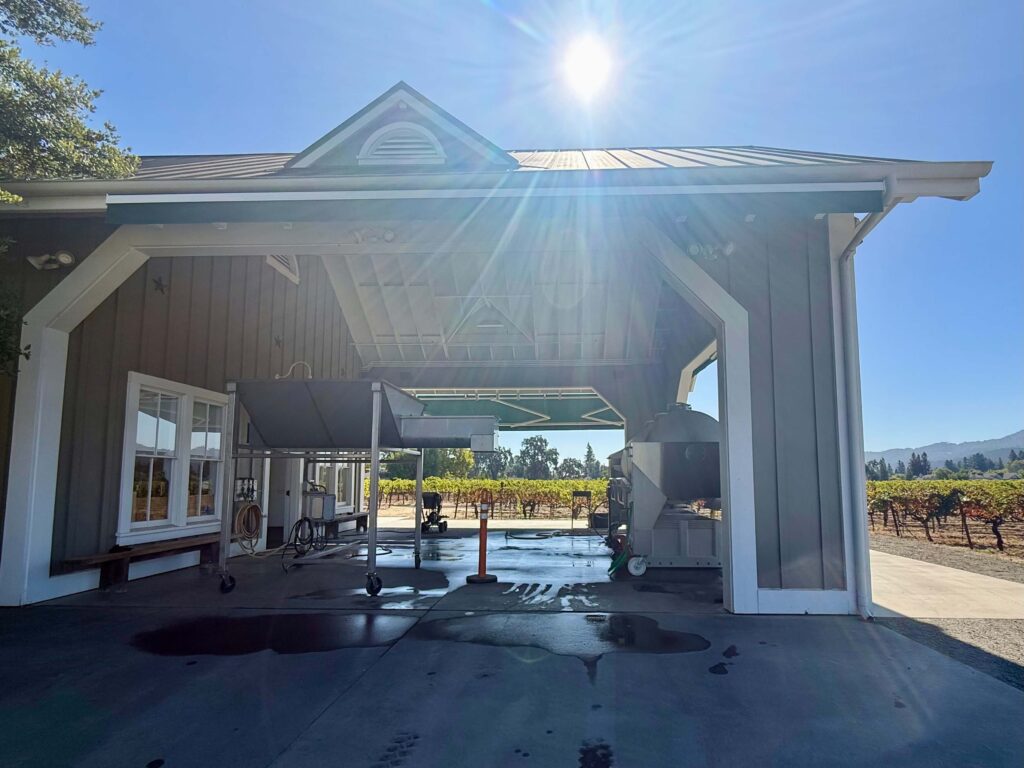
If Cathy is the voice of Corison, her husband William Martin has been its architect—in the literal sense. A Middlebury graduate in art and physics, he met Cathy in 1990, married her in 1992, and brought the winery its first computer; he still runs its accounting and IT. More consequentially, he went looking for land.
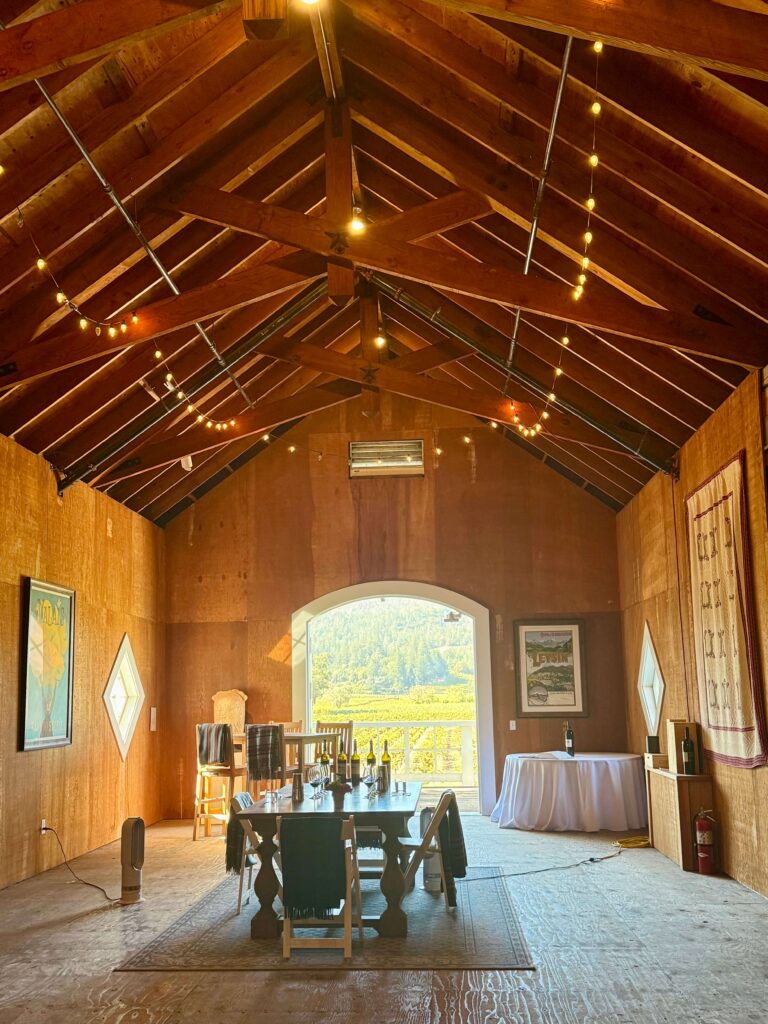
In 1995, the couple bought Kronos Vineyard, a parcel just south of St. Helena that had been farmed for more than a century, and made their first estate wine from it the following year. In 1999, they broke ground on the gabled, Victorian-inspired barn William designed, with Kronos wrapped around it on all four sides, and crushed their first grapes there that autumn. It remains a working farm building rather than a monument. That suits a woman who has never pretended to be a businesswoman first. “It was difficult for my business when my wine was unfashionable,” she admits, “but, to a fault, the business part of it all has never been my strong suit.” Production averages around 3,000 cases a year, and that is the plan. “I’ve stayed tiny for 40 years so that I can wrap myself around growing the grapes and making the wine.”
Everything at Corison begins with the alluvial benchland on the western side of the valley floor, between Rutherford and St. Helena. “This is classic Rutherford Bench,” Corison says of the ground most visitors would assume is level. “This is actually not flat.” The soils are well-drained, gravelly loams, and hot afternoons and cold nights preserve the natural acidity and deep color that give her wines their tension. “Here on the bench,” she says, “you get brightness and floral notes.”
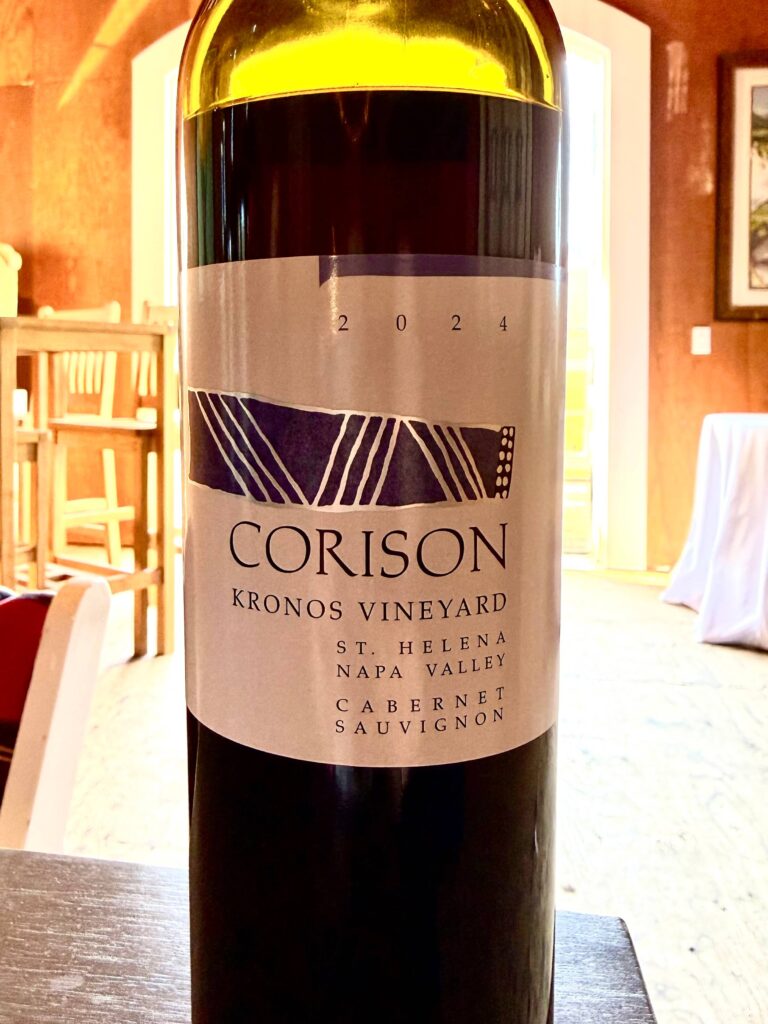
Kronos Vineyard was planted in 1971 on St. George rootstock—phylloxera-resistant, which spared these vines Napa’s 1990s replanting wave—Kronos is one of the last genuinely old Cabernet Sauvignon vineyards in the valley. “Kronos is a gravel pit,” Corison says flatly. The vines, now past fifty, yield a meager 1.25 tons per acre, and she speaks of them with unmistakable affection. “Those gnarly old ladies are wise—they’ve seen it all. Among other things, they sail through heat spikes with aplomb. I love the concentration they provide with moderate alcohol.” The wine, she insists, carries a signature. “There’s a viscosity about the Kronos that is distinctive. I could pick it out blind. There’s also perfume, with power and elegance.” She describes the vineyard’s name as where wine sits for her: between earth and sky, which is precisely where the Titans of myth were born.
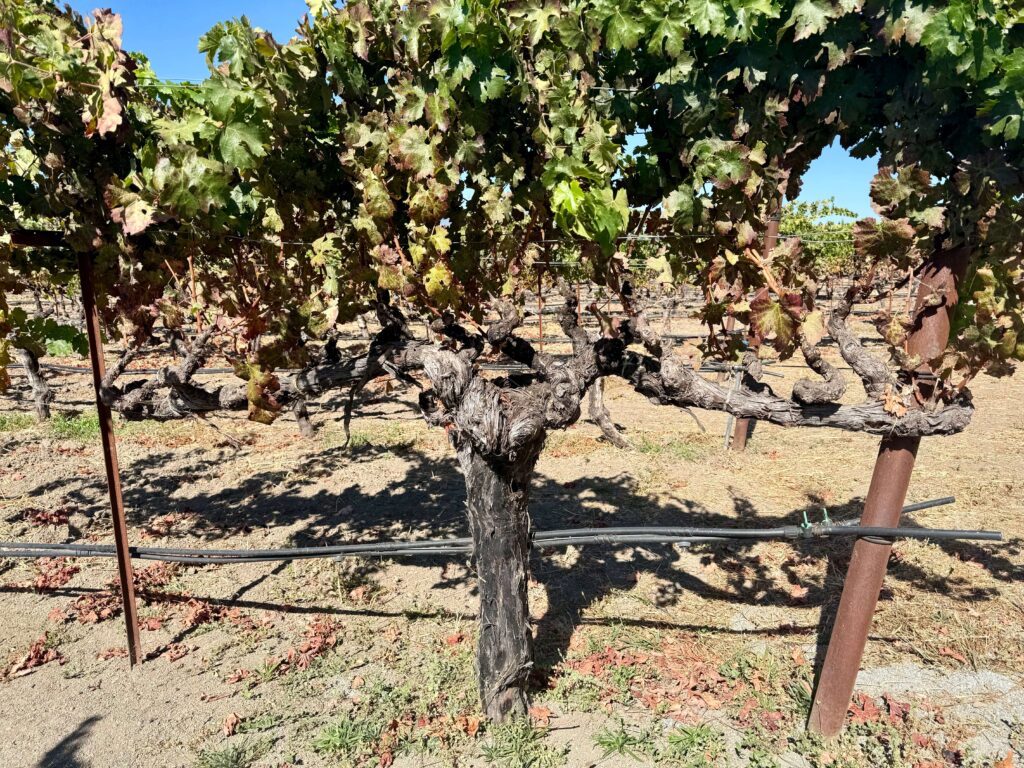
Sunbasket Vineyard, the second estate vineyard, carries an even deeper Napa lineage. It was planted in the early 1950s by André Tchelistcheff, Napa’s Russian-born “Maestro,” who christened it for the sunshine pooling in that corner of St. Helena. Very close to Kronos and with some 70% gravel, it supplied Corison for more than a quarter of a century. In 2015, the family bought it outright, converted it to organic farming, and in 2017 released the first Sunbasket Vineyard bottlings. “Though they are a stone’s throw apart, the wines are singular, speaking of those places,” Corison says. “The Sunbasket tends to be red- and blue-fruit driven, jumping out of the glass from an early age. Kronos, on the other hand, tends more toward black and blue fruits, tighter and even brooding in its youth. That said, they are both structured to be very long-lived, with terrific natural acidity and moderate alcohol.”
A leased vineyard adjacent to the estate rounds out the farming.
Corison has always framed her ambition as a seeming paradox. “I consider it my job to let the wines speak of time and place, looking to make Cabernet that is both powerful and elegant,” she says. “I think of my role as an interpreter, not a maker.”
Cabernet will make a powerful wine wherever it is grown; the interesting work happens at the intersection of power and finesse. Her touchstones lie well beyond Napa. “One of my first loves was Italy—Chianti Riserva,” she recalls. “I love wines with a life force—a vibration.”
The work starts in the vineyard, where she spends most of her year, and culminates in the decision that has defined her style through every era of Napa fashion: when to pick.
“Every year the list of the things I watch gets longer,” she says. “With one eye on the numbers, because they convert directly into the balance of the wine, I am tasting and smelling, waiting for any greenness to disappear and fruit flavors to blossom. I’m monitoring the lignification of the seeds and the ripening of the skins, which determine the quality of the tannins. I’m monitoring the status of the vines, as they are the engine that ripens the fruit.”
The upshot is that she picks early, capturing the full spectrum of Cabernet fruit rather than letting it slide toward jam.
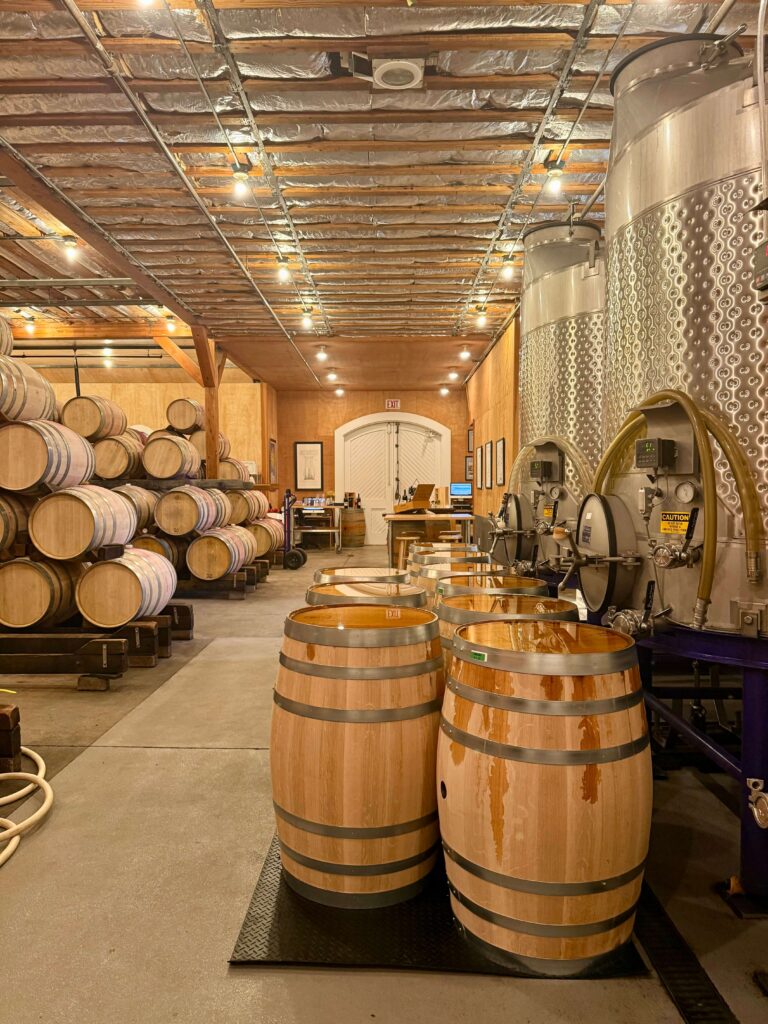
In the cellar, handling is gentle and traditional. The wines spend about twenty months in French oak barrels from several forests, chosen for complexity rather than overt flavor. And she is unsentimental at the blending table. “I have become ruthless at blending time,” she says. “Anything that doesn’t belong in the blend gets bulked out, even if it’s really good wine.” The wines bearing the Corison name are 100% Cabernet Sauvignon—no Merlot or Petit Verdot to round the edges—so the variety and the site have nowhere to hide.
The result is a style I would describe as quietly emphatic. Young Corison Cabernet shows juicy, vibrant fruit threaded with violets, olive, sage and spice, and the tannins have a fine, velvety grip rather than a rasp. These are wines that are genuinely enjoyable on release, yet they evolve with real grace over twenty or thirty years. The winery’s periodic library releases are among the most persuasive arguments anywhere for California Cabernet’s capacity to age.
The Cabernets carry the family name; the side projects carry names borrowed from myth and ancestry. Helios, after the Greek sun god, is a Cabernet Franc from Sunbasket—aromatic and plush, with the variety’s pencil-lead and violet signature over black plum and allspice. Corazón, the ancestral Spanish form of the Corison name, meaning “heart,” covers a handful of small lots: a bone-dry, Alsace-inspired Gewürztraminer, a barrel-fermented and totally dry Cabernet Sauvignon rosé and, at times, a Riesling. Tiny productions all, they speak of a palate shaped far beyond the valley. “I love the wines of the world,” Corison says, “and they inspire my winemaking to this day.”
For a long time, the question hanging over Corison was who comes next. Cathy and William’s daughters, Rose and Grace, had worked at the winery on and off since childhood, but both went elsewhere for college and careers—Rose to an engineering degree at Harvey Mudd, Grace to an acting degree at Syracuse and the restaurants of New York. Then, in 2020, both came home.
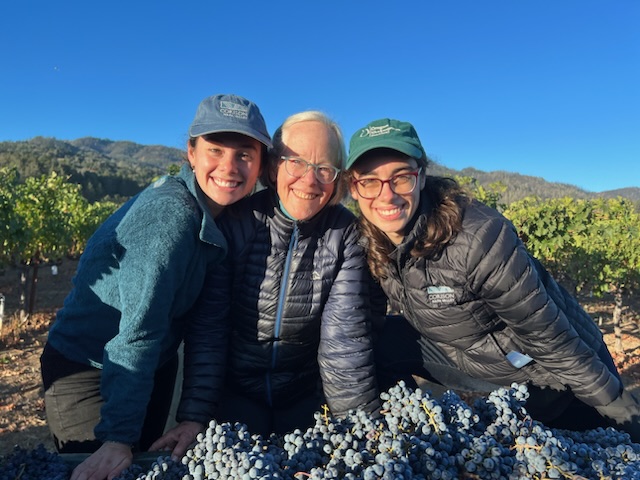
Grace, Cathy, and Rose Corison
Grace is now assistant winemaker, training to take the reins from her mother. She has been the driving force behind the estate’s sustainability work: CCOF organic certification for the vineyards and Napa Green certification for both vineyards and winery, recognized in November 2025 with the Golden Vines Sustainability Award. Rose works part time—bottling, harvest, bookkeeping, IT—while running a tutoring business and pursuing her own winemaking certificate.
Asked what worries her most about the valley’s future, Corison doesn’t reach for a list of threats. “As long as we continue to be farmers first,” she says, “all will be well.”
There is a temptation to cast her as a contrarian—the one who held out against the tide of ripeness. That is true as far as it goes, but it misses the point. Corison was never defining herself against anything. She simply found a piece of ground that tells a particular story, and she has spent forty years trying to get out of its way.
Winery Information
Region: USA, California, Napa Valley
Address: 987 St. Helena Highway Saint Helena, CA 94574
Open for Tastings: Yes
Major Grapes: Cabernet Franc, Cabernet Sauvignon
Vineyard Size: 19 acres
Own Winery: Yes
DTC Mailing List: Yes
Vineyard Sustainability: Organic
Year Established: 1987
Owner: Cathy Corison
Winemaker: The Corison Martin Family
Website: https://www.corison.com/
Most Recent Reviews for this Winery
Published: October 2026