
Winery Story
Château Haut-Bailly
Among the most spectacular estates of Bordeaux, Château Haut-Bailly has never relied on spectacle. It does not thunder like some of the Médoc first growths, nor does it cloak itself in the mystique of scarcity or flamboyant excess. Yet over the past two decades, Haut-Bailly has steadily become one of Bordeaux’s most intellectually satisfying wines: a château whose greatest strength may be its refusal to chase fashion at all. That restraint feels increasingly radical in modern Bordeaux.
The Art of Restraint
At a time when many estates seem trapped between escalating luxury branding and the pursuit of density, extraction, and immediate impact, Haut-Bailly continues to move in an entirely different direction. The wine has become more precise, more detailed, and arguably more profound over time, but never louder. The estate’s trajectory has not been built on reinvention so much as refinement and an almost obsessive pursuit of harmony — in the land it occupies and in the wine.
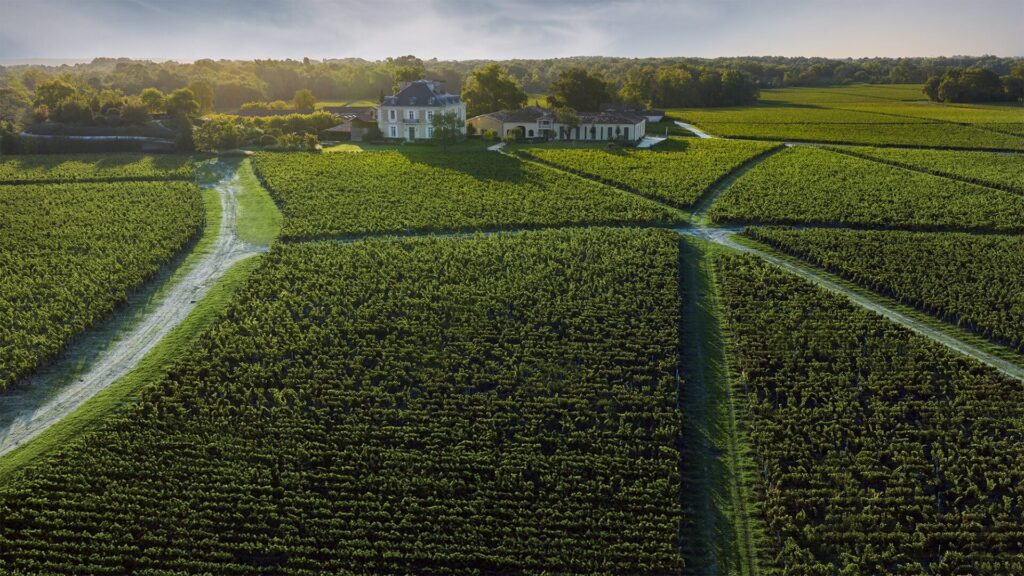
That philosophy runs through every layer of Haut-Bailly’s history. Viticulture on the site dates back at least to the 15th century, long before the estate acquired its modern identity. The vineyards that would become Haut-Bailly emerged formally in the 17th century under Firmin Le Bailly, a Parisian banker who recognized the potential of the deep gravel soils south of Bordeaux. Over the centuries, the estate rose steadily in stature before reaching a major turning point under Alcide Bellot des Minières in the late 19th century, when Haut-Bailly became one of the most admired wines of Graves.
But like much of Bordeaux, Haut-Bailly’s story has also been one of collapse and recovery. After Bellot des Minières’ death in 1906, the estate drifted through instability, experimental cellar practices, economic hardship, and the long shadow of phylloxera. By the time Belgian wine merchant Daniel Sanders purchased the château in 1955, Haut-Bailly required nothing short of rescue.
The Sanders family did not restore the estate through dramatic gestures. They rebuilt it slowly. Parcel by parcel. Vintage by vintage. Vineyard by vineyard.
That patient philosophy still defines the estate today under the leadership of Véronique Sanders, granddaughter of Daniel Sanders and one of the most respected figures in Bordeaux. If Haut-Bailly now feels unusually coherent — architecturally, stylistically, philosophically — it is largely because of her long stewardship and clarity of vision.
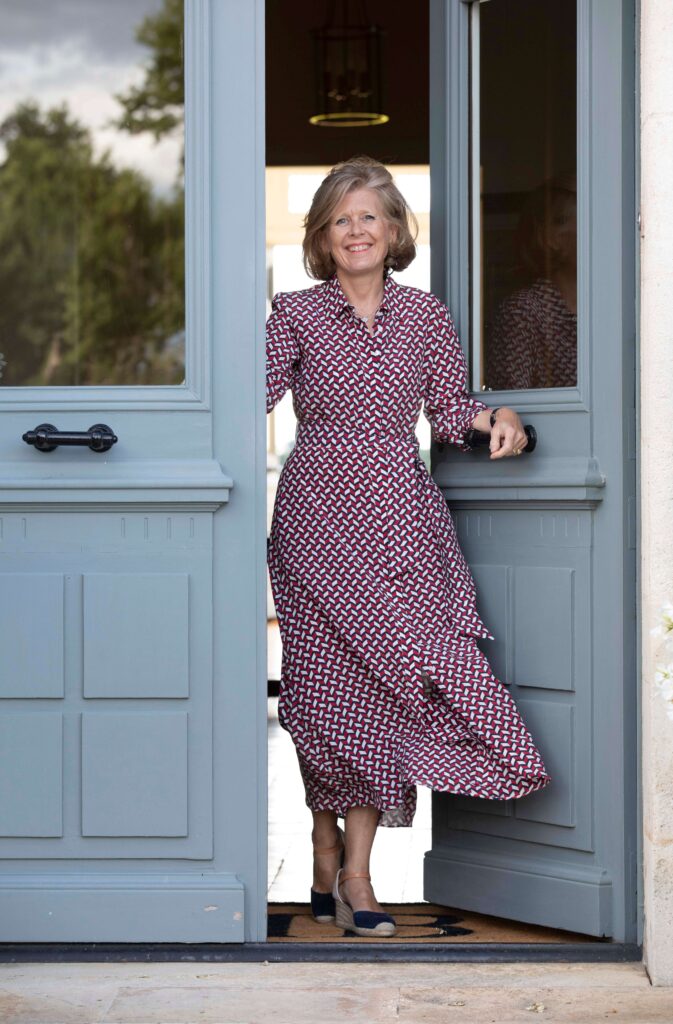
Véronique Sanders (Photo credit: George Uferas)
“What has changed the most is the rapid pace of change itself and the increasing complexity of many aspects of our work,” Sanders says. “Over the past twenty years, viticulture, vinification, distribution, and communication have all undergone profound transformations.”
That statement could apply to Bordeaux as a whole. Climate change, shifting markets, changing consumer expectations, technological evolution, and rising financial pressures have fundamentally altered the region over the last two decades. Yet Haut-Bailly’s response has been remarkably measured.
“At Haut-Bailly,” Sanders explains, “we have never wanted to follow fashion; we have always tried to remain faithful to our style. Haut-Bailly is about balance, elegance, depth, and emotion, never excess.”
That rejection of excess is central to understanding the château.
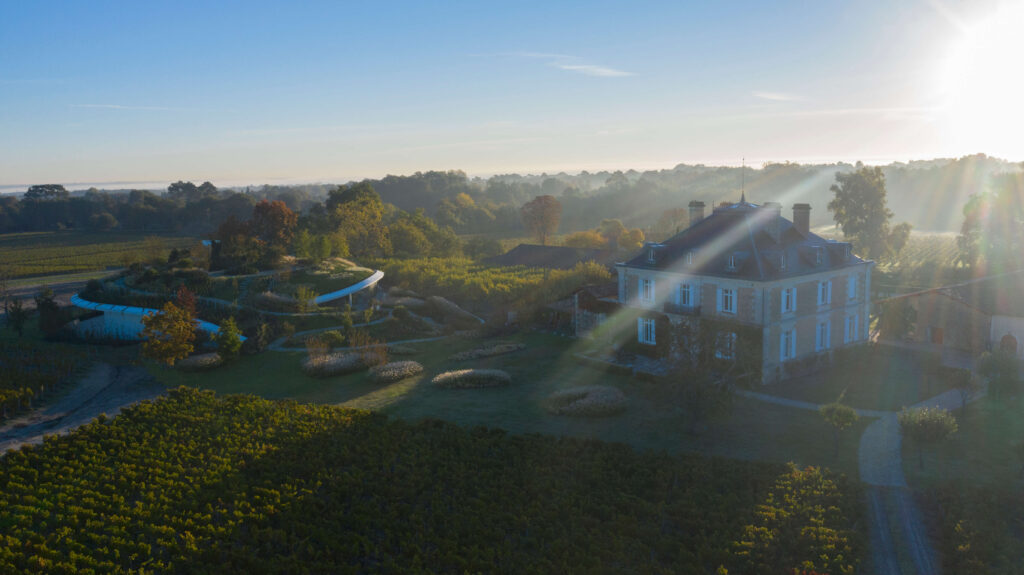
Photo Credit: Florent Larronde
In many ways, Haut-Bailly may now represent the clearest modern expression of classical Graves. Not classical in the sense of austerity or rigid tradition, but classical in proportion. The wines routinely possess enormous concentration, yet they rarely feel heavy. The tannins can be abundant, but they arrive wrapped in velvet. Alcohol seldom dominates. Oak remains integrated rather than performative. Even in warm vintages, the wines retain shape and cadence.
“My grandfather Jean Sanders often used the expression ‘rien de trop,’ meaning ‘nothing in excess,’” Sanders says. “I think it remains one of the most accurate definitions of Haut-Bailly.”
That philosophy has become even more relevant in the face of climate change.
The modern era has forced estates across the region into difficult choices. Earlier harvests. Canopy adjustments. Rootstock selection. Soil management. Water retention. Precision viticulture. At many top châteaux, the challenge is no longer simply achieving ripeness, but preserving freshness and identity within increasingly solar vintages.
At Haut-Bailly, the response has been less about imposing a new style than refining precision.
“The core identity has not changed,” Sanders says. “What has evolved is the level of precision with which we can express that identity, especially in terms of purity, definition, and textural finesse.”
That refinement is visible both in the vineyard and in the château’s dramatic new winery — one of the most architecturally ambitious projects undertaken in Bordeaux in recent years.
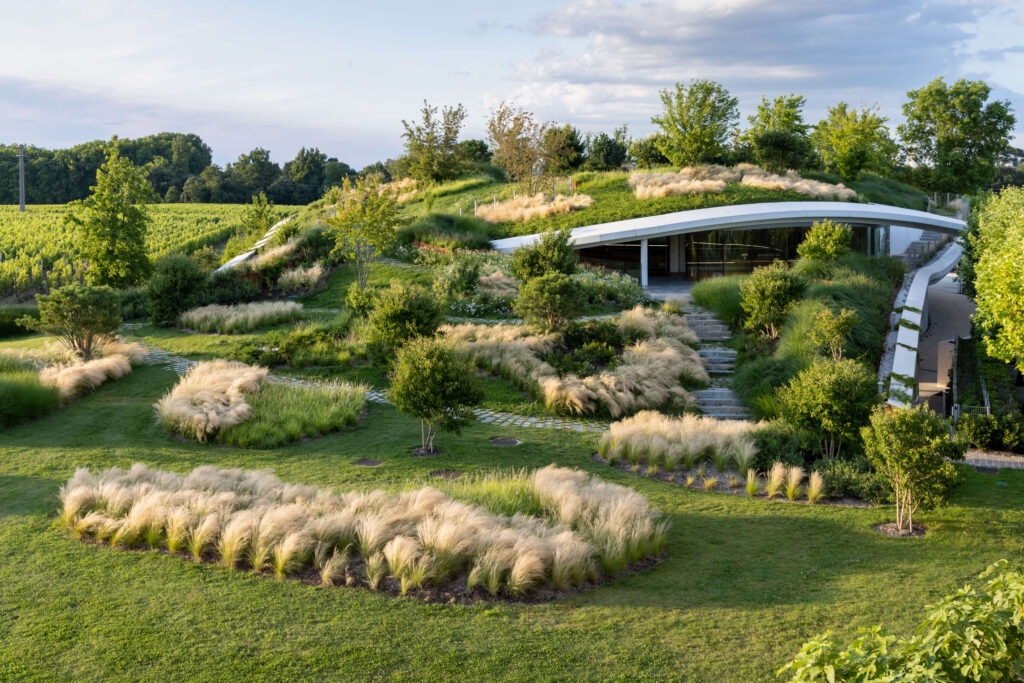
The Exterior of Haut-Bailly’s Winery (Photo credit Iwan Baan)
Many modern winery projects in Bordeaux can feel strangely disconnected from the wines themselves: monuments to wealth or branding disguised as production facilities. Haut-Bailly’s new cellar is different. It is undeniably ambitious — a vast circular underground winery topped by a 2,400-square-meter hanging garden and covered by a massive unsupported dome — yet it somehow manages to embody the same restraint as the wine.
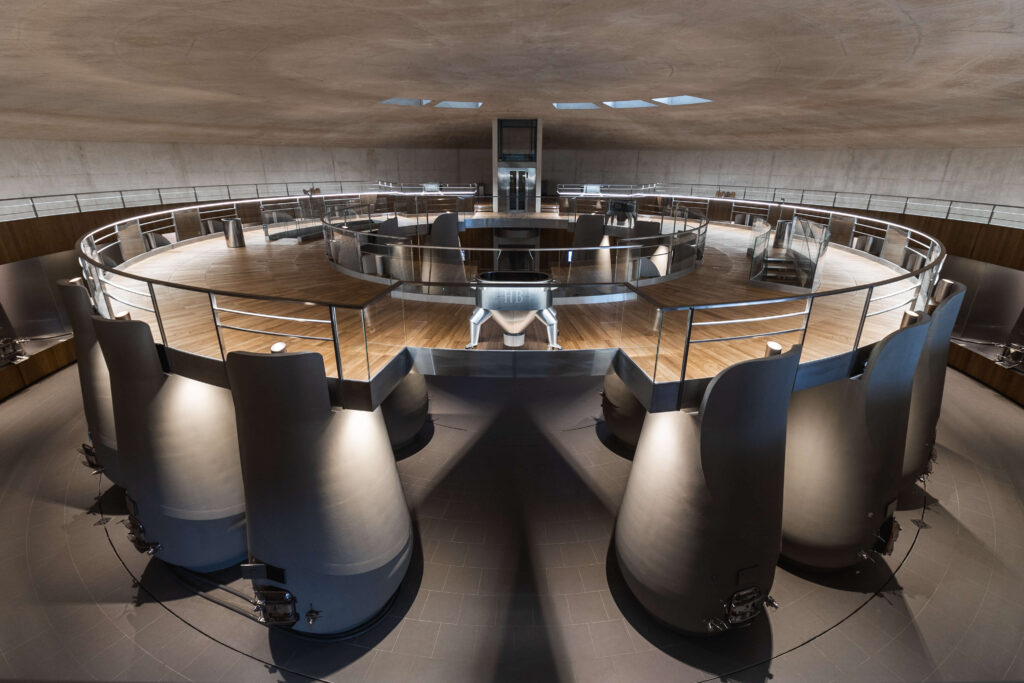
The New Cellar at Château Haut-Bailly (Photo credit: Florent Larronde)
“We had to build a tool of great technical ambition at the very heart of our historic estate, without altering its soul,” Sanders explains.
Perhaps the most revealing detail is that the project was designed without uprooting a single vine.
That decision says everything about Haut-Bailly’s priorities. In an era when many luxury projects are designed to be seen, Haut-Bailly’s was designed not to disturb.
“The building is largely underground,” Sanders says. “Two-thirds of it are hidden so that the cellar does not dominate the landscape; it is a prolongation of it.”
The same philosophy extends into the wines themselves. Haut-Bailly does not seek domination. It seeks continuity.
That continuity is perhaps most vividly embodied by the estate’s remarkable parcel of century-old vines, some planted at the turn of the 20th century. These mixed plantings — including Cabernet Sauvignon, Merlot, Cabernet Franc, Carmenère, Malbec, and Petit Verdot — are increasingly rare living archives of pre-modern Bordeaux viticulture.
In a region increasingly shaped by homogenization and technical optimization, those vines are reminders that Bordeaux once embraced complexity and variation rather than uniformity.
And Haut-Bailly itself increasingly feels like a counterargument to the idea that greatness requires force.
Bordeaux has conditioned generations of drinkers to equate longevity with severity — the notion that truly great wines must first punish before eventually rewarding patience decades later. Haut-Bailly has always challenged that assumption.
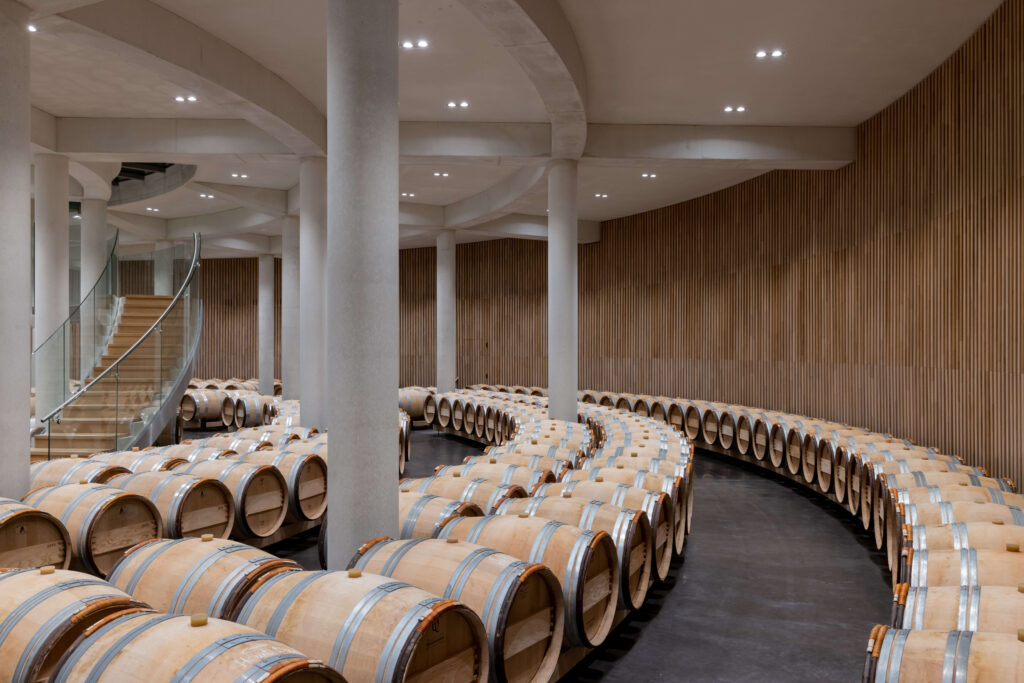
Photo Credit: Iwan Baan
“Haut-Bailly has a remarkable ability to age, of course, but it is not built on austerity,” Sanders says. “Its structure is there, but it is wrapped in silk.”
That may be the château’s greatest achievement today. The wines increasingly deliver both immediate sensuality and profound longevity without sacrificing either. They are approachable without being simple, ageworthy without becoming hard or monolithic.
“At Haut-Bailly, the quieter years often have a special grace,” she says. “They may not shout, but they speak very clearly and sometimes very beautifully of the place.”
That observation cuts to the heart of what makes Haut-Bailly compelling. The château does not merely survive variation; it seems to reveal itself through it. The wines are not designed to overwhelm the vintage — they interpret it. In weaker years, that can produce wines of intellectually captivating subtlety. In stronger years, it prevents excess.
That balancing act has become increasingly difficult in Bordeaux. The region’s economics often reward visibility, power, and immediate critical impact. Yet Haut-Bailly continues to resist the gravitational pull toward exaggeration. Instead, it is a château whose confidence allows it to speak softly with singular wines of unwavering restraint.
Winery Information
Region: France, Bordeaux, Pessac-Léognan
Address: 48 rue de la Liberté, 33850 Léognan, France
Open for Tastings: By Appointment Only
Major Grapes: Cabernet Franc, Cabernet Sauvignon, Merlot, Petit Verdot
Vineyard Size: 75 acres
Own Winery: Yes
DTC Mailing List: No
Vineyard Sustainability: NA
Year Established: 1630
Owner: The Wilmers Family
Winemaker: Gabriel Vialard (Technical Director) alongside Véronique Sanders (Managing Director)
Website: https://www.haut-bailly.com/
Most Recent Reviews for this Winery
Published: May 2026