
Winery Story
Château Léoville Barton
In 1826, an Irish merchant's grandson named Hugh Barton purchased a parcel of the great Léoville estate in Saint-Julien, five years after buying neighboring Château Langoa. Two centuries later, the same family is still there — and still, remarkably, making wine the same way: with balance, restraint, and an almost stubborn refusal to chase fashion.
Drinkability
“We are looking for drinkability,” Damien Barton-Sartorius told me when I visited the estate a few years ago. “In the past, people were hunting for big points but forgetting that you’re supposed to be drinking these wines. At dinner, we want to be the first bottle that’s empty, not the wow wine.”
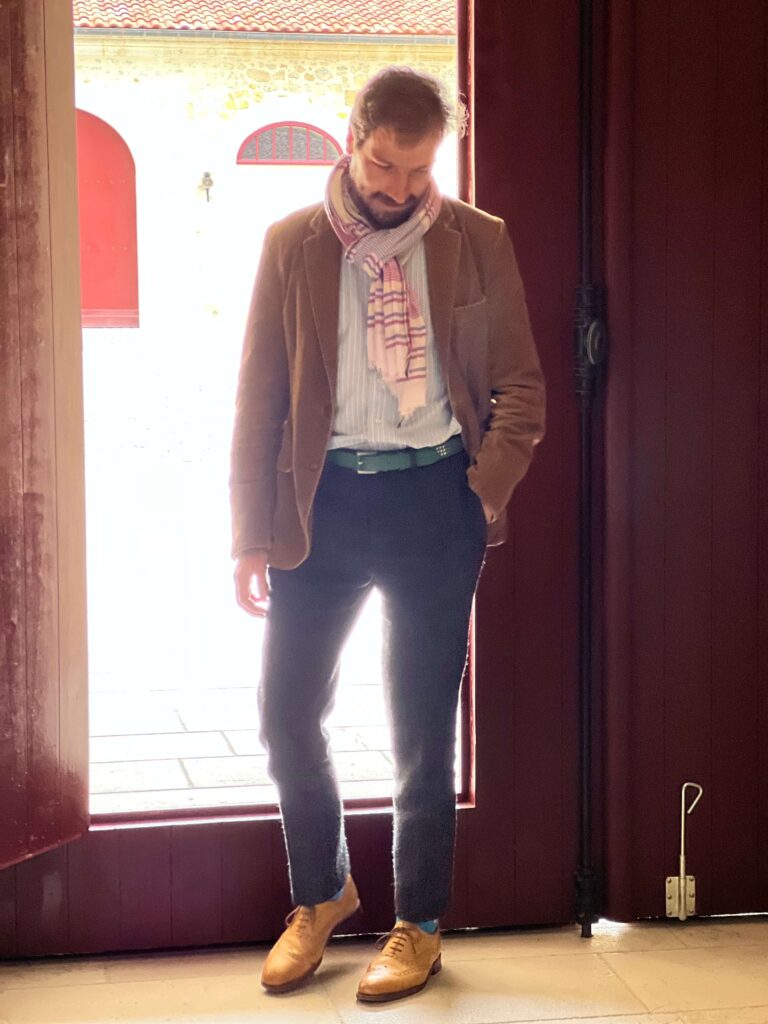
Damien Barton-Sartorius
Drinkability — an essential yet less discussed factor in our vinous decisions — remains the best single word for the style of Léoville Barton. We talk a great deal about richness, power, and scores, yet we continually reach for the bottles that best quench our thirsts. Marketers, meanwhile, have seized “drinkability” to describe simple wines designed for early consumption, so applying the word to a serious, long-aging classified growth can carry a damning-with-faint-praise effect. It shouldn’t.
Damien’s mother, Lilian Barton Sartorius, the ninth generation of Bartons at Léoville, put it this way: “We are looking for drinkability. The first thing we want is balance. Equilibrium. There was a famous stage when people wanted to leave their fruit on the vine longer. A journalist once said to my father, ‘Your neighbors want to know why you’re picking so early.’ He said, ‘You should ask them why they are picking so late.'”
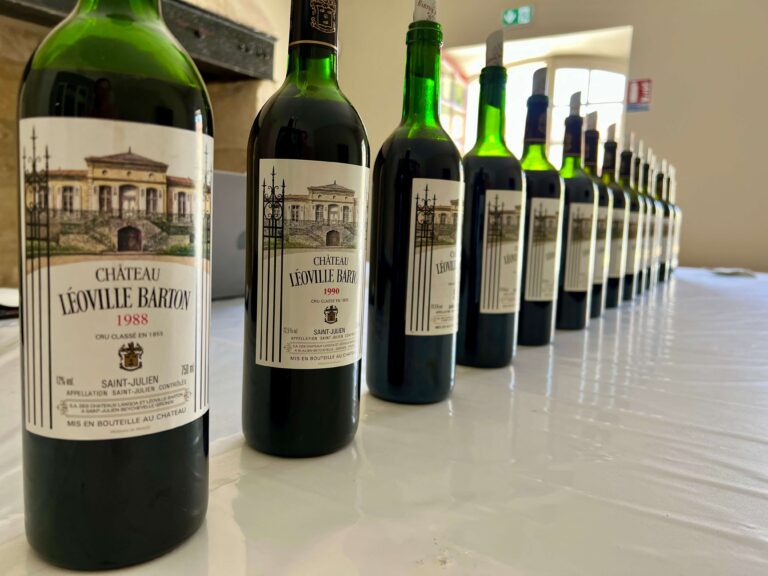
Her father was, of course, Anthony Barton (1930–2022), the “gentleman of the Médoc,” who took charge of the family properties in 1983 and, through steady investment in the cellars and vineyards and an unwavering commitment to classically proportioned claret, restored the estate to the front rank of Saint-Julien. Decanter named him its Man of the Year in 2007. His early-picking retort, delivered in the era when hang time and extraction were the fashion, now reads as prophecy: as Bordeaux warms and the pendulum swings back toward freshness, the wines Anthony championed look less old-fashioned than ahead of their time.
The Barton story begins a century before the Léoville purchase. Thomas Barton left Ireland for Bordeaux in the early eighteenth century and built a thriving négociant business, but never bought vineyard land — under pre-Revolutionary law, property owned by a foreigner reverted to the French crown upon his death. It fell to his grandson Hugh, operating in the changed legal landscape after the Revolution, to put down roots: Château Langoa in 1821, then a portion of the vast Léoville domaine in 1826. As Lilian likes to say, Langoa was the result of real determination, while Léoville almost happened by chance.
Chance served the family well. In the 1855 Classification, Léoville Barton was ranked a Second Growth and Langoa Barton a Third — and because Hugh had bought only vineyards, with no winery attached, both wines have always been made under the same roof at Langoa. To this day, Léoville Barton has no château building of its own; the elegant chartreuse pictured on its label is, in fact, Langoa. Two classified growths made side by side in one cellar remains a Médoc curiosity, and a charming one.
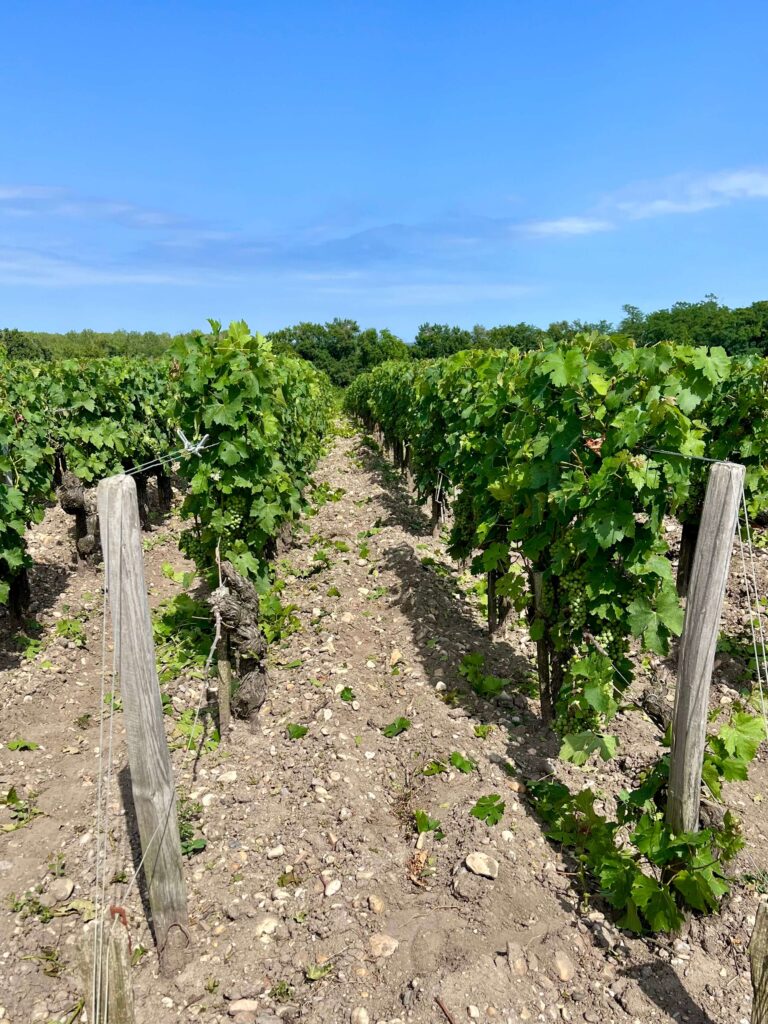
Vines at Léoville Barton in July, after leaf trimming
The family’s continuity through wars, phylloxera, and the lean mid-century decades is its own achievement. Lilian recalls her grandparents’ era, when the châteaux were in disrepair and new barrels were bought only when there was money — and buckets were deployed at Langoa when it rained. Anthony’s stewardship reversed those fortunes, and in 2009, Lilian formally took over. Today, the tenth generation is fully embedded: Damien directs the commercial side and increasingly the estate’s overall strategy, while his sister Mélanie — the first trained oenologist in the family’s three-hundred-year history — oversees the technical side, having cut her teeth turning around Château Mauvesin Barton, the Moulis property the family acquired in 2011.
Terroir
Saint-Julien is a small appellation — some 900 hectares and only 18 producers — but its deep Garonne gravels produce what many consider the most complete expression of Left Bank Cabernet: Pauillac’s structure married to Margaux’s perfume. Within the commune, the Barton holdings straddle its two great gravel plateaus. Léoville Barton’s roughly 50 hectares lie principally on the northern plateau toward Pauillac, where the gravel is deep, poor, well drained, and laced with iron — soil that yields austere, linear, supremely elegant Cabernet Sauvignon. Langoa’s vines sit on the Beychevelle plateau to the south, where a little more clay in the soil gives fleshier, more voluptuous wine. Austere Léoville, sensual Langoa: two siblings, one address.
“The vineyards of Léoville and Langoa have not changed much since the 1855 Classification,” Damien told me as we toured the parcels in his beat-up 1970s Land Rover — a vehicle that contributes considerably to the feeling of timelessness about the place. “A small parcel was sold by Anthony, and there were a few plot exchanges, but it’s mainly the same.”
The plantings today run to roughly three-quarters Cabernet Sauvignon, with around 20 percent Merlot and a small balance of Cabernet Franc, from vines averaging three decades of age. But the land time forgot is quietly innovating. On that same vineyard tour, we came across a worker trimming the canopy with a pair of machetes. “This is a new method we’ve developed to prevent mildew without needing to resort to strong synthetic chemicals,” Damien explained, hopping out of the Land Rover. “We thin using these homemade machetes. This is all done by hand, focusing on the upper part of the vines… This method significantly lessens the need for spraying by reducing opportunities for contamination. In Bordeaux, you always need to be ahead of the mildew!”
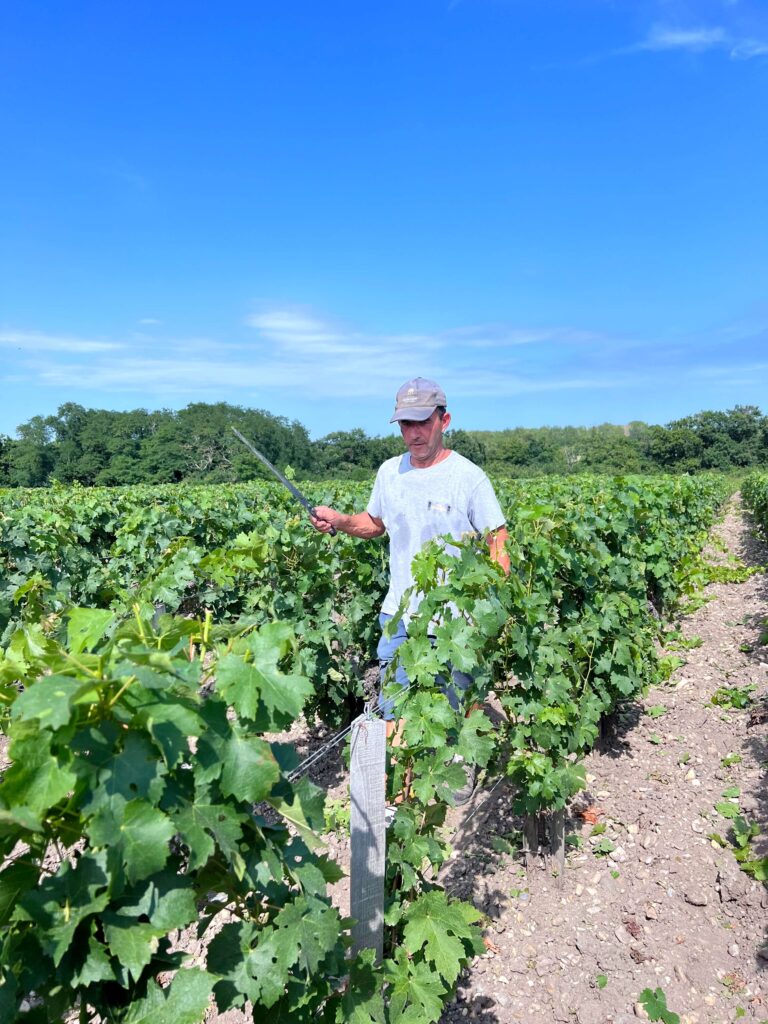
A worker at Léoville Barton trimming the canopy with a pair of machetes
That hands-on ethos runs through the whole estate. A substantial portion of the vineyard is farmed fully organically, herbicides were abandoned years ago, and pheromone-based pest confusion is now used commune-wide — “it’s always easy to find a consensus,” Damien notes, in an appellation of just 18 growers. Hedgerows have been planted between the creeks and the vines to keep spray drift out of the waterways. And in a region where nearly every plantable square meter carries AOC value, the Bartons maintain some 80 hectares of forest and meadow in Saint-Julien — the only forest in the appellation, kept as habitat rather than converted to vines. Drinkability, one begins to realize, has a broader meaning here: a definition that incorporates sustainable production and social responsibility.
Winemaking
The wines are made as they long have been — hand-harvested fruit, fermentation in temperature-controlled wooden vats, roughly eighteen months in barrel with 50 to 60 percent new French oak, egg-white fining — but the tools have been sharpened. A new cuverie, completed in time for the 2021 vintage, replaced the old battery of eighteen 200-hectoliter vats with a graduated range: ten of 200 hectoliters, four of 150, and a collection of smaller 120- and 80-hectoliter vessels.
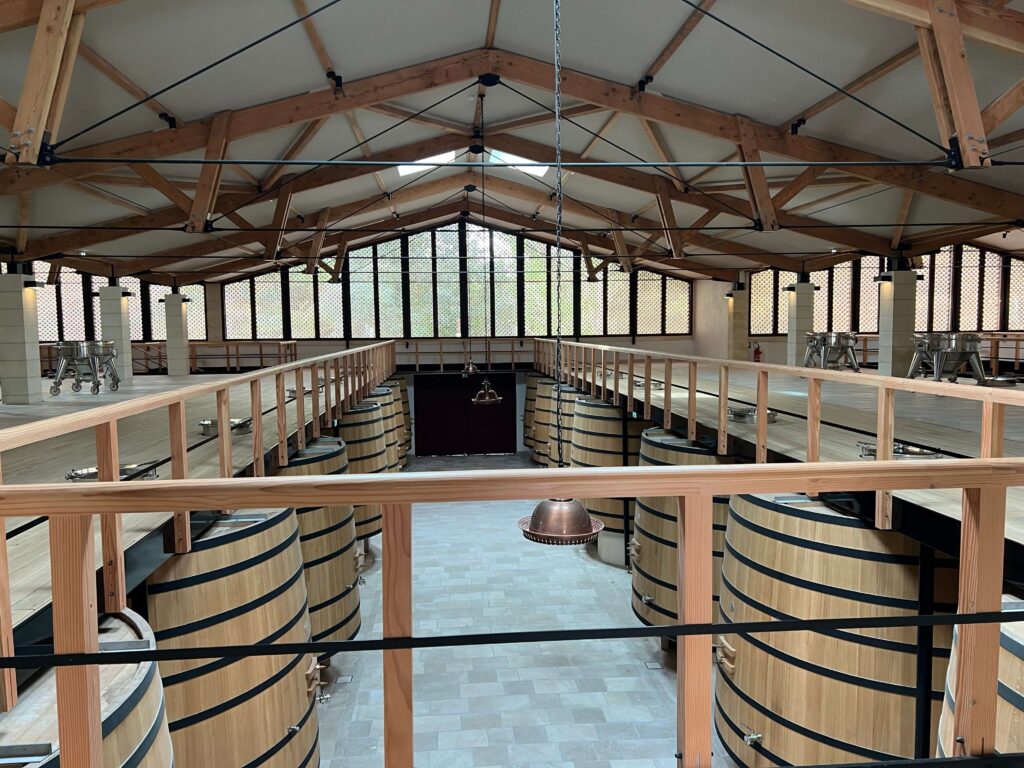
“It’s a real revolution!” Damien said when he showed me through it. “With our new winery, we are now able to separate the plots… The smaller vats are useful for putting the difficult plots aside. We also have so much more precision with the press, which is important since we tend to use a lot of press juice.”
Characteristically, the family kept the project sober — no signature architect, no visitor-center bling — because the point was precision, not marketing. And precision here serves restraint. Extraction has always been gentle at Léoville Barton, a discipline that pays its greatest dividends in hot years. “Consider the hot vintage of 2003,” Lilian told me. “Many of the Bordeaux wines from that vintage have gone downhill, whereas our wines remain very drinkable. We’ve never looked for too much extraction. We are very gentle with pumping over. In 2022, there was hardly any pumping over and no délestage.”
Recent Vintages
That gentle hand has carried the estate gracefully through a run of warm vintages. The 2022 wears the heat of the year with unexpected poise; the 2023 is tight-knit, perfumed, and energetic, one of the wines of the vintage in Saint-Julien. The 2024, from a far more challenging season, is a classically proportioned, mid-weight claret that should drink beautifully at ten years. And the 2025, offered en primeur this spring from tiny yields of around 22 hectoliters per hectare, is bright, earthy, and refined, offering compelling tension and impressive persistence.
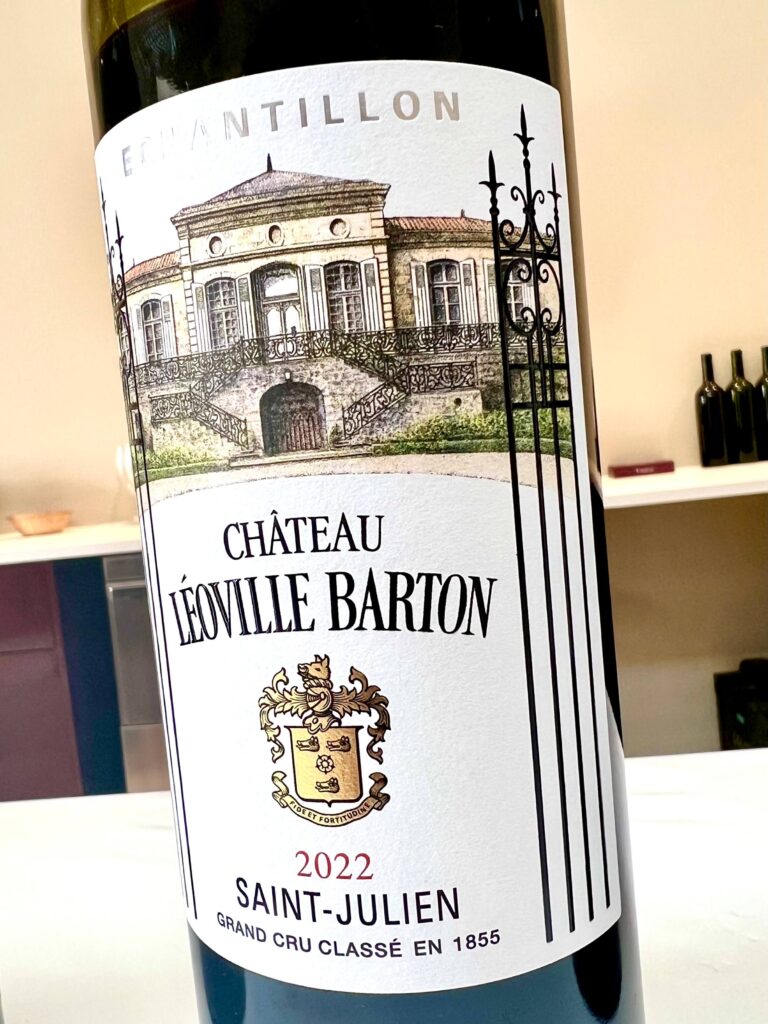
Just as telling is how the wine is priced. Léoville Barton’s long tradition of fair release pricing — an Anthony Barton signature — endures at a moment when Bordeaux can least afford arrogance. Global wine consumption is declining, the en primeur system is under strain, and parts of the wider Bordeaux vineyard are in genuine crisis. Damien speaks candidly about all of it, and about the estate’s responsibilities to its employees and its neighbors; there is, as he sees it, no room for complacency at the start of a third century. The consumer, he points out, always comes back to value for money — and few wines in the Médoc deliver it as reliably as this one.
Winery Information
Region: France, Bordeaux, Saint-Julien
Address: 33250 Saint-Julien-Beychevelle, France
Open for Tastings: For Professionals Only
Major Grapes: Cabernet Sauvignon, Merlot
Vineyard Size: 124 acres
Own Winery: Yes
DTC Mailing List: No
Vineyard Sustainability: NA
Year Established: 1826
Owner: The Barton-Sartorius Family
Winemaker: Mélanie and Damien Barton-Sartorius
Website: https://www.leoville-barton.com/en/
Most Recent Reviews for this Winery
Published: July 2026