
Winery Story
Château La Gaffelière
One of the best buried-treasure stories in Saint-Émilion begins on a winter morning in 1969. Léo de Malet Roquefort had gone out to plant a small, fallow plot in the middle of his vineyard in the Moulin du Palat section. His initial digging uncovered fragments of an ancient mosaic. He stopped and, to his credit, called the regional antiquities service rather than a bulldozer driver. Archaeologists uncovered a mosaic-paved room the same day. Excavations through 1987 revealed a substantial Gallo-Roman residence from the fourth and fifth centuries, with part of it under the road and neighboring vineyards. The mosaic ensemble is considered without parallel in the Gironde, and the site has since been reburied for its own protection.
The Palace Under the Vines
The property’s Roman origins were suggested by the placename for sixteen centuries: Le Palat, from palatium, the palace. Ausonius, a consul, tutor to an emperor, and poet, owned a Bordeaux vineyard during this period. The château on the hill above La Gaffelière is named after him: Ausone. The Malet Roqueforts believe the mosaics floored his rooms, though the connection is difficult to prove. What is not in doubt is that a wealthy Roman lived very well on this slope and that vines have been planted here ever since.
However, the estate’s own name comes from the opposite end of the social scale. It descends from gaffet, the old word for a leper and for the clapper-stick he carried, and records a medieval hospital for the sick that stood on this ground.
The Modern Era
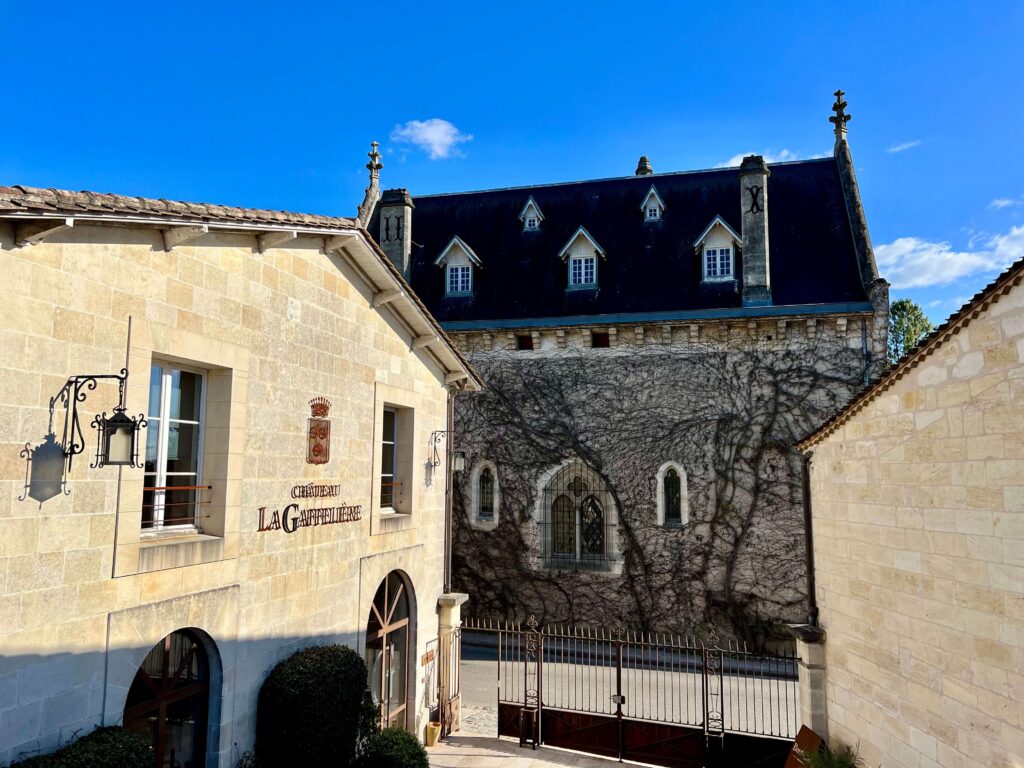
Château La Gaffelière’s modern chapter began in 1705, when Louis II de Malet Roquefort married Isabeau de Bonneau de Fonroque, bringing the property into the family. It has remained in the family ever since. Nine generations later, the Malet Roqueforts are the longest continuously established winegrowing family in Saint-Émilion.
The nineteenth century, as in Bordeaux, was largely a story of subdivision. Neighboring holdings that had once belonged to the same broad estate went their own way; one became Canon-la-Gaffelière. Jean-Léo de Malet Roquefort bought the vineyard in 1843 and took full ownership in 1862; later generations both sold and bought, with Fonroque going in 1886. For most of the twentieth century, the wine was sold as Gaffelière-Naudes, and the suffix was dropped in the 1960s.
When the Saint-Émilion classification was created in 1955, La Gaffelière was placed among the Premiers Grands Crus Classés B. Léo de Malet Roquefort, who inherited the property in 1958 and made his first harvest the following year, served as one of its custodians for six decades. The 2018 vintage was his sixtieth vintage, commemorated by a reissue of the 1959 label.
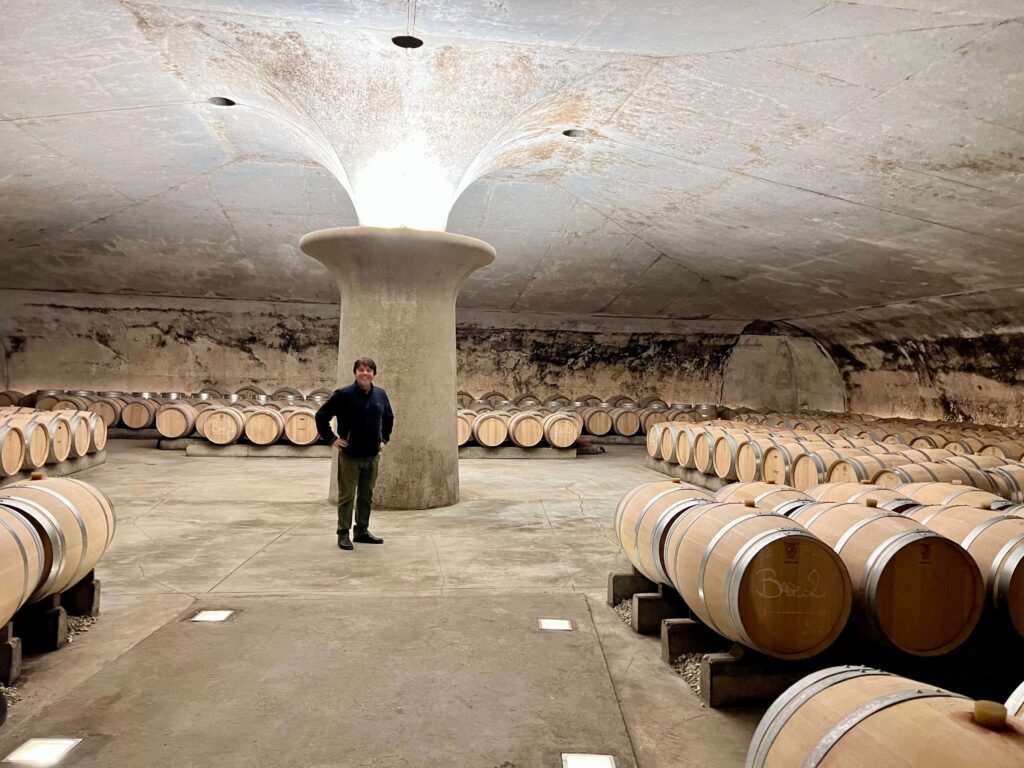
The quality over that period was something of a rollercoaster. The middle decades were patchy, and older bottles from the 1970s and 1980s rarely matched the reputation of what came before. The recovery began in 1990, with a subterranean concrete barrel cellar designed by Philippe Mazières — an unusual building for Saint-Émilion at the time — and accelerated once the next generation arrived.
Alexandre de Malet Roquefort
“I returned to Saint-Émilion in 2001, and in 2011 I became 100% part of the family business,” Alexandre de Malet Roquefort told me. “In 2001, we started replanting. In 2004, Stéphane Derenoncourt began consulting here.” Parcel restructuring and significant capital investment followed. In 2013, the vat room was rebuilt from the ground up by Olivier Chadebost, preserving its stone walls and timber frame around twenty temperature-controlled stainless-steel tanks and an optical sorter feeding them. In late 2014, the family added thirteen neighboring hectares and pulled three of their own for replanting.
The Terroir
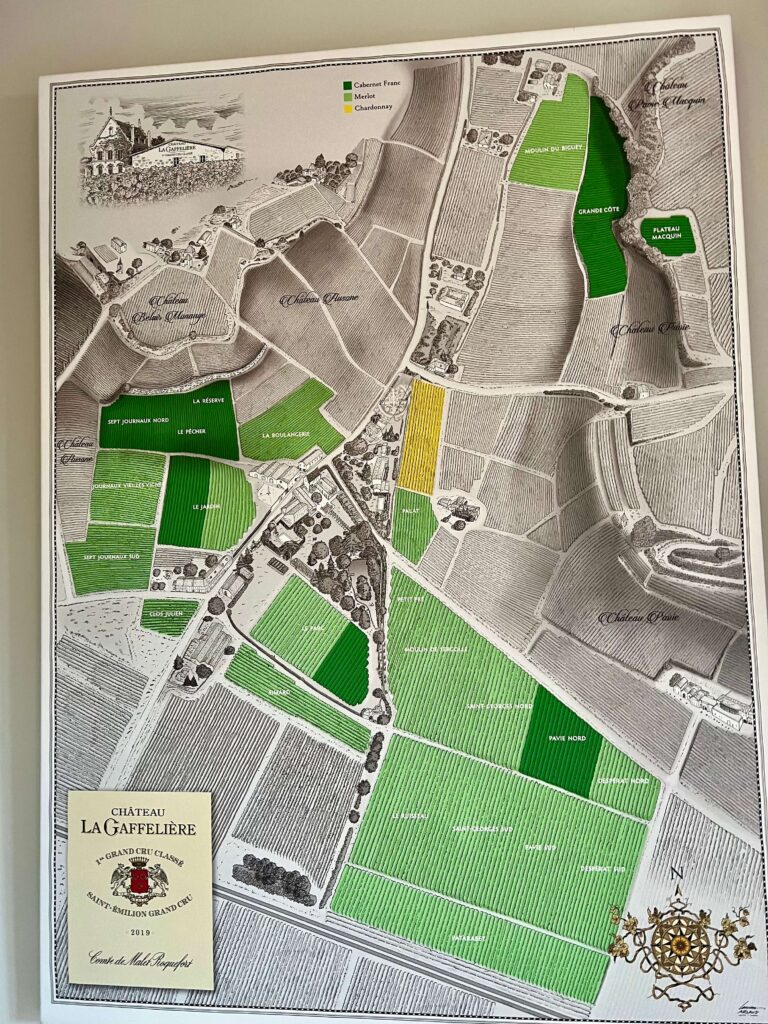
The vineyard that produces the grand vin spans twenty-two hectares, all south-facing, and is one of the rare Saint-Émilion holdings that lets you walk the appellation’s entire geological gamut in a single morning. At the top, plots sit on the limestone plateau, among the commune’s highest and most celebrated ground. Below, the côte falls away into clay over limestone — the classic slope soils that give Merlot here its combination of flesh and tension. At the bottom, the pied de côte turns siliceous and sandier, warmer and earlier-ripening, giving perfume and immediate charm rather than structure.
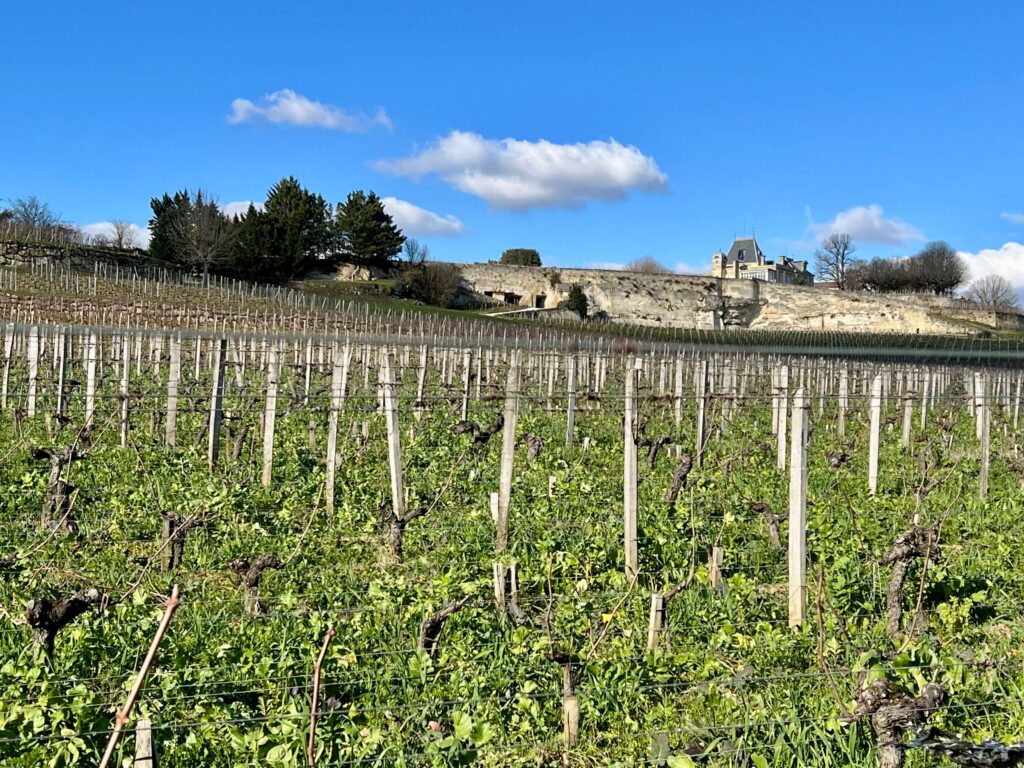
The family calls this wedge the golden triangle, set between the hills of Pavie and Ausone, and for once the phrase is literal rather than promotional. Three quite different ripening curves contribute to the final blend, which is why the wine can be both elegant and structured in vintages that force other estates to choose.
The plantings are in a state of restoration, and Alexandre is open about why. “Before 1956, we had more Cabernet Franc in the vineyard,” he said. “In 1956, we lost many vines to a devastating frost. Like many, my father replanted with Merlot. I decided we needed to return to the way we were, with a larger portion of Cabernet Franc, because it grows very well here on clay and limestone.”
Replanting since 2001 has brought the vineyard to roughly forty percent Cabernet Franc, at densities of 8,000 to 9,000 vines per hectare. A block of Cabernet Sauvignon that survived into the mid-1990s on ground that never reliably ripened it was removed. Both decisions were shrewd, and the current wines’ improved aromatic lift is proof.
The Winemaking
Picking is done by hand into ten-kilo crates. The fruit goes into cold storage overnight at around eight degrees Celsius, giving the sorting table a calmer morning. The next day, bunches are destemmed, berries pass through the optical sorter, and the vats, sitting below the sorting floor, are filled by gravity. Every parcel ferments separately in tanks shaped like inverted truncated cones, a geometry that keeps the cap shallow and makes gentle extraction easier; pump-overs and punch-downs are deliberately restrained. Malolactic fermentation is split between barrel and tank, decided by taste rather than protocol.
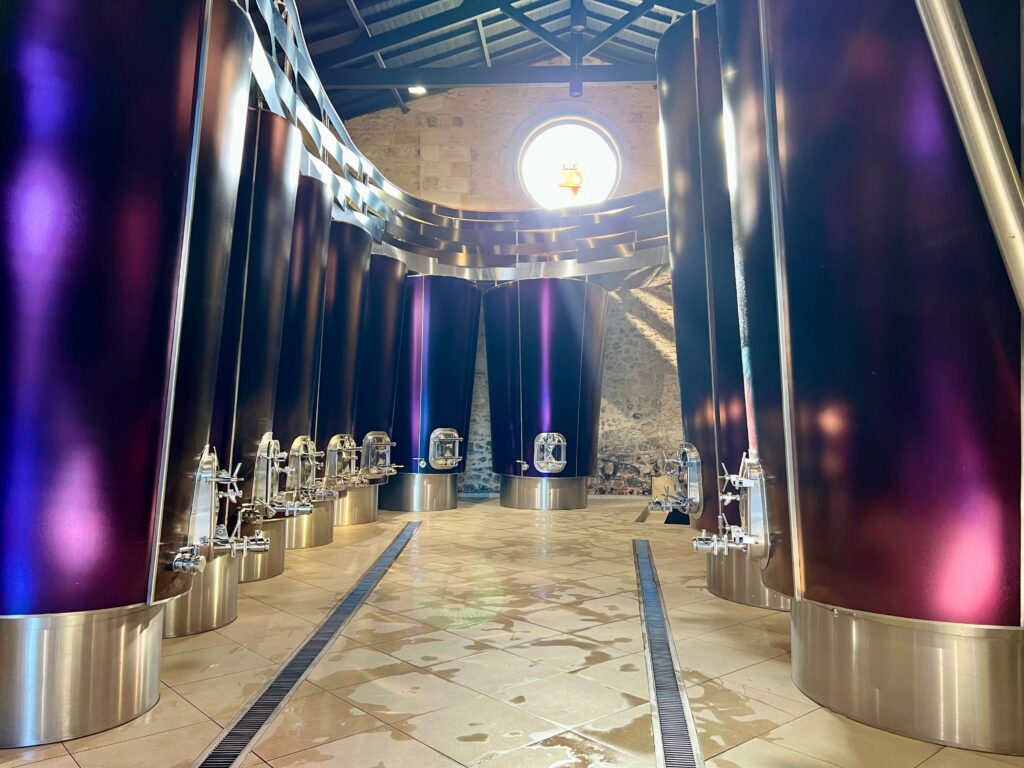
Élevage lasts twelve to sixteen months, with around fifty percent new French oak, in the underground cellar directly beneath the vat room — so the wine goes down to barrel by gravity as well. Rackings are limited. Nothing about the regime is showy, and the restraint is the point: this is an estate that, during the loudest years of Right Bank winemaking, declined to make a loud wine.
The Classification
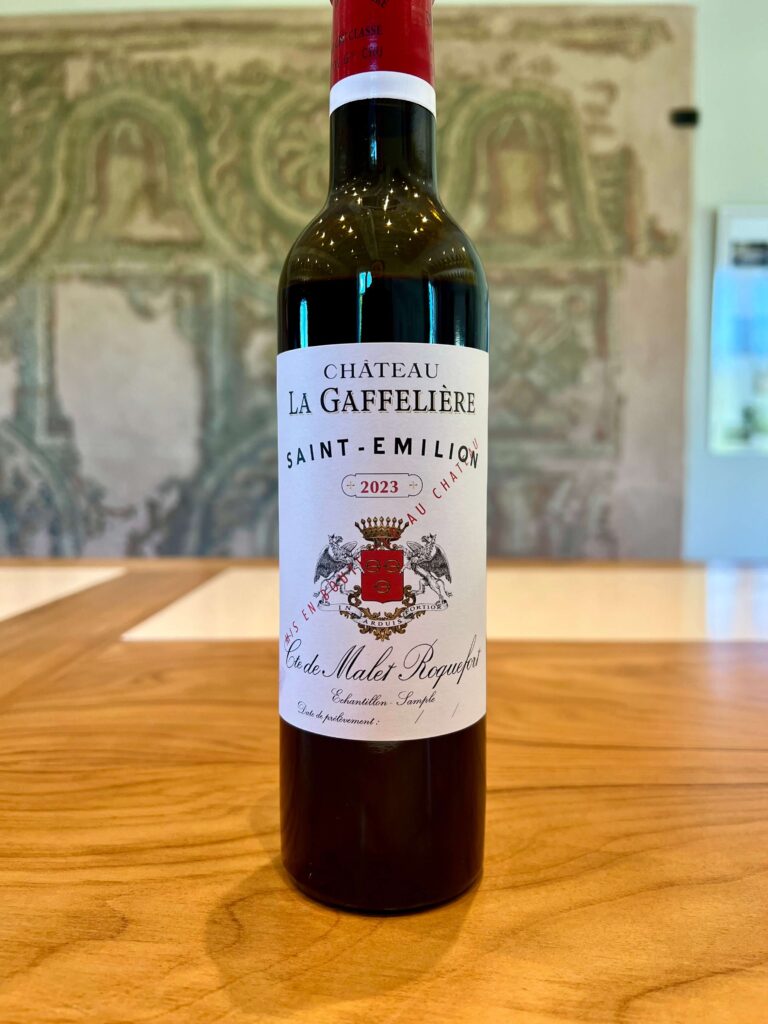
On June 1, 2022, a few months before the new Saint-Émilion classification was published, the family announced that La Gaffelière would withdraw from the classification altogether. Angélus, Ausone, and Cheval Blanc had already left, for reasons of their own, in a revision cycle badly bruised by litigation and conflict-of-interest findings.
The trigger was a letter. In the committee’s assessment of their dossier, the family found the quality of their terroir itself called into question — ground whose configuration had barely changed in decades, let alone in the millennia since somebody laid a mosaic floor at the bottom of it. They also took issue with how the tasting had been scored and chose not to appeal or appear before the commission. Alexandre consulted his siblings, and they agreed there was nothing to be gained by arguing with a process willing to set aside sixteen centuries of history.
Whatever one thinks of the classification, this was the most pointed of the four exits, because it came from the estate with the least to gain from theatrics and the longest institutional memory. Léo de Malet Roquefort had been present at the system’s birth. The wine is now labeled simply Saint-Émilion.
The Estate Today
Production of the grand vin is modest for a property of this visibility: comfortably under 100,000 bottles, less in strict years. Clos La Gaffelière is the second wine, made with the same discipline. Around it sits a broader family business, Domaines Comte de Malet Roquefort, which includes Château Armens, Chapelle d’Aliénor, La Connivence, and Puyblanquet.
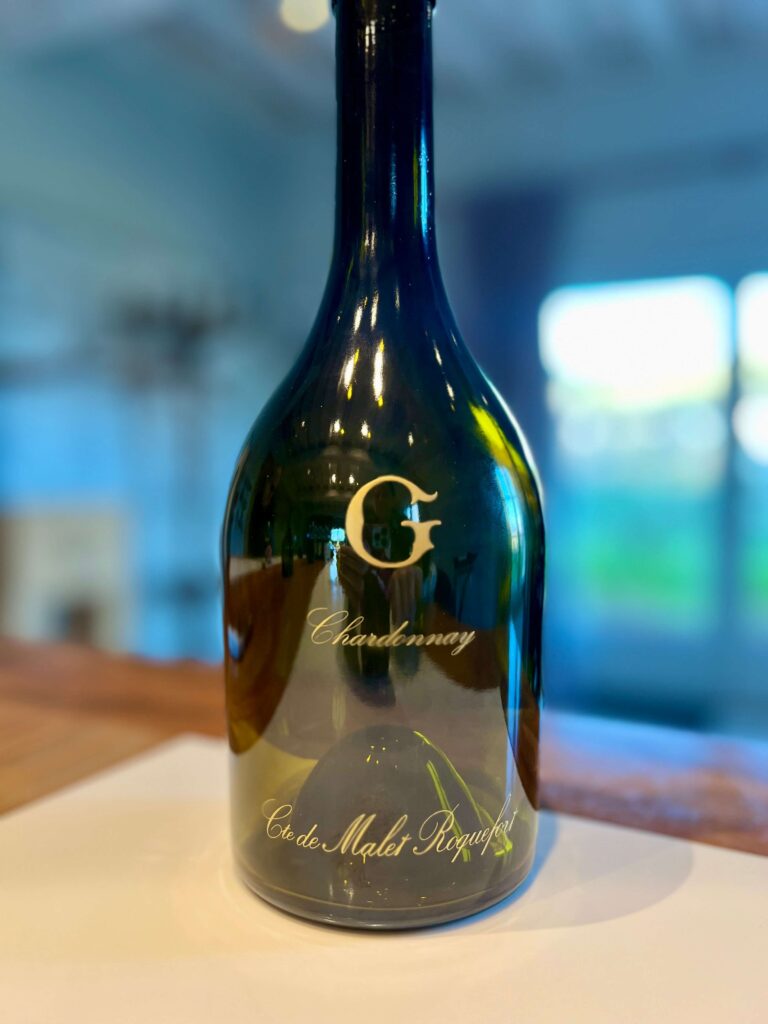
One of the most exciting recent additions to the estate’s wines is a small-production Chardonnay, a seriously great example of the variety. “It comes from a half-hectare plot,” Alexandre said. “It is a blend of vintages. Our cellar master, Frank, is completely crazy about white Burgundy, which was part of the inspiration.” Because it is a blend of vintages, each new wine is given an “Episode” number. For example, Episode 2 is a blend of 2021 and 2022, all barrel-fermented, and was bottled in 2023. Only 800 bottles were made. Blending vintages aims to emphasize terroir more than vintage.
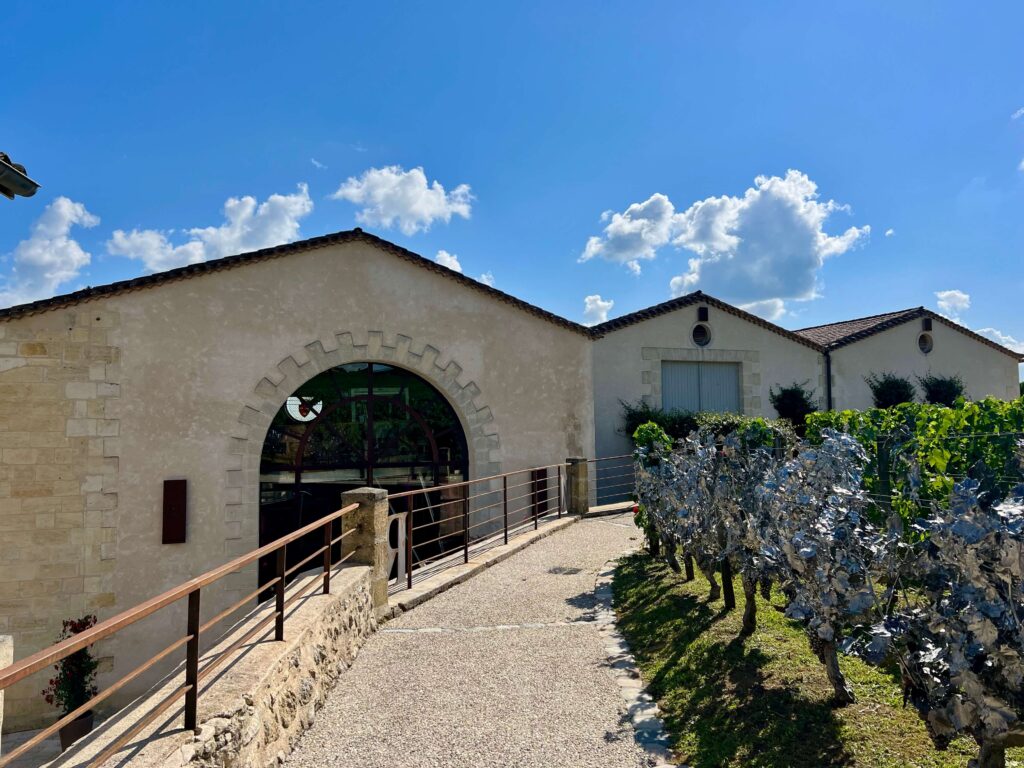
Château La Gaffelière’s quality has been remarkably consistent over the past couple of decades, producing a Merlot-led Saint-Émilion built on perfume and structure rather than mass, with Cabernet Franc threading cool graphite through red and black fruit and tannins that are ripe and silky, leading into a long, layered finish. It never chased the fashions for over-ripeness and over-extraction, which is why wines from this early part of this century have aged better than many neighbors’ wines. Alexandre puts it plainly: “Here, we cannot follow fashion; we can only make our signature.”
Winery Information
Region: France, Bordeaux, Saint-Émilion
Address: 626 Route de la Gare, 33330 Saint-Émilion, France
Open for Tastings: No
Major Grapes: Cabernet Franc, Chardonnay, Merlot
Vineyard Size: 55 acres
Own Winery: Yes
DTC Mailing List: No
Vineyard Sustainability: NA
Year Established: 1705
Owner: The Malet Roquefort Family
Winemaker: Thomas Soubes
Website: https://gaffeliere.com/
Most Recent Reviews for this Winery
Published: September 2026