
Winery Story
Château Guiraud
A Protestant merchant, a flying socialite, a Canadian family, and a band of Bordeaux partners have all held the keys to this Sauternes First Growth. Now, under Sandrine Garbay's direction, Guiraud is redefining what a great sweet-wine estate can be.
Old Gold, New Roots
There are more conventional ways to buy a Sauternes First Growth than falling for it from the cockpit of an airplane, but few are more romantic. As Sandrine Garbay tells it, Paul Rival—a Parisian man-about-town with a taste for aviation—was flying over the village of Sauternes when he spotted the owners of Château Guiraud in the process of moving out. He decided, more or less on the spot, that the place should be his. Rival was a close friend of Coco Chanel, and the two would often share a bottle of Guiraud over lunch, which strikes me as exactly the right way to drink it: not as a dutiful dessert-course afterthought, but as a wine for conversation, glamour, and a little mischief.
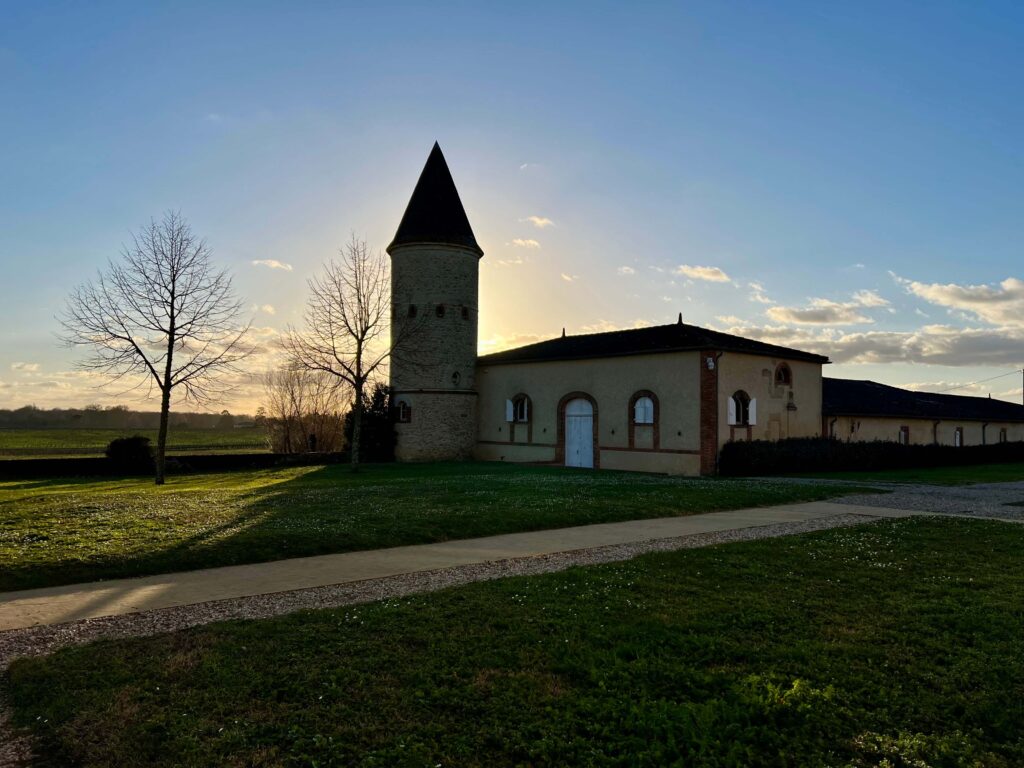
My tasting and interview with Sandrine Garbay—the estate’s general manager and head of winemaking since 2022—felt like visiting a property at a turning point. The château has passed through a remarkable succession of hands since the 18th century, and each owner has left a mark on its story. Few, though, have taken on Guiraud at such a pivotal moment for Sauternes itself, and even fewer have arrived with Garbay’s credentials.
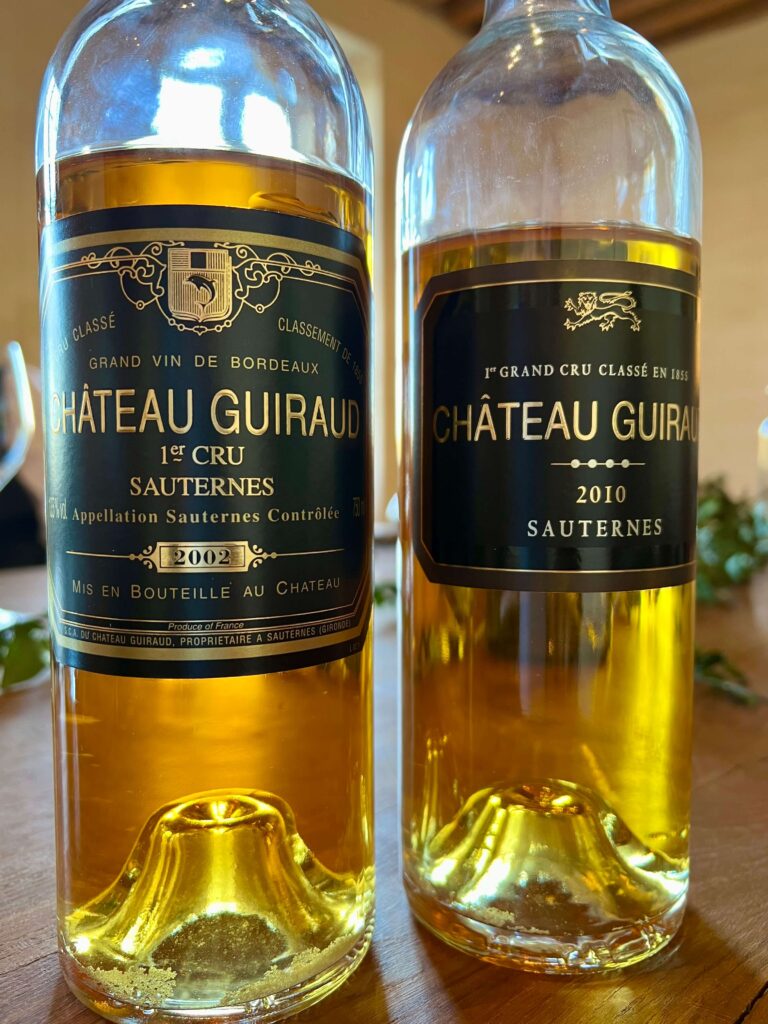
The estate was known originally as the Maison Noble du Bayle, and it took its present name in 1766, when it was acquired by Pierre Guiraud, a Protestant merchant from Bordeaux. The Guiraud family remained in possession until 1837, and their legacy is written all over the property—most visibly in the Protestant chapel they built on the grounds, which still stands today, and in the estate’s famously austere label. That black label, framed in gold, is a nod both to the family’s Protestant faith and to the goldsmith’s craft of one of its members, and it has remained essentially unchanged for well over two centuries. In a region where labels are routinely redesigned to court new markets, there is something defiant about that black-and-gold sobriety.
By the time of the 1855 Classification, Guiraud’s reputation was secure enough to earn it a place among the Premiers Crus of Sauternes and Barsac, the tier just below Château d’Yquem. The Bernard family acquired the property in 1861, and it passed by marriage to the Maxwell family, who renovated the cellars and expanded the estate. Then, in 1932, came Rival and his airplane.
Rival’s tenure was soon overshadowed by the Second World War. The château was occupied, and the cellars paid the price. “We have very, very few older vintages because the stocks were stolen when the château was occupied during the war,” Garbay told me. “We fortunately have around 100 bottles of 1942 that are original.”
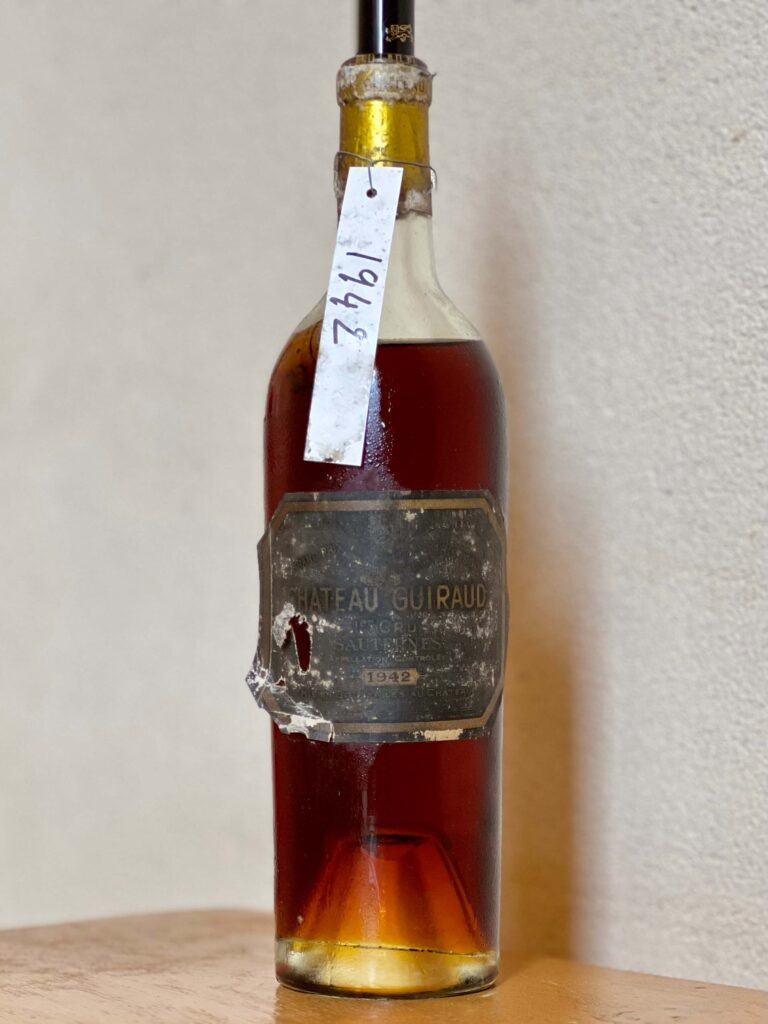
That 1942 is a wine with double significance. The 1940s were, generally speaking, a very good decade for Sauternes—and, as Garbay pointed out with evident delight, a decade in which much of the work was done by women, with so many men away at war or held as prisoners. “They were made by women!” she said. It is hard not to see a certain symmetry in the fact that, eight decades later, Guiraud is once again in the hands of a woman.
The postwar decades were not kind to Guiraud, and by the late 1970s the château and its wines were in need of serious attention. That attention came in 1981, when the Narby family, wealthy Canadians of Egyptian origin, bought the estate and set about restoring it. Frank Narby’s most consequential decision was to bring in Xavier Planty, who would spend nearly four decades at Guiraud—first as manager and winemaker, later as co-owner—and who, more than anyone, made the modern estate what it is.
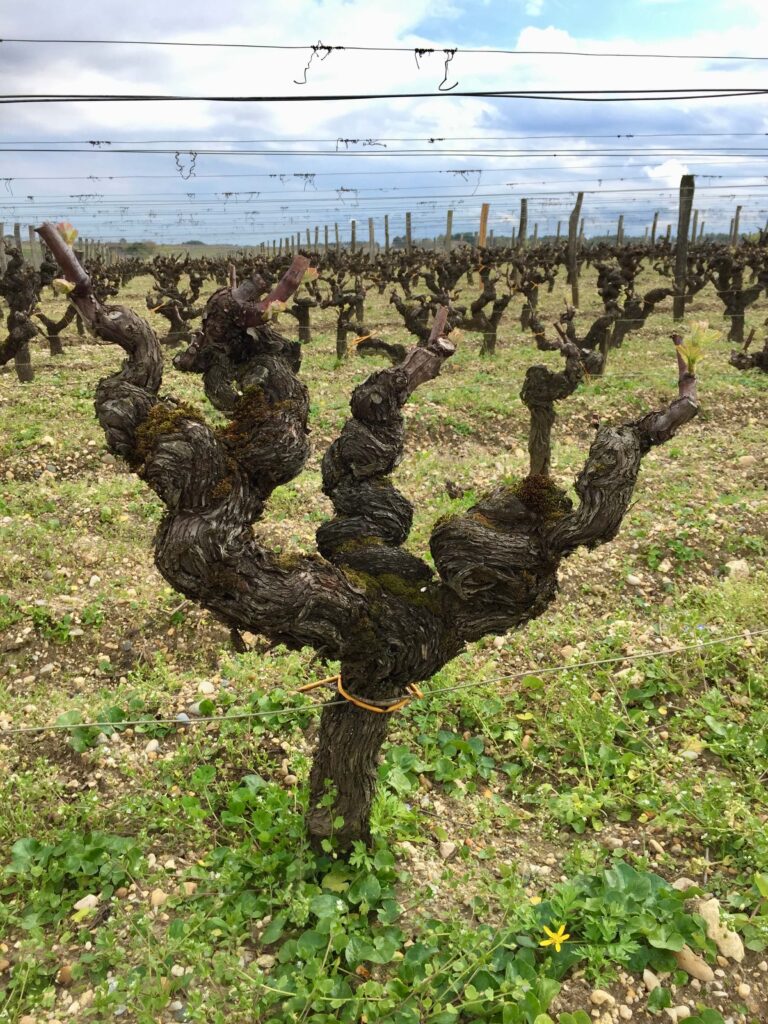
Planty was a pioneer of environmental thinking in Bordeaux long before it was fashionable. In the mid-1990s he began converting the vineyards to organic farming and set about restoring biodiversity across the property: planting hedgerows of mixed species, allowing natural grasses to grow between the vine rows, installing bird boxes and insect hotels, and creating a biodiversity garden with hundreds of varieties of fruits, vegetables, plants and flowers. In 2001, he established a conservatoire of Guiraud’s own Sémillon and Sauvignon Blanc vines—a genetic library of old, locally adapted material that is now bearing fruit in more ways than one. In 2011, Guiraud became the first of the 1855 classified growths to be certified organic. The team even experimented with going further. “We started to do 100 percent biodynamics,” Garbay said, “but decided it was too big a challenge for here.”
In 2006, the Narbys sold. The buyers were an unusual and formidable consortium: Planty himself, alongside Robert Peugeot of the Peugeot family’s investment arm; Olivier Bernard of Domaine de Chevalier; and Stephan von Neipperg of Château Canon La Gaffelière in Saint-Émilion. During this period, Guiraud began to look outward, opening its restaurant, La Chapelle, in 2018 and developing its dry white wines as a serious business. Xavier’s son, Luc Planty, took over the running of the estate toward the end of this era.
In October 2021, Xavier Planty sold his shares to Matthieu Gufflet, who became Guiraud’s majority owner. Gufflet, the founder of the purchasing group EPSA and the owner of Château de Callac in the Graves, has built his business interests around sustainability and hospitality, including the Terres de Natures group of hotels and restaurants. Peugeot, Bernard, and von Neipperg remained on board as minority partners. The next step is underway: a 25-room hotel is being built at Guiraud under the Terres de Natures banner, a project that should make this corner of Sauternes a destination in its own right.
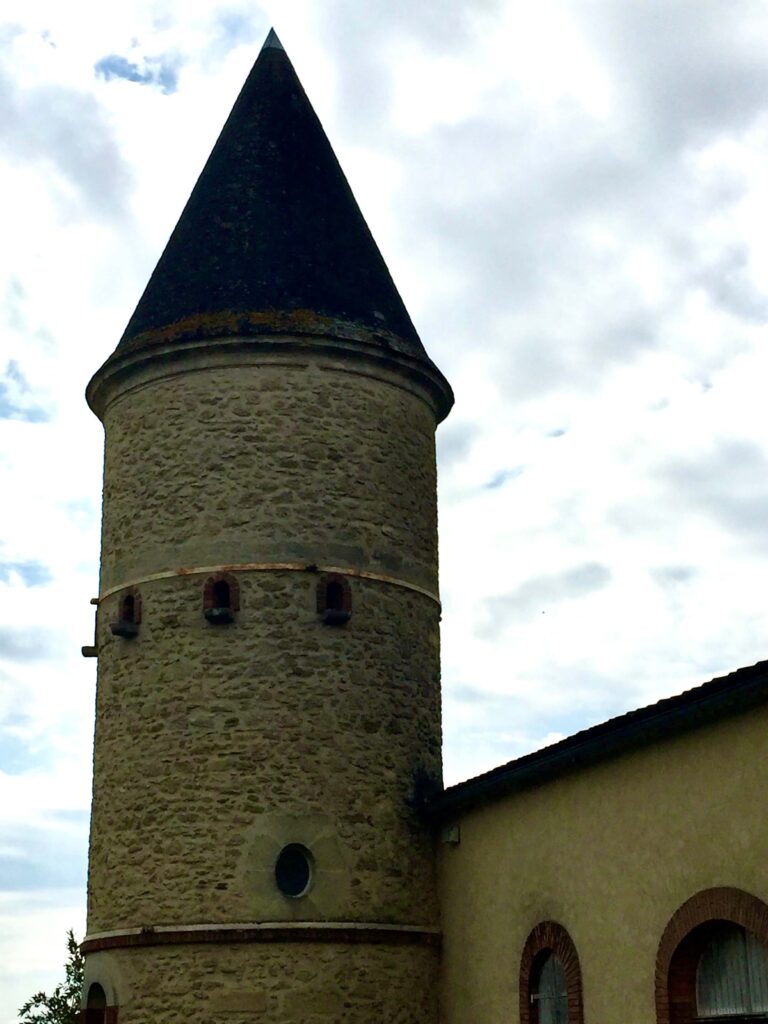
The following spring, Gufflet made the appointment that signaled just how seriously he takes the wine. Sandrine Garbay, who holds a doctorate in oenology from the University of Bordeaux, joined Château d’Yquem in 1994 and served as its cellar master for more than two decades. Moving from Yquem to Guiraud might look, from the outside, like leaving one First Growth for another just down the road. Garbay is quick to point out how different the two properties really are.
“The soils here are very different from Yquem,” she said. “There is more sand and gravel here, but at Yquem it is more clay. This impacts the textures of the two varieties.” The scale of the operation is different, too. “Less resources here, of course, but that makes everyone here very engaged. There is a big challenge to do everything with not so many employees.” She speaks of her team with genuine admiration: “The know-how of the team here is really perfect—how to select the grapes and how to sort them. The knowledge here is very good.”
Guiraud is one of the largest estates in Sauternes, with around 95 hectares of vines on gently sloping hillsides that rise to roughly 72 meters. Guiraud is a close neighbor of Yquem, but its soils—predominantly sand and gravel over a mosaic of clay and limestone—give the wines a different textural signature. “We have 95 hectares of vines here—so a big vineyard like Yquem—so we have a lot of soil variation,” Garbay explained. Today, around 50 hectares are dedicated to the sweet wines and 40 to the dry whites.
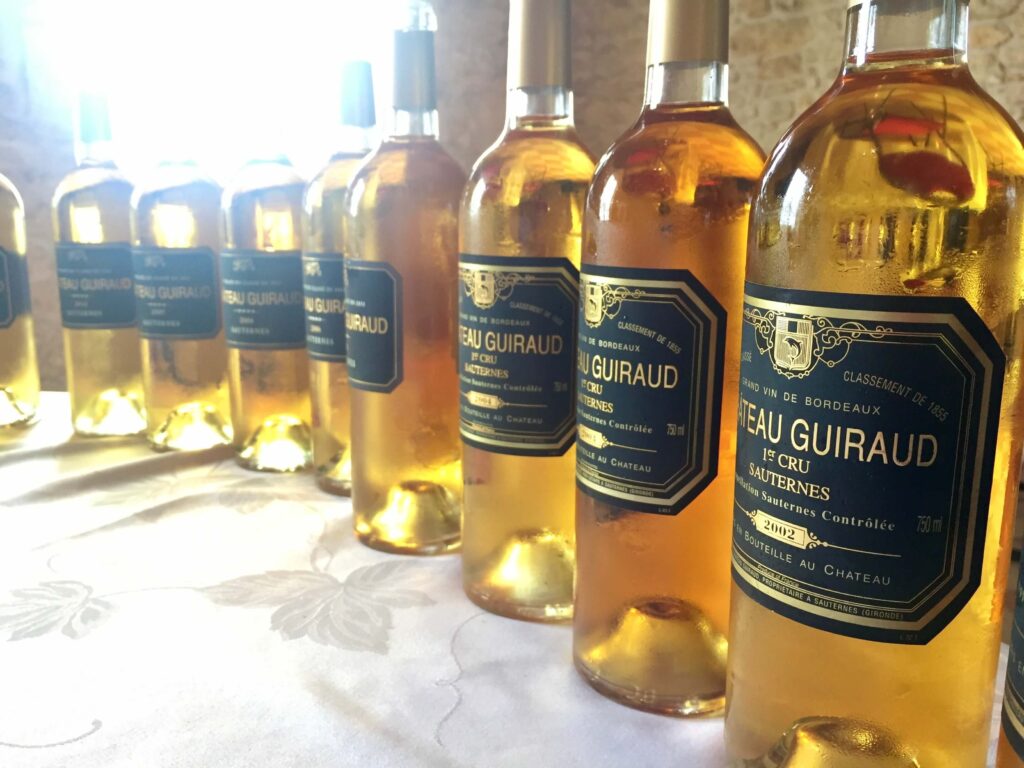
The defining feature of Guiraud, however, lies in its encépagement. “In the vineyard we have 65 percent Sémillon and 35 percent Sauvignon Blanc,” Garbay said. “The blend is not always this, but we put this as the blend because it is close to this every year.” That gives Guiraud one of the highest proportions of Sauvignon Blanc of any Sauternes, and Garbay sees it as both the estate’s calling card and its insurance policy. “The proportion of the Sauvignon Blanc is the uniqueness here. This will work very well with the climate challenge.” In an era of hotter, riper vintages, the freshness and lift that Sauvignon brings to the blend are becoming ever more precious.
Planty’s conservatoire has become a key tool for the future. “We are now doing massal selection on our own unique clonal material,” Garbay said—replanting with cuttings from the estate’s own old vines rather than commercial clones, so that each new generation of vines carries Guiraud’s particular genetic memory. “The engagement with organics and biodiversity here from early on is great,” she added.
Making Sauternes is an act of patience, and at Guiraud the harvest proceeds in the traditional way, with pickers making successive passes—tries—through the vineyards to select individual botrytized berries as they reach the ideal level of concentration. Yields are painfully low, often around 10 hectoliters per hectare. The wines are fermented and then aged in French oak barrels for about a year and a half before bottling.
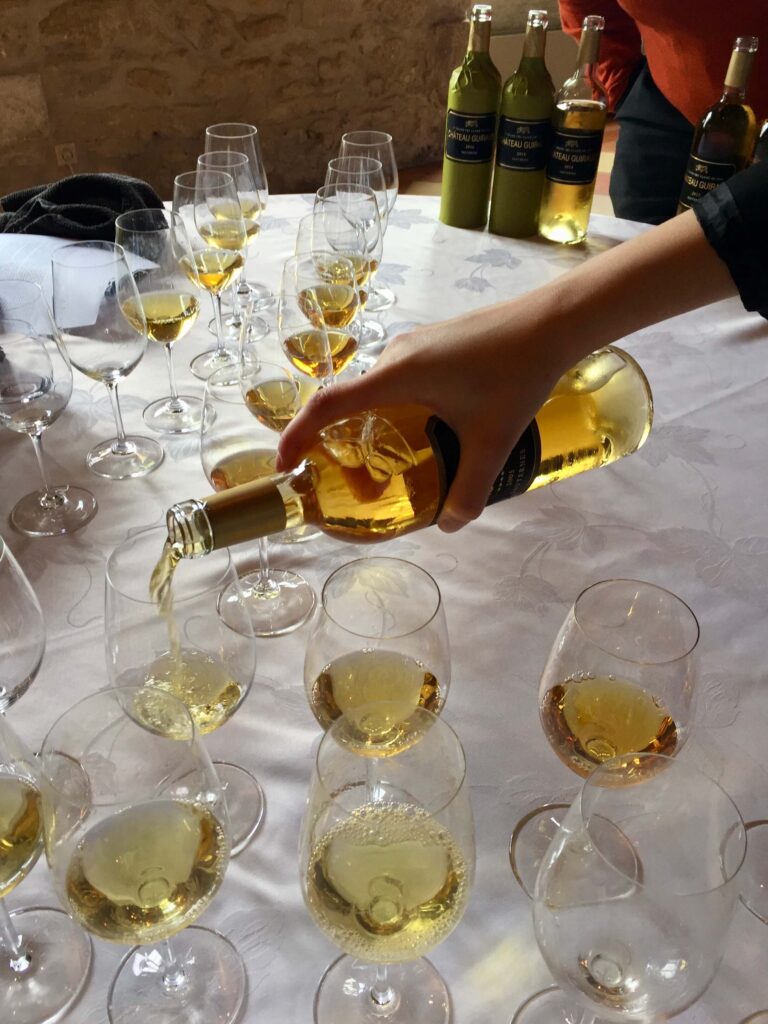
Garbay’s years at Yquem have given her an unusually deep understanding of how botrytis shapes a wine over time. As we tasted, she pointed to the 2001, whose color has evolved faster than its fruit. “When there is a lot of noble rot on the berries, the color develops more quickly, even if the fruit does not,” she explained. “We see this in the 2001. The 1929 Yquem is the same.” She suspects it may be due to sugar caramelization and a chemical reaction between botrytis and the grapes’ phenolics. She also offered a neat summary of one of the great paradoxes of sweet winemaking—that a very rich must actually inhibits the yeast: “The lower the concentration, the higher the alcohol the yeast can produce.”
Selection is as rigorous in the cellar as in the vineyard. No Petit Guiraud, the estate’s second sweet wine, was made in 2021 or 2022. In 2022, a hot, generous vintage, the wine was simply too rich to be Petit Guiraud, so Garbay chose to put the fresher lots into the grand vin to preserve its balance. In 2020, by contrast, the production of Petit Guiraud was fairly high.
If Guiraud’s sweet wines carry the weight of history, its dry wines are the engine of its future. The estate has made dry white wines since the 1980s, but the push to make them a genuine quality focus came as an important business decision under the new partnership. Today, Guiraud produces around 200,000 bottles of dry white across two labels: G de Château Guiraud and the Grand Vin Blanc Sec, first made in 2020. Some of the earlier-harvested berries from the top plots go into the Grand Vin Blanc—fruit that, in another era, might have been left on the vine for botrytis.
The dry wines have proved very popular. They sell out quickly, and the economics are compelling. The G leaves the château at around €7.50 a bottle for merchants, and the Grand Vin Blanc at around €25. “The dry wine revenue helps to support the Sauternes production,” Garbay said frankly—an admission that would have been unthinkable a generation ago, but which is increasingly the reality across the appellation.
Garbay is also clear about the role Sémillon must play in the region’s dry-wine future. “I think in Sauternes we have to promote Sémillon as the backbone of the dry whites,” she said. It is a telling remark from the winemaker of an estate so closely identified with Sauvignon Blanc, and a reminder that Sémillon remains the soul of this corner of Bordeaux. Nowadays, she noted, the sweet wines of Sauternes are made mainly from Sémillon, even if there were once vintages of L’Extravagant, from Barsac’s Château Doisy-Daëne, made largely or entirely from Sauvignon Blanc. At Guiraud, the two grapes are partners rather than rivals, and the estate’s future depends on getting that partnership right in both colors—sweet and dry.
Walking the grounds, past the chapel the Guiraud family built more than two centuries ago, it is easy to feel the weight of all the lives that have passed through this place: the Protestant merchant and his goldsmith descendants, the aviator who fell for it from the sky, the women who brought in the harvests of the 1940s while the château’s cellars were emptied by an occupying army, the Canadian family who rescued it, and the Planty father and son who made it a pioneer of organic Bordeaux.
What Garbay and Gufflet are building now feels less like a break with that history than a continuation of it. The organic vineyards, the conservatoire, the unusually high proportion of Sauvignon Blanc, the thriving dry wines, the restaurant and the hotel to come—all of it serves a single purpose, which is to keep one of the great sweet wines of the world not only alive but relevant. Somewhere in the cellar, around 100 original bottles of the 1942, made by women in the darkest of times, are still waiting. It seems fitting that their story, and Guiraud’s, is now in Garbay’s hands.
Winery Information
Region: France, Bordeaux, Sauternes
Address: 1 Château Guiraud, 33210 Sauternes, France
Open for Tastings: By Appointment Only
Major Grapes: Sauvignon Blanc, Sémillon
Vineyard Size: 235 acres
Own Winery: Yes
DTC Mailing List: Yes
Vineyard Sustainability: Organic
Year Established: 1766
Owner: Matthieu Gufflet (majority), Robert Peugeot, Olivier Bernard, and Stephan von Neipperg
Winemaker: Sandrine Garbay
Website: https://www.chateauguiraud.com/en/
Most Recent Reviews for this Winery
Published: October 2026