
Winery Story
Château Beauséjour
Seven hectares on the western côtes of Saint-Émilion, nine generations, one contested sale, and a family name that came back to the label.
Small Yet Mighty
Smallness is the first thing to understand about Beauséjour, an estate of not quite eight hectares, of which fewer than seven are planted. In an appellation where the past two decades have been marked by consolidation, acquisition, and the absorption of neighboring parcels into larger holdings, Beauséjour has remained almost exactly the size it was when it was carved out of a larger property in 1869. It is Burgundian by nature, stranded on the sprawling Right Bank. Today, it is run by a winemaker who openly says Burgundy is the model she has in her head.
The land Beauséjour occupies has borne several names. In the Middle Ages, this corner of the plateau was known as Peycoucou, Peycogut, or Puycocu — the peak where the cuckoo sings — and it belonged to the Cordeliers, the Franciscan community whose convent maintained a press house, a barrel cellar, and a cave. Vines were only one of many crops, but they were there.
In the seventeenth century, the friars ceded control to the de Gères family, seigneurs of Camarsac since 1495. By the end of that century, Henry de Gères held roughly fourteen hectares here. Then, in 1722, Jeanne de Gères married François de Carle de Figeac and brought the land with her as dowry — which is how Beauséjour’s story becomes entangled with Figeac’s, a knot that has never entirely come undone.
The estate passed to Jacques, comte de Carles (1724–1803), a maréchal de camp in the royal army who later served as lieutenant-general under the Republic and also owned Figeac and the bourdieu of Sarpe, today’s Haut-Sarpe. In 1787, Carles gave the property the name it still bears: Beauséjour. Two years before the Revolution, a general with three estates decided this one was the pleasantest stay.
His cousin André de Carle-Trajet inherited in 1803, along with Figeac, and promptly demonstrated how to lose a great terroir. He built the château, pushed yields with heavy manuring and productive varieties, and diversified into cereals and livestock. When Napoleon’s Continental Blockade collapsed, the economics collapsed, and so did he. In 1823 he sold Beauséjour for 32,000 francs to a pharmacist named Troquart, who restored the fourteen-hectare property, built its reputation, and enlarged it by buying the neighboring Saint-Martin. In 1847, Troquart’s cousin, a notary named Pierre-Paulin Ducarpe, took over seventeen and a half hectares.
On 8 June 1869, Ducarpe’s son Léopold married and received about half the vineyard, some ten hectares, which became Château Beauséjour-Ducarpe and, through a further chain of sales, the present-day Château Beau-Séjour Bécot. The other half — seven and a half hectares, plus the château and its outbuildings — went to Léopold’s sister Madeleine, who had married Doctor Calixte Duffau-Lagarrosse.
Both halves kept the Beauséjour name. Both were producing eighteen tonneaux apiece by 1881. For the next century and a half, the confusion between the two Beauséjours would be one of the more reliable irritations of Saint-Émilion, resolved on labels only by the appended family name.
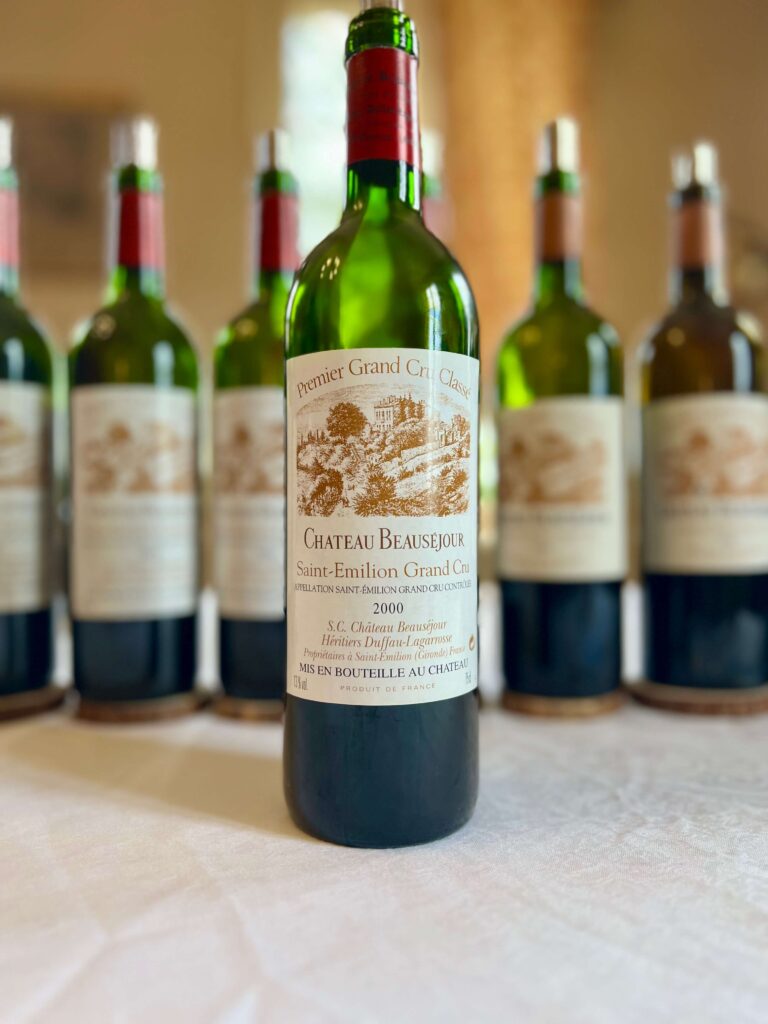
When the first official Saint-Émilion classification was published on 16 June 1955, Beauséjour Duffau-Lagarrosse entered as Premier Grand Cru Classé B. It has been confirmed at every subsequent revision, including the seventh, published on 8 September 2022 — a run of continuity that only a handful of properties in the appellation can claim, and one that looks more impressive with each classification cycle that ends in litigation or withdrawal.
Continuity did not mean stability. The catastrophic frost of 1956 forced the replanting of virtually the entire vineyard, which is why the “old vines” of Beauséjour are old in the way that most Saint-Émilion old vines are old: they are the grandchildren of a disaster. In 1963, the family formalized its ownership into a société civile, a decision whose consequences would take almost sixty years to detonate. Michel Rolland became consulting oenologist in 1979. Jean-Michel Dubos arrived as régisseur in 1983.
And then came 1990 — a wine that became, and remains, one of the reference bottles of modern Saint-Émilion, sought by collectors who in many cases have never tasted anything else from the address. It is a peculiar kind of fame: a single vintage so luminous that it casts the rest of the range into shadow. For the better part of two decades afterward, Beauséjour was spoken of as a property that had done it once.
The correction began in 2006, when direction passed to Christophe Redaud alongside Vincent Duffau-Lagarrosse. It accelerated in 2009, when the family handed general management to Nicolas Thienpont, with Stéphane Derenoncourt’s team consulting and David Suire as technical director. The vineyard was progressively replanted at higher densities — from around 6,000 vines per hectare toward figures approaching 8,800 on new plantings — and the wines from 2009 onward made the case that 1990 had not been an accident but a glimpse.
By then, however, the ownership structure had become the problem. The société civile of 1963 had multiplied across generations to thirty-two shareholders, many of them living outside the region and several outside France, most of them regarding Beauséjour as an annual dividend rather than a farm. Joséphine Duffau-Lagarrosse, ninth generation, has been candid that an estate with thirty-two owners is close to ungovernable. In June 2020, the shareholders voted to sell.
What followed was the most closely watched property transaction in Saint-Émilion this century. Stéphanie de Boüard-Rivoal of Angélus visited in August 2020 and made a proposal; it was declined. On 7 November 2020, after months of negotiation, Philippe Cuvelier of Clos Fourtet and Poujeaux signed a purchase agreement for €68 million with the support of 92% of the shareholders — a deal that would have kept Thienpont’s team in place. Because the sale was routed through SAFER, the regional land agency, the transfer required regulatory approval, and the process reopened the field. On 18 March 2021, SAFER’s technical commission designated de Boüard-Rivoal. Then, on 7 April, the board of SAFER Nouvelle-Aquitaine approved the sale to a third bidder for €67,712,750 before costs — a figure reported at around €75 million all in, and, for a property of this size, a per-hectare benchmark that nobody in the appellation has forgotten.
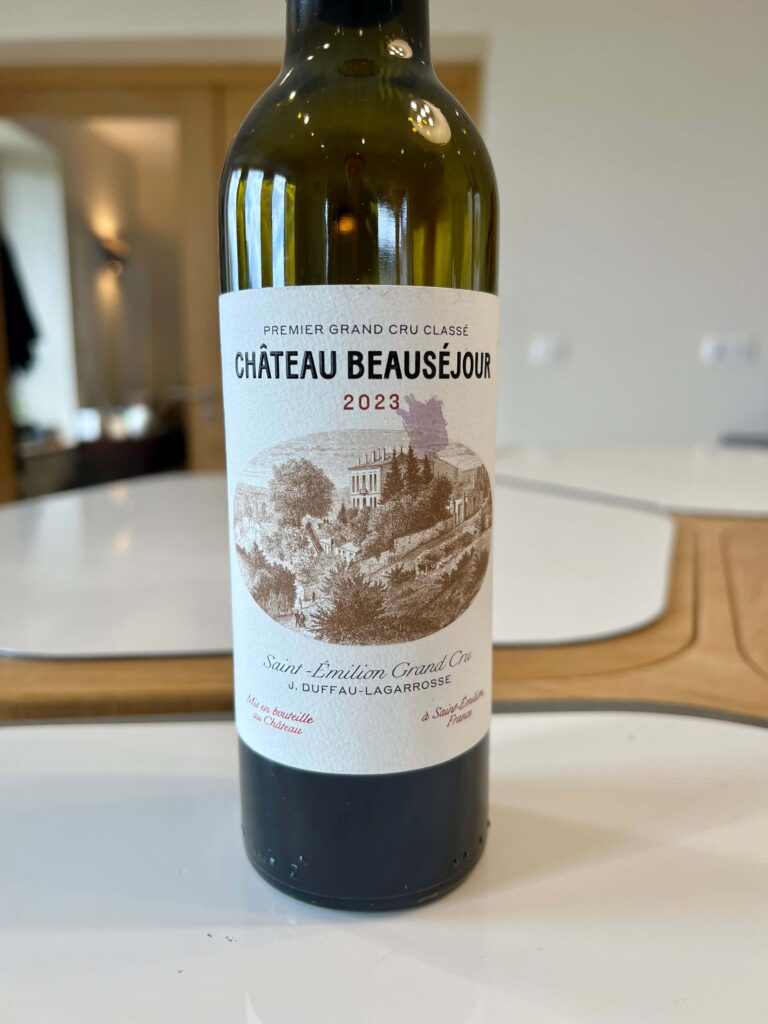
The third bidder was Joséphine Duffau-Lagarrosse herself, backed by Famille C Participations, the investment vehicle of the Courtin family of Clarins, led by Prisca Courtin. The operating company is held 86% by Famille C, 11% by Joséphine, and 3% by François Janoueix. Two women of the same generation, from entirely different industries, kept a nineteenth-century inheritance intact — and the family name, in abbreviated form, returned to the label. Starting with the 2021 vintage, Héritiers Duffau-Lagarrosse became J. Duffau-Lagarrosse, and the wine is simply called Château Beauséjour.
The Terroir
Strip away the drama, and what remains is the reason anyone was bidding at all.
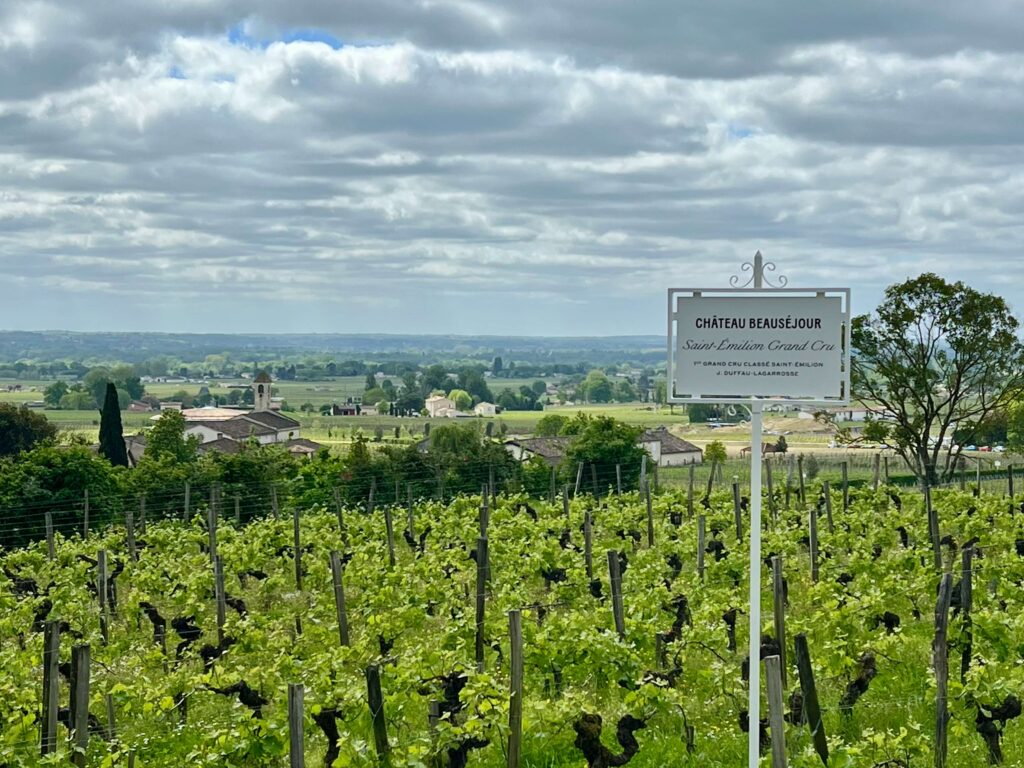
Beauséjour is a single, unbroken block on the upper western slope, immediately below and around the buildings, bordered by Canon, Beau-Séjour Bécot, and Angélus. The exposure is south to southwest; the gradient is gentle; the sun works the vines for most of the day.
Three soil types stack down the hill. At the top, at the level of the buildings, lies the calcaire à astéries — the hard starfish limestone of the plateau, which offers the vine nothing easy and forces the roots deep. Below that lies the molasses du Fronsadais of the côte, with a clay fineness that is genuinely uncommon in the appellation. At the foot of the property, older colluvial soils of sand and clay are derived from the degradation of marls.
The limestone is the engine. It behaves like a sponge, holding and releasing water with a regularity that has become the single most valuable asset a Saint-Émilion estate can own, and it is why the property has come through the hot, dry summers of the past decade with its acidity intact. Average vine age is now 50 to 55 years, with planting densities ranging from 6,500 to 8,800 vines per hectare on the newer parcels. Horses are increasingly used in the vineyard — partly for soil structure, partly because they do less damage to old vines, and every vine preserved is a piece of the property’s genetic archive.
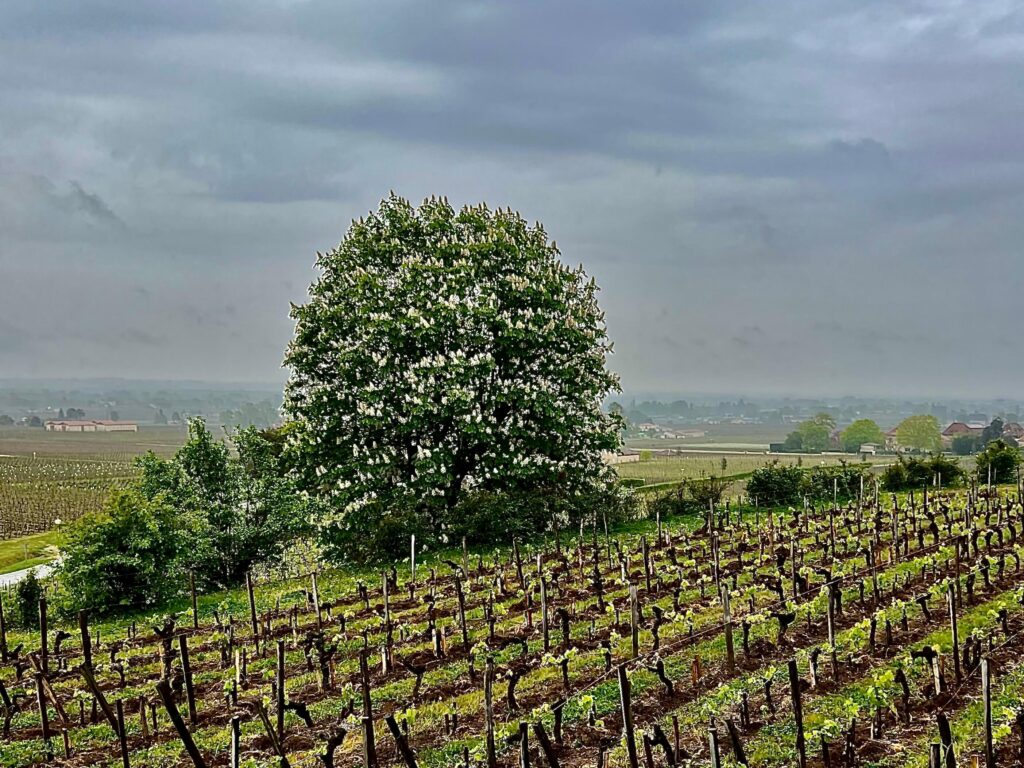
There used to be a small amount of Cabernet Sauvignon planted here, but it was removed in 2011. Merlot remains the dominant variety, but the balance is shifting. Half a hectare of Merlot has been replanted to Cabernet Franc, bringing the encépagement to roughly 75% Merlot and 25% Cabernet Franc from 2023. In a seven-hectare vineyard, half a hectare is a serious commitment — close to a tenth of production — and it reflects a deliberate view on warming: Cabernet Franc for aromatic lift and freshness, with a stated ceiling around 35%, beyond which the wine would stop being Beauséjour. Rootstock selections made by a previous generation, chosen for vigor when that was the goal, are also under review.
Winemaking
The most consequential physical change in a generation arrived for the 2024 harvest. Demolition of the old vats — the ones installed by Joséphine’s grandparents — began in January 2024, and the new cuvier, designed by the Bordeaux practice BPM, was completed in July, in time for the crop. The vat count rose from nine to sixteen: fourteen concrete vessels ranging from 30 to 60 hectoliters, plus two in stainless steel. The 30-hectoliter units are, as far as anyone has claimed, the smallest concrete vats in Saint-Émilion.
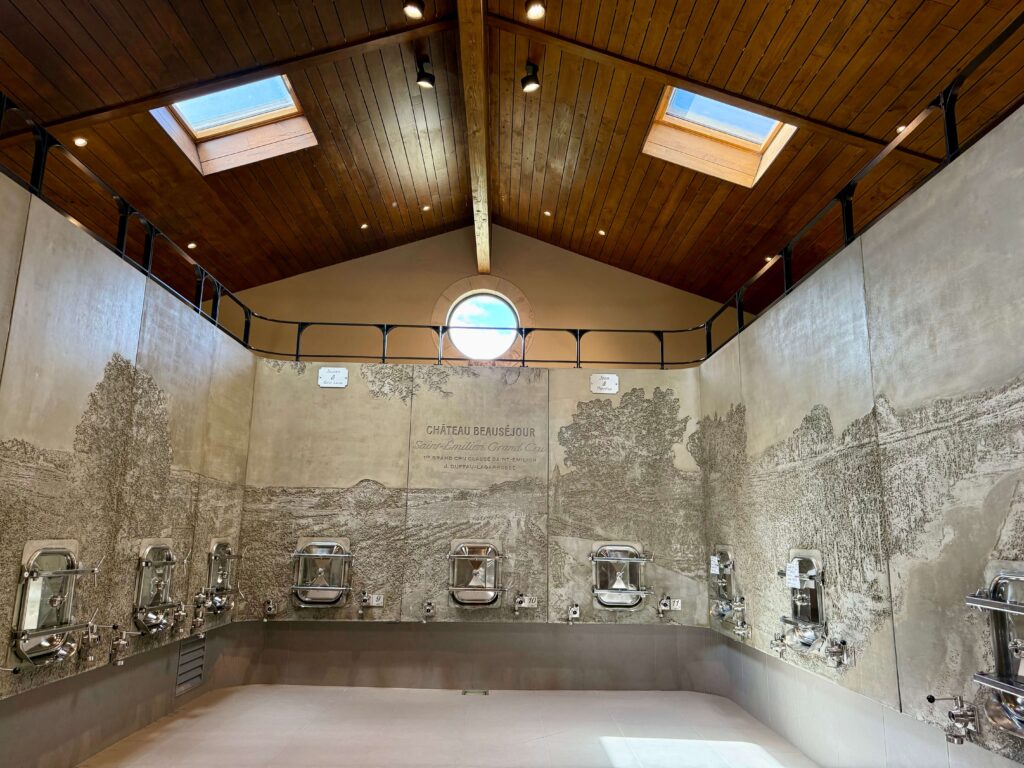
The point is not volume — capacity rose by only about 10% — but resolution. Whereas the previous generation selected by parcel, the vineyard is now vinified according to differences within parcels. The vat geometry was specified to increase the contact area between cap and juice, allowing a gentler, more controlled extraction; the concrete was chosen for thermal stability and neutrality. Harvest is by hand, sorted rigorously, with fermentation kept parcel by parcel and variety by variety until assemblage.
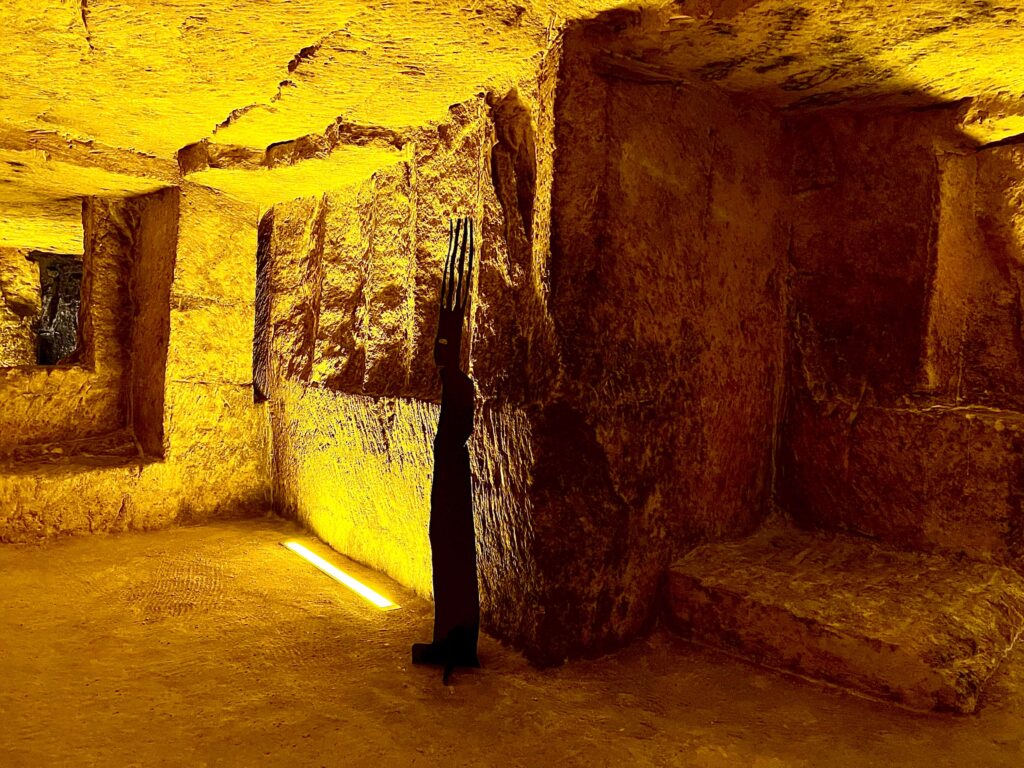
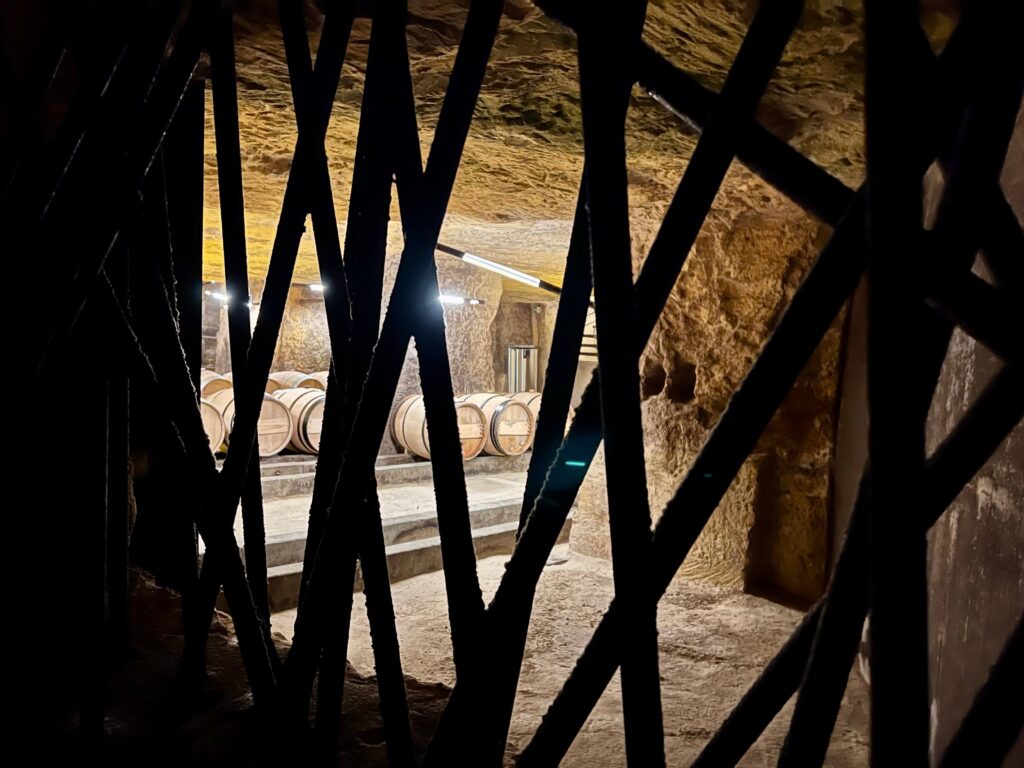
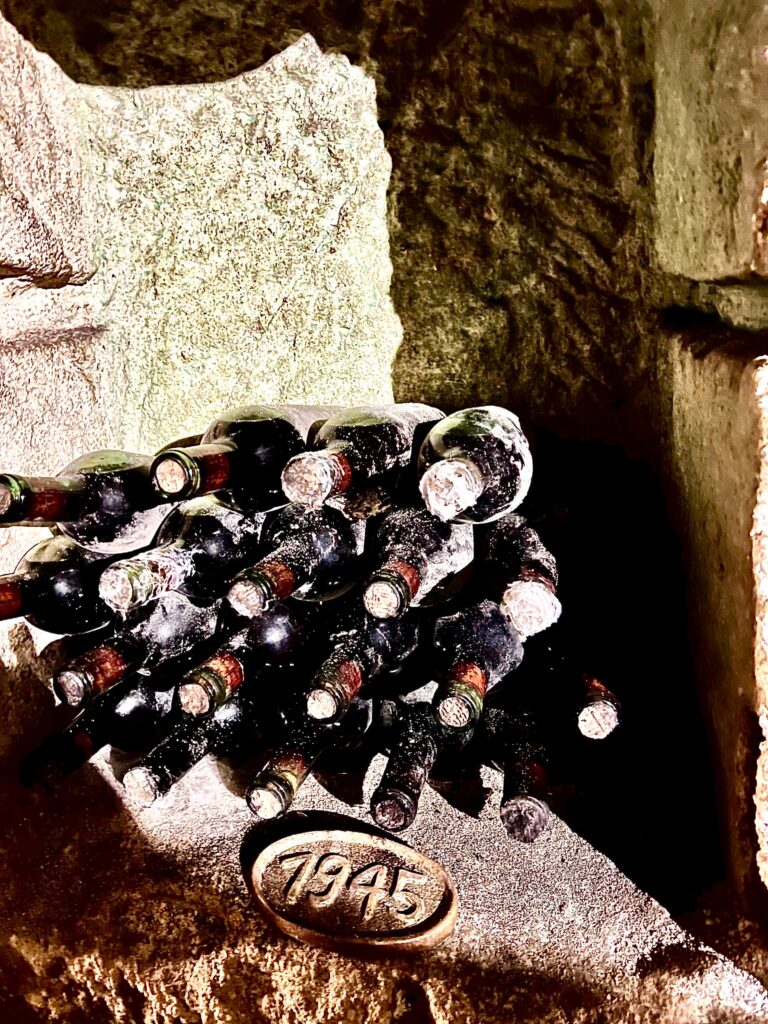
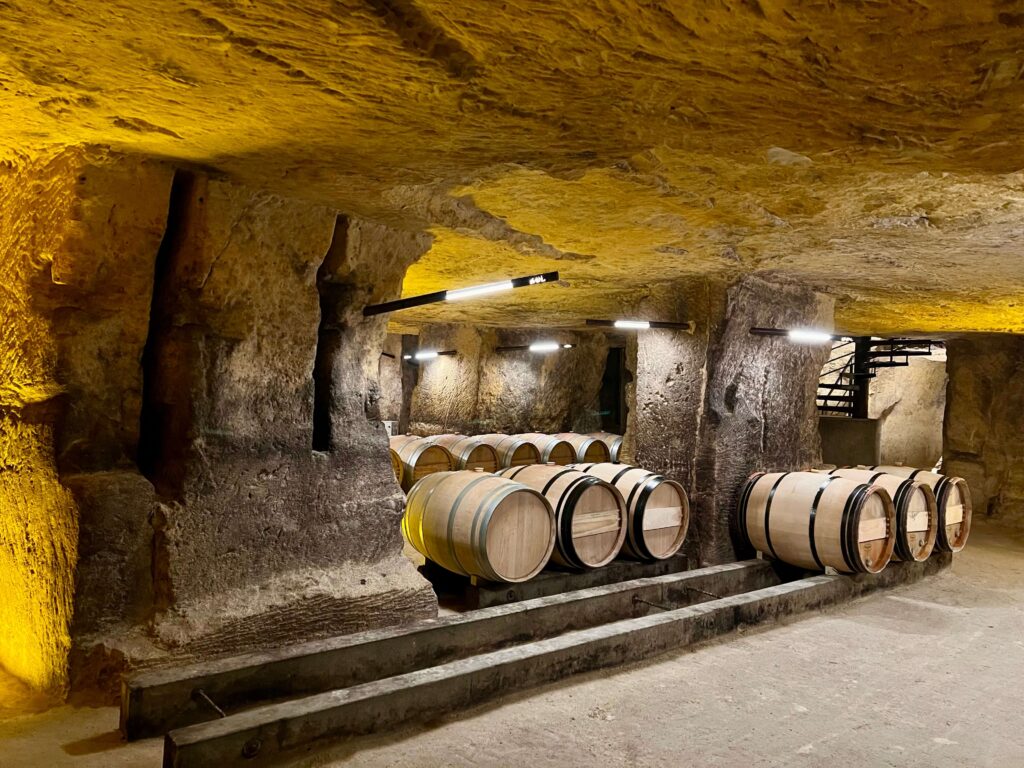
Élevage occurs below ground in the monolithic quarries cut into the limestone directly beneath the vines — a labyrinth that delivers, without machinery, the constant temperature and humidity that every modern cellar spends money trying to imitate. The grand vin spends upward of a year, typically around eighteen months, in barrel. The second wine, Croix de Beauséjour, has borne that name since the 1998 vintage, having previously been labeled Croix de Mazerat; it is made exclusively from estate fruit.
Axel Marchal and Julien Viaud have consulted since the 2021 vintage — Marchal, a professor at Bordeaux’s ISVV, whose brief, by his own account, is the long-term preservation of freshness; Viaud, an agronomist and oenologist with international experience.
My favorite description of this small, singular site comes from consultant Julien Viaud, who refers to Château Beauséjour as “armchair terroir.”
“We call it armchair terroir, because it gives great fruit no matter the weather. It’s the limestone here. You just need to be patient.”
Winery Information
Region: France, Bordeaux, Saint-Émilion
Address: 804 Route de Chatelet, 33330 Saint-Émilion, France
Open for Tastings: No
Major Grapes: Cabernet Franc, Merlot
Vineyard Size: 17 acres
Own Winery: Yes
DTC Mailing List: No
Vineyard Sustainability: NA
Year Established: 1869
Owner: Famille C Participations & Joséphine Duffau-Lagarrosse
Winemaker: Joséphine Duffau-Lagarrosse
Website: https://beausejour-jdl.com/en/
Most Recent Reviews for this Winery
Published: August 2026