
Winery Story
Château Angélus
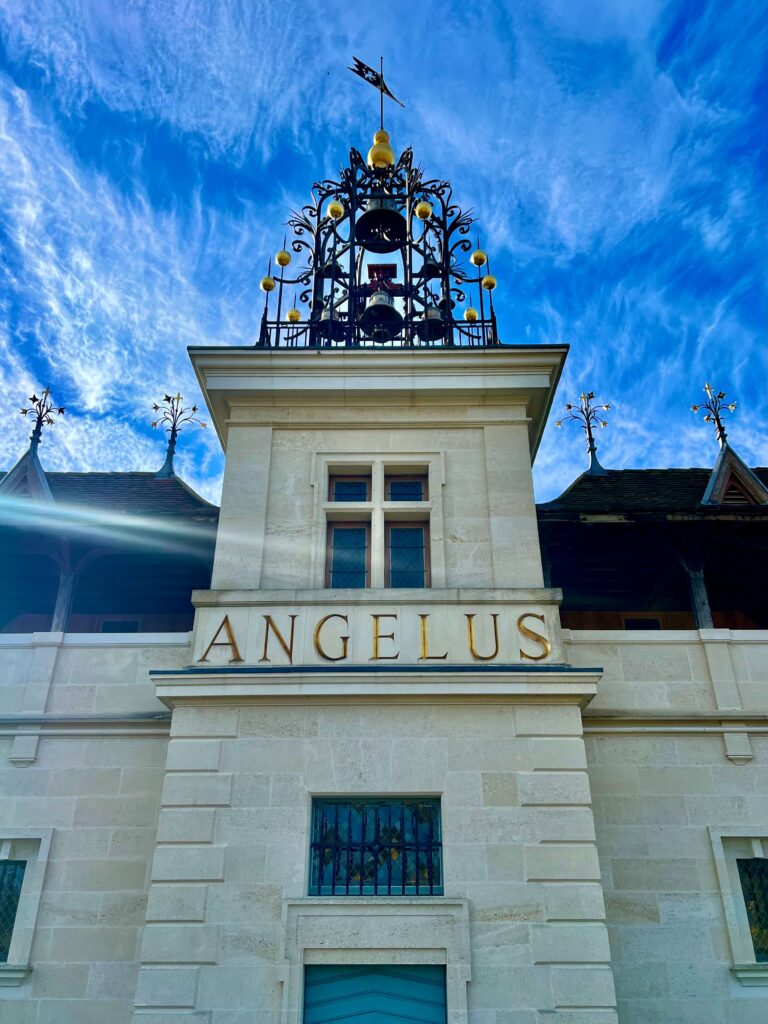
There is an acoustic phenomenon at the foot of Saint-Émilion’s limestone plateau. Stand in the shallow bowl of vines below the town, and you may notice the tolls of the three surrounding church bells coalesce into a single sound. Château Angélus took its name from that moment and has featured a bell on its label ever since.
The Bells
Angélus may not be an ancient aristocrat of the Right Bank like Ausone or Figeac, yet it does have a rich history.
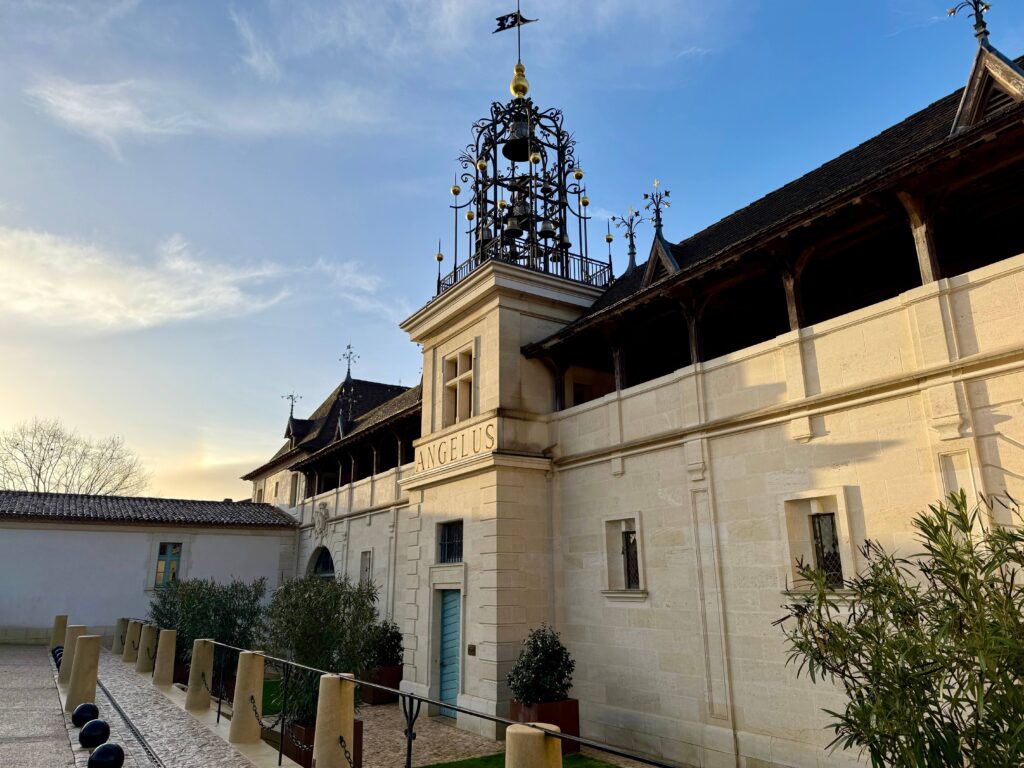
The estate officially traces its origins to 1782, when Jean de Boüard de Laforest, a king’s bodyguard, settled in Saint-Émilion. His daughter, Catherine Sophie, married Charles Souffrain de Lavergne in 1795 and made her home on the Mazerat estate, which belonged to her husband’s family. From there, the line runs forward through eight generations to the present. The house recognizes its continuity from that arrival — nearly 250 years of it.
Maurice de Boüard de Laforest inherited the Mazerat estate around 1910, and in the years that followed, the property was assembled into its present form. In 1920, a three-hectare enclosure called Angélus was added; the neighboring Clos de l’Angélus came soon after, acquired with money brought by Maurice’s wife, Elisabeth Bouchet. Maurice left the estate to his sons, Jacques and Christian, in 1945. They continued to buy land, extending the original holdings to just over twenty hectares (around 57 acres) by the mid-1980s.
One branch of the family has publicly argued for years that Maurice — and specifically Elisabeth — should be recognized as the founders, which would make Angélus a century old rather than two and a half. The estate has never conceded the point. However, in 2016, it created a cuvée in Elisabeth Bouchet’s name, made from 100% old-vine Cabernet Franc from a tiny parcel at the bottom of the slope. Bouchet is also the former Right Bank Bordeaux name for the grape. The wine is a tribute and, read a certain way, an acknowledgment.
One bottle has become the clearest link between the generations: the 1953 Angélus. Made by Jacques and Christian, it remains an inspirational vintage for the current generations in charge of the estate: Hubert de Boüard and his daughter Stéphanie de Boüard-Rivoal. When Hubert was still an enology student, he showed the wine to his mentor, Émile Peynaud; it convinced Peynaud of the caliber and potential of Angélus’s terroir.
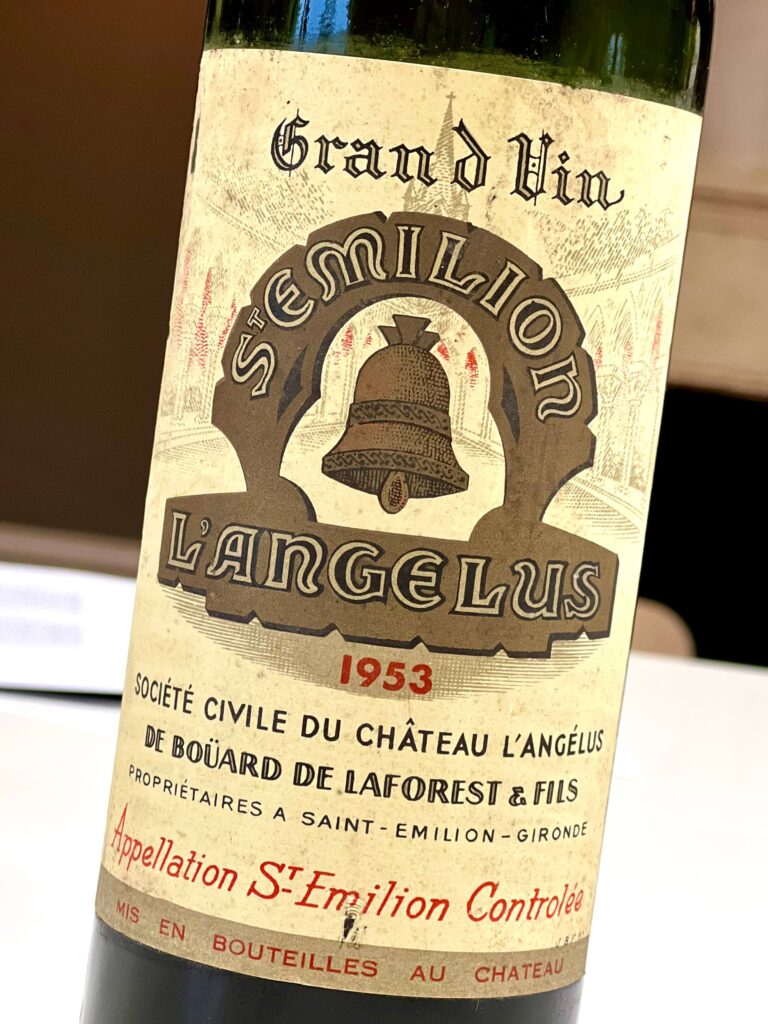
The 1953 also carried the varietal idea that would come to define the estate. Jacques had chosen to emphasize Cabernet Franc partly because the lower-slope terroir appeared ideal for it, and partly because of love: his mother’s maiden name was Bouchet, the traditional Saint-Émilion name for Cabernet Franc. Hubert told me that the 1953 likely contained at least 30–35% of the variety. Cabernet Franc now represents 47% of the plantings, including a significant holding of old vines planted by Jacques, and recent blends have returned to broadly similar proportions—largely through Hubert’s efforts.
The 1953 showed Hubert what Angélus had been capable of; he became the modern author of what it would become. Jacques’s son took over the running of the estate in 1985, joined two years later by his cousin by marriage, Jean-Bernard Grenié. By then, Angélus had drifted; the terroir was better than the winemaking, which is the most frustrating position a young vigneron can inherit and the most rewarding one to fix.
What Hubert did was, in Bordeaux at that time, close to heresy. He looked to Burgundy. He harvested and vinified parcel by parcel. He fermented whole berries in open-topped vats. He put the malolactic fermentation into barrel rather than tank, and left the wine on its fine lees through the winter without racking it early. He cut yields, tightened selection, and introduced substantial new oak. The wines that emerged from the late 1980s onward were plusher, deeper-colored and far more precise than those that had come before, and the market noticed immediately. He also, with an eye on how wine lists sort themselves alphabetically, dropped the definite article: Château L’Angélus became Château Angélus, and moved to the top of the page.
The classification followed the wine. Angélus was a grand cru classé in the first Saint-Émilion classification of the mid-1950s, was promoted to premier grand cru classé B in 1996, and in 2012 reached premier grand cru classé A — the only property ever to have climbed every rung of that ladder. Along the way, the bell acquired a second life on screen, first in a Bond film in 2006 and twice more after that, which took the label to an audience no wine merchant could have bought.
The Terroir
Angélus is unusual by nature’s design, sitting in an amphitheater on the south-facing slope below the plateau and, crucially, at its foot — the pied de côte, a position Saint-Émilion has historically undervalued in favor of the limestone above. The bowl traps warmth, so budbreak comes early and ripening reliably precedes that on the plateau. The slope drains itself. Beneath, the geology shifts as you descend: clay-limestone in the upper sections, giving way to warm sandy clay-limestone scree over clay lower down, with the clay fraction forming a narrow band that supplies water and minerals steadily rather than succumbing to floods and droughts.
Varieties are planted largely according to soil types — Merlot on the clay-rich upper slope, Cabernet Franc on the scree at the bottom. But the estate’s stylistic signature favors a large proportion of Cabernet Franc, usually around 40% of the blend. Cabernet Franc accounts for roughly 47% of the plantings, one of the highest proportions in the appellation, with Merlot around half and a sliver of Cabernet Sauvignon. On these soils, the variety retains its perfume and its cool, mentholated lift without turning green, and the old vines — the oldest are now well past sixty — reach into the clay for water in hot years. The 2022 and 2023 vintages made the case for this planting better than any argument could: throughout the hot, dry summers, the Cabernet Franc held its freshness.
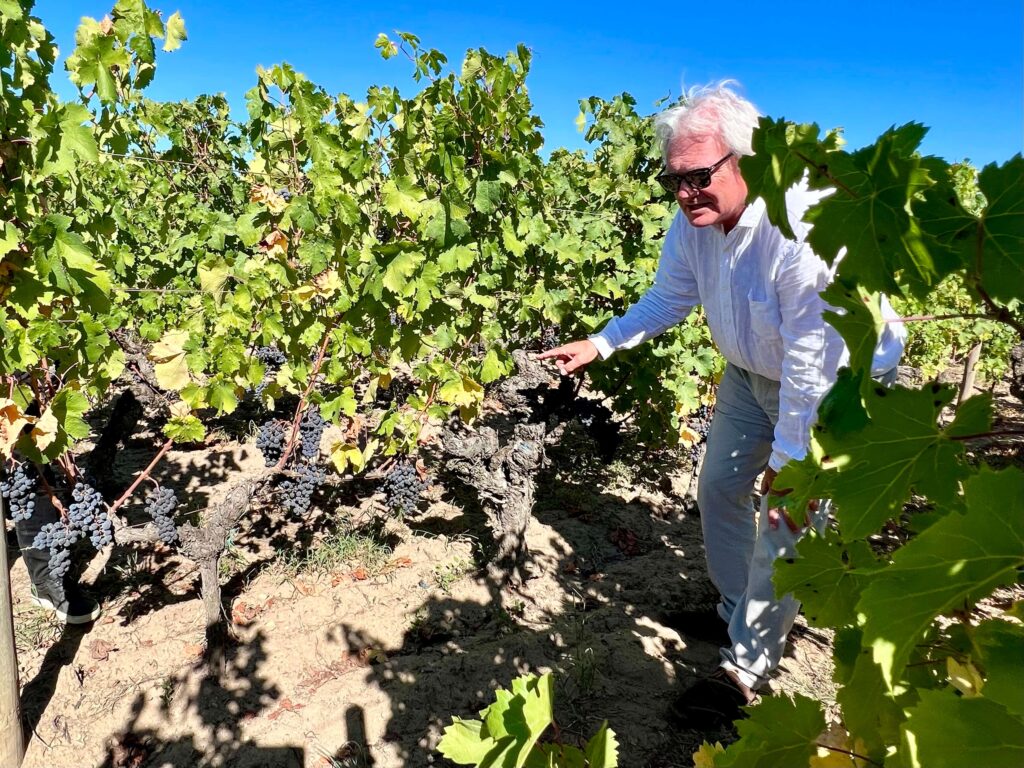
Hubert de Boüard Showing the Old Vine Cabernet Franc at Château Angélus
The grand vin itself is drawn from just over 20 hectares (around 57 acres) in that historic core, and the blend typically ends up at about 60% Merlot and 40% Cabernet Franc. The style that results is the estate’s calling card — velvety, dense, and rich from the early-ripening bowl, but tightened and highly structured with a stunning perfume coming from the Franc. When it is right, it is the rare Saint-Émilion that manages opulence and tension in the same mouthful.
In the Cellar
Fruit is picked by hand and sorted twice, in the vineyard and again by optical sorting at reception — Angélus was early to that technology, as it has been early to most things. A cold pre-fermentation maceration of four days to a week precedes fermentation, with Merlot in wood and stainless steel and Cabernet Franc in concrete. Malolactic fermentation happens in the barrel; the wine then rests on its lees over the following summer before racking, during which much of that velvety weight is built.
The oak regime has moved a long way from the maximalism of the 1990s. Élevage now runs to something like twenty-two months, with a growing share of the Cabernet Franc raised in thirty-hectoliter foudres rather than barriques, and with used barrels increasingly used for Merlot to keep the fruit bright.
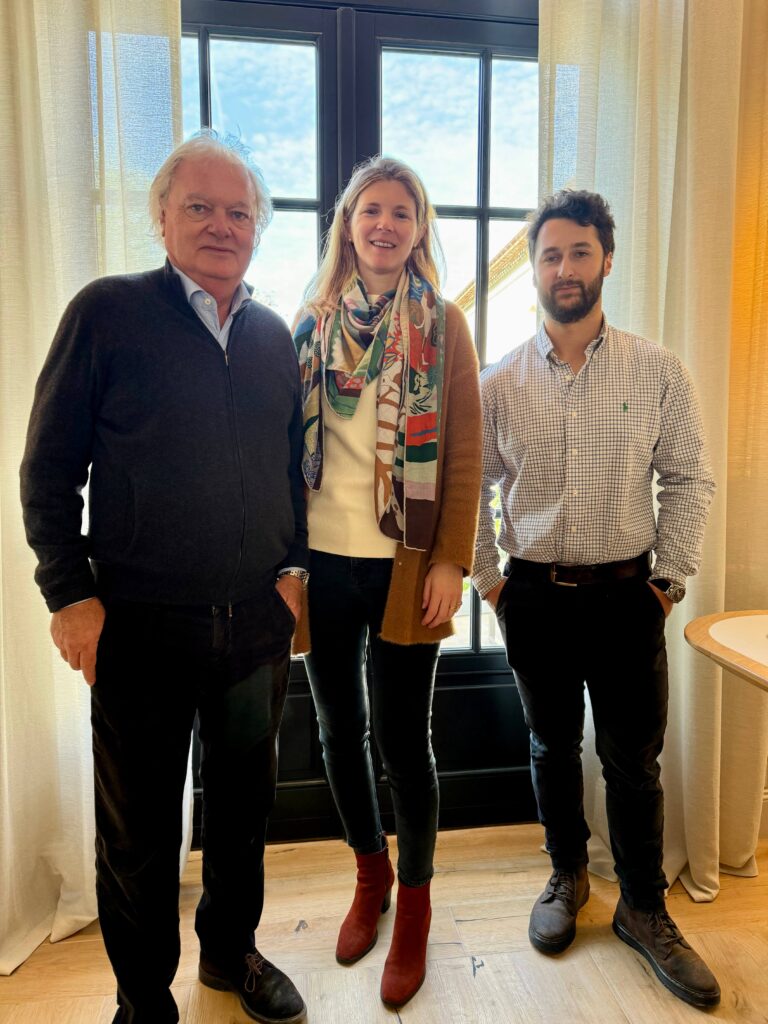
The Current Winemaking Team: Hubert de Boüard, Stéphanie de Boüard-Rivoal, and Benjamin Laforêt (technical director)
A half-underground winery was completed for the 2019 harvest, with eighteen inverted truncated-cone vats and full gravity flow. Then, this spring, the estate unveiled its new cellar for the grand vin — buried seven meters down, with pillar-free vaults borrowed from cathedral builders and an oak roof spanning twenty-two meters, and the same suspended inverted cones in oak, steel and concrete. The shape is not decorative: it is intended to provide a slow, gentle infusion rather than a hard extraction, with mechanical handling reduced to almost nothing. Carbon dioxide from fermentation is captured; water use has been cut. It is due to receive the 2026 harvest.
The Classification
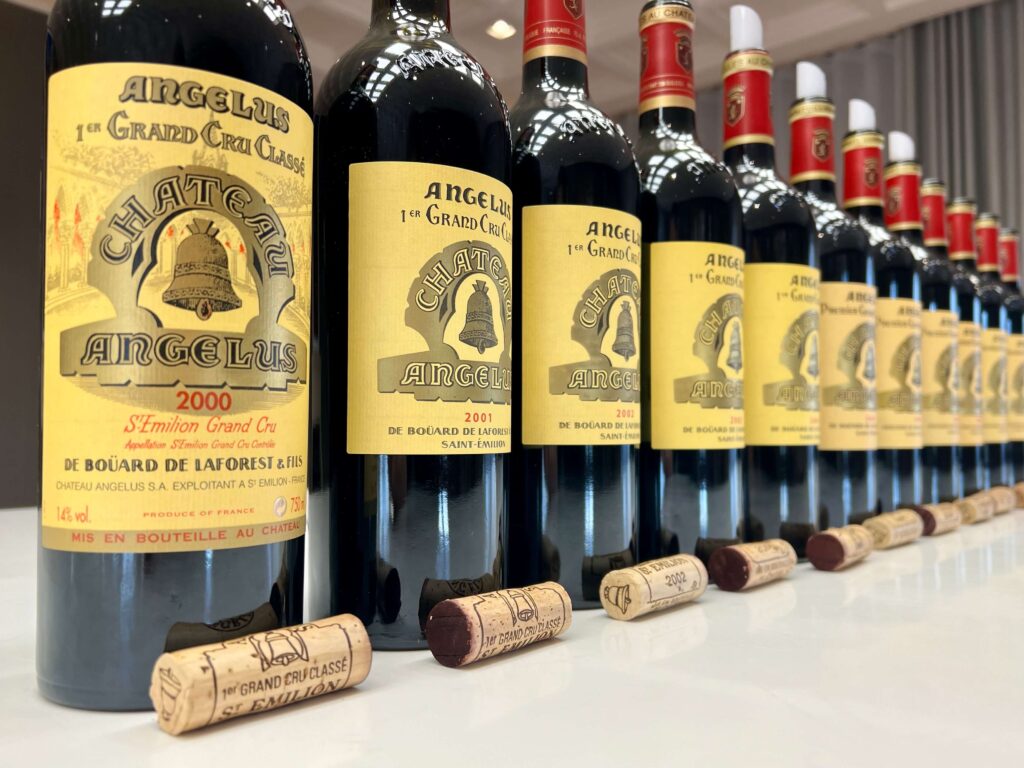
In 2012, the year of the promotion, Hubert handed the running of the estate to his daughter Stéphanie de Boüard-Rivoal — the third woman to lead Angélus, after Catherine Sophie around 1800 and Eugénie Chatenet a century later. She had come from six years in banking in London, and she arrived with a program: organic conversion from 2018, certification achieved in the early 2020s; beehives, cover crops, hedgerows, pheromone confusion instead of sprays; a serious upgrade in ambition for the second wine, Carillon d’Angélus, which dates to 1987; new cuvées beneath it, including No. 3, the Bordeaux-appellation Tempo, and the Clos du Milieu and Blanc du Milieu pair; and a hospitality arm in Saint-Émilion and Bordeaux built around restaurants and small hotels. Eight cuvées now, roughly 135 hectares in total holdings, 65 of them in Saint-Émilion, and around 170 employees.
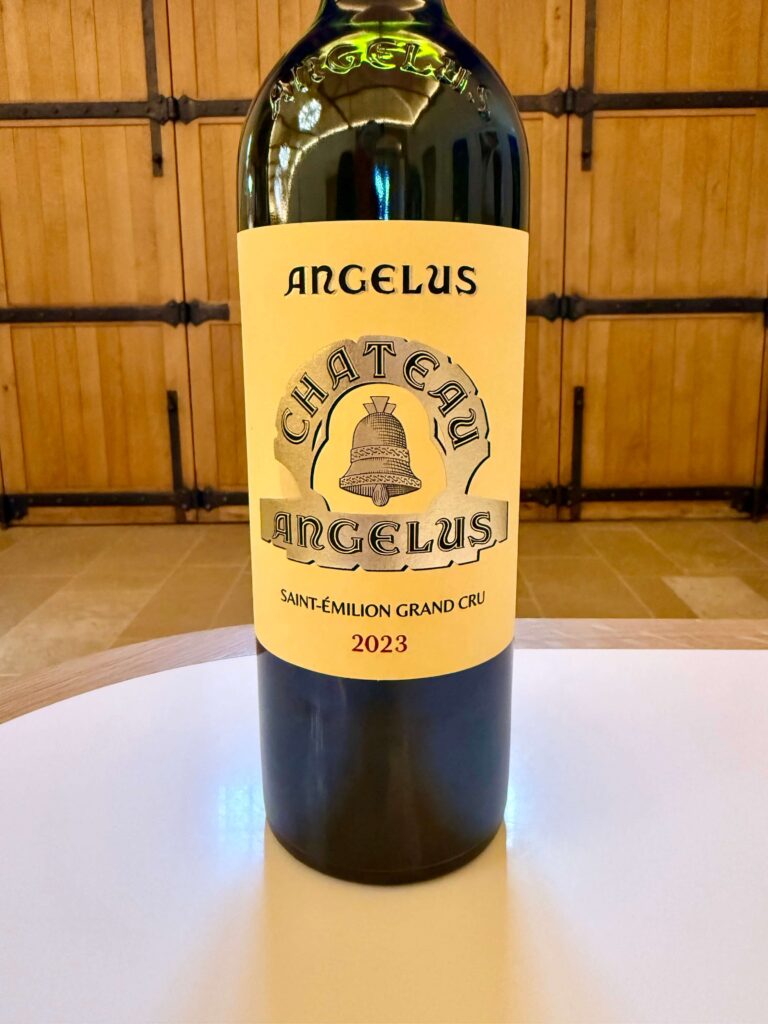
And then, in January 2022, she withdrew Angélus from the classification altogether, following decisions by Cheval Blanc and Ausone, stating that what had once driven progress had since become a vehicle for antagonism and instability. From the 2022 vintage, the label reads simply Saint-Émilion Grand Cru. There is something almost vertiginous in it — an estate that spent four decades climbing a ladder no one else had ever climbed in full, stepping off it at the top rung.
Angélus is not left without a measure of itself. The 1953 supplied one before any ranking: made by Jacques and Christian and carried by a student to his teacher, it convinced Peynaud of the terroir’s future. It joins Jacques’s old Cabernet Franc vines to Hubert’s revival and Stéphanie’s future beyond classification. Above the amphitheater, three bells still resolve into one sound. Below, each generation must make the vineyard speak for itself.
Winery Information
Region: France, Bordeaux, Saint-Émilion
Address: 33330 Saint-Émilion France
Open for Tastings: By Appointment Only
Major Grapes: Cabernet Franc, Merlot
Vineyard Size: 57 acres
Own Winery: Yes
DTC Mailing List: No
Vineyard Sustainability: NA
Year Established: 1782
Owner: The de Boüard de Laforest Family
Winemaker: Benjamin Laforêt
Website: https://www.angelus.com/en/
Most Recent Reviews for this Winery
Published: August 2026