
Winery Story
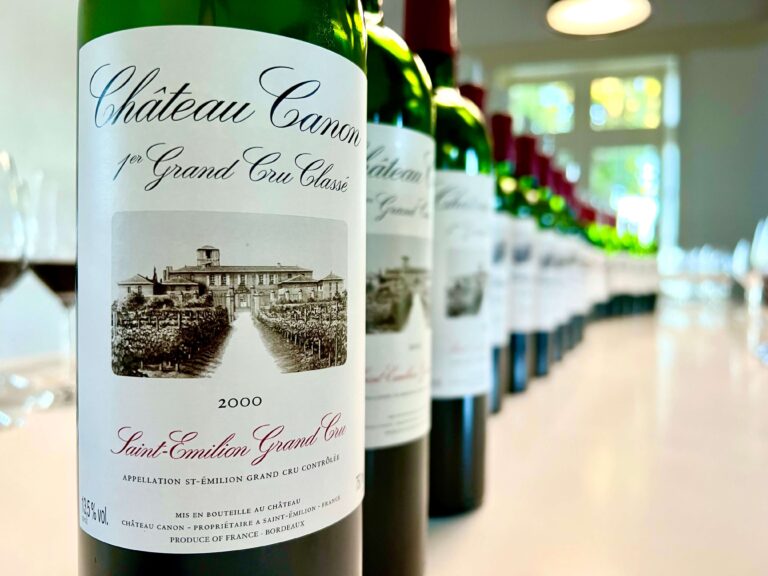
Château Canon
During the mid- to late twentieth century, Château Canon's walled vineyard on the limestone plateau — one of Bordeaux's most coveted sites — fell into disrepair. Thirty years of Chanel investment, John Kolasa's persistence, and Nicolas Audebert's precision have made it Bordeaux's most convincing restoration story, returning the wines to the pinnacle of Saint-Émilion.
The Restoration
There is a moment, walking up the lane from the village of Saint-Émilion between two low walls of honey-colored stone, when the whole argument for Château Canon resolves itself without anybody having to say a word. The bell tower is behind you. The land does not climb; it simply is — flat, high, quiet, running out to the west in a single unbroken block of vines until the ground falls away toward the Dordogne. You are standing on the top of Saint-Émilion. There is nowhere further up to go.
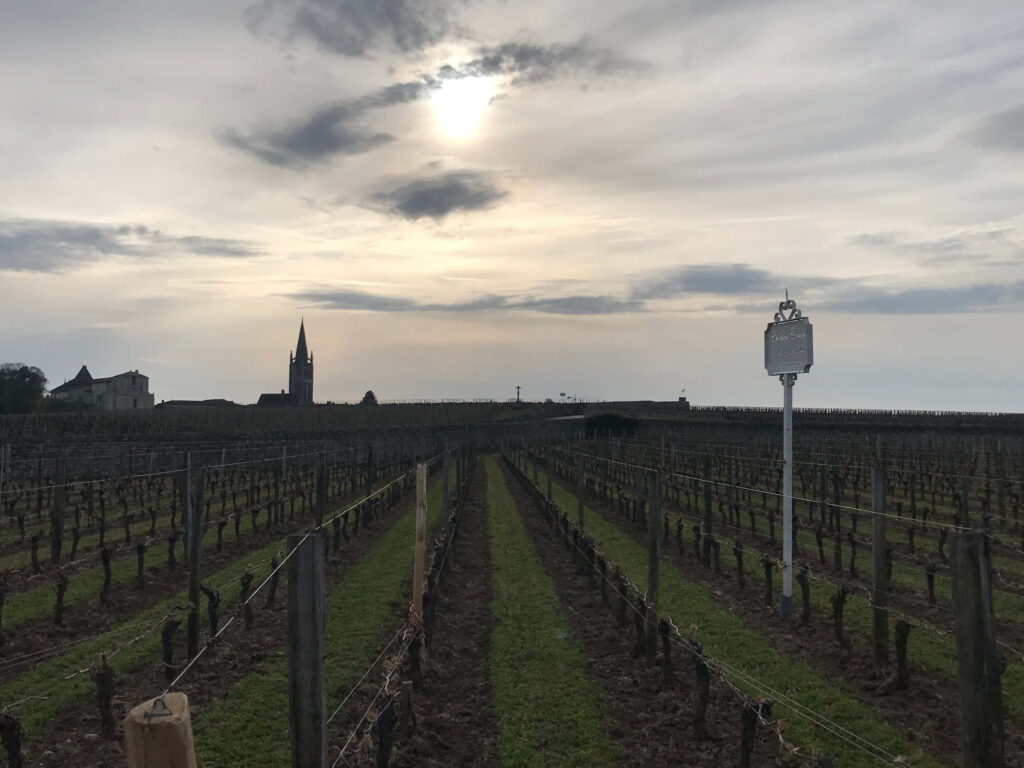
That is Canon’s whole story, and it always has been. Everything else — the privateers, the frost, the tainted cellars, the collapsing quarries, the fashion house — is commentary on a piece of ground that was never in doubt.
The Terroir
Canon’s 34 hectares sit on the calcaire à astéries, the asteriated limestone that gives Saint-Émilion its plateau, its cellars, its churches, and its character. The name comes from the fossilized crinoids — sea lilies, star-shaped in cross-section — packed into the stone alongside oyster and urchin fragments from the Oligocene sea that laid it down. It is the same rock the village is built from, and the same rock that was quarried out from underneath the plateau for a thousand years to build Saint-Émilion, Libourne and half the châteaux of the Libournais.
Roughly 90 percent of the vineyard sits squarely on that plateau; the remainder tips over onto the côtes. The estate crests at 287 feet (87 meters) — high enough for genuine ventilation, which matters more every year as botrytis and mildew pressure rise, and high enough that the walled perimeter and elevation together give real protection against spring frost. The exposure is broadly southwest, opening toward the river.
What makes the site exceptional rather than merely good is what sits between rock and vine. The topsoil is thin — a clay veneer of roughly 10 to 28 inches (25 to 70 centimeters) over solid limestone. That is not much for a vine to work with, and it would be a liability if the limestone underneath behaved like a wall. It doesn’t. The rock is porous, and it is veined with clay-filled fissures. Rain is absorbed and held; in drought, capillary action returns it slowly upward to the root system. The vine drinks from its own reserve.
This is the single most important thing to understand about Canon, and it explains why the estate has sailed through the hot vintages of the last decade with its acidity and its aromatic delicacy intact while heavier clay sites on the plateau’s edges and richer soils below have labored. Limestone regulates. It slows ripening, it holds freshness, it refuses to allow the fruit to become jammy. In a warming Bordeaux, a cool, water-regulating, fossil-rich rock under half a meter of clay is not a nice geological footnote. It is the most valuable asset on the Right Bank.
Then there is the underground. Beneath the vines runs a labyrinth of former quarries — miles of galleries carved out over centuries and finally closed in the 1860s when the pilfering of stone got out of hand. The vines above are rooted in ground that is, in places, hollow and permanently cool. It is a strange and beautiful piece of terroir: leaves in full sun and wind, roots in the chill of the caves. The estate is fond of that image, and having spent time down there I understand why. It is also, as we shall see, very nearly what destroyed the property.
The plantings are approximately 70 percent Merlot to 30 percent Cabernet Franc, with the Cabernet Franc share drifting gradually upward — a mid-thirties proportion is the long-term ambition. On limestone, this pairing is not a formula but a genuine partnership. Merlot gives Canon its flesh, its blue-fruited generosity and that famously silken mid-palate. Cabernet Franc, which needs light and warmth and gets both up here, supplies the spine, the floral lift and the aromatic persistence. Nicolas Audebert calls them the meat and the bones. That is about right.
Kanon To Fournier: 1760 to 1996
The estate was already a walled clos when Jacques Kanon bought it in 1760. A privateer who had made his money commanding ships between France and Quebec, he acquired what was then known as Saint-Martin, added parcels, built the château, and finished the enclosure. He kept it only about a decade before selling to the Libourne merchant family Fontémoing, and it was a Fontémoing descendant who formally adopted the name Château Canon in 1853.
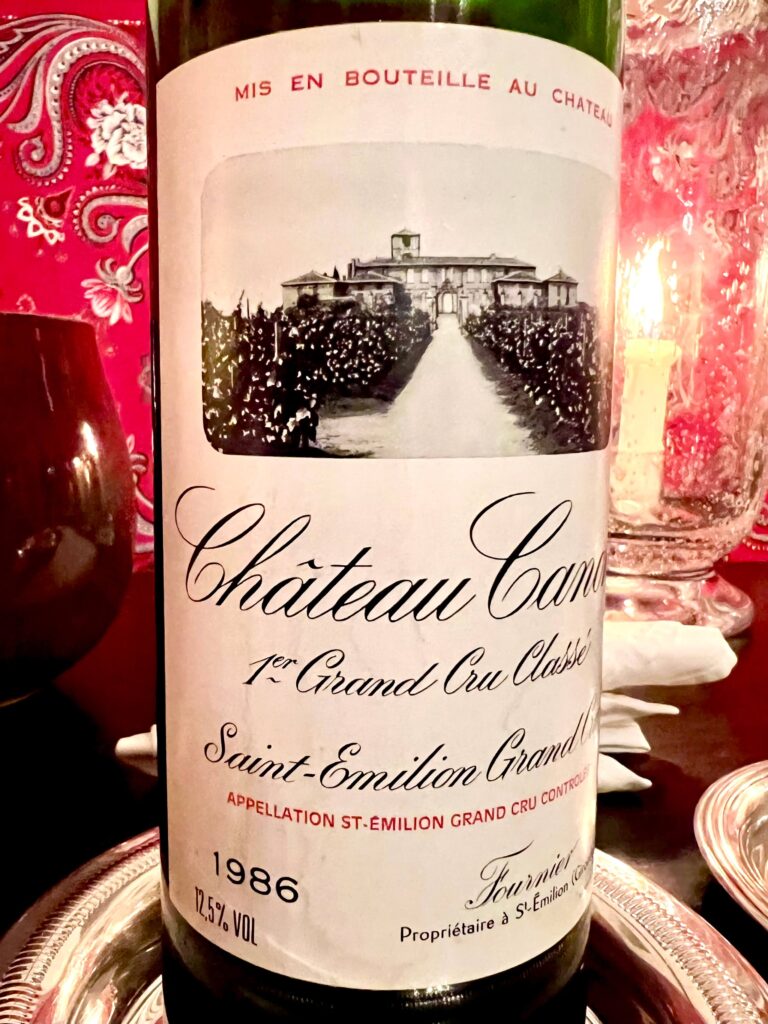
The Fournier family arrived in 1919 and gave Canon its twentieth-century reputation. Under them, the estate ranked among the Premiers Grands Crus Classés from the very first Saint-Émilion classification in 1955, and made wines of the type collectors still hunt: the 1945, 1947, 1950, 1953, 1955, 1959. These were not big wines. They were wines that held their aromatic detail for forty and fifty years, which is precisely what limestone-grown Merlot and Cabernet Franc can do when nobody gets greedy with extraction.
The February frost of 1956 tore through Saint-Émilion and forced extensive replanting at Canon as everywhere else. The estate absorbed it. What it could not absorb was the slow compound decline of the following decades: family difficulties, virused vines, deferred maintenance, and — invisibly, catastrophically — a cellar going bad and a subterranean quarry system going soft. By the early 1990s, Canon was a great terroir producing wines that could not be trusted from one bottle to the next.
1996: Chanel Buys a Problem
The Wertheimer brothers, Alain and Gérard, owners of Chanel, had bought Château Rauzan-Ségla in Margaux in 1994. In 1996 they added Canon. The price was, by all accounts, remarkably low, and the reason was straightforward: what they had bought needed a decade of work before it needed a marketing plan.
The inventory of problems was formidable. The vineyard was disease-ridden and required replanting in its entirety — which, under appellation rules, had to be staged over years, each replanted parcel removing fruit from the grand vin while producing nothing in return. The cellars were TCA-contaminated, which meant the wines themselves were tainted. And the quarry galleries beneath the property were in genuine danger of collapse.
John Kolasa, who had spent a decade at Château Latour and had already begun the turnaround at Rauzan-Ségla, was handed the job. His work was unglamorous and essential. The cellars were gutted before the 1997 vintage and rebuilt: contaminated material removed, a gravity-fed layout installed, stainless steel replacing wood for fermentation. The galleries were shored up. Between 1996 and 2003 roughly half the vineyard was pulled out and replanted. To keep fruit flowing during the reconstruction, 3.5 hectares of neighboring Château Curé-Bon were acquired in 2000.
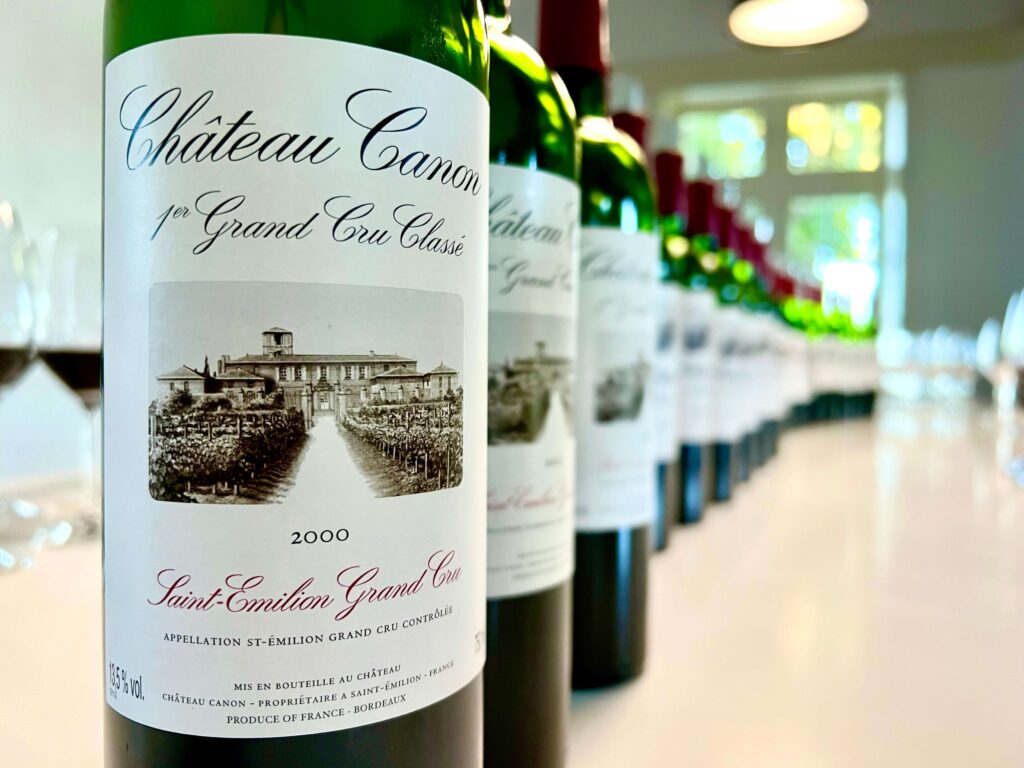
Meanwhile, the details accumulated: harvesting into small crates with sorting from 2002; the pumps eliminated; in 2006 the last wooden vats replaced with double-walled, truncated-cone stainless steel, which permitted longer, gentler macerations with cleaner aromatics. In 2011 came the purchase of Château Matras, roughly 12 hectares adjoining, which took the estate to its current 34 hectares (84 acres) and gave the second wine a proper home — renamed Croix Canon from the 2012 vintage, drawn largely from holdings around the restored Chapelle de Mazerat. At the 2012 revision of the classification, Canon retained its Premier Grand Cru Classé B rank and two Cabernet Franc parcels from Matras were absorbed into the classified vineyard.
Kolasa’s era is often described as the prelude to Canon’s renaissance. That undersells it. He inherited a ruin and left behind a functioning first growth whose replanted vineyard was, crucially, just beginning to reach adult age. Nobody who tastes the wines of the last decade should forget who put those vines in the ground.
The Modern Canon
Nicolas Audebert took over technical direction in May 2014, arriving from Cheval des Andes in Mendoza with earlier years at Krug behind him. He assumed responsibility for Canon and Rauzan-Ségla together, and after Chanel’s June 2017 purchase of the 10-hectare Château Berliquet from the de Lesquen family, for that estate as well. Thomas Duclos came on as consultant. Stéphane Bonnasse runs technical direction on site; Javier Aguado manages the vines. The major reconstruction of the château and cellars, begun in 2012, was completed in 2015.
The important thing about Audebert’s arrival is what he did not do. He did not impose a style. Canon in 2026 is recognizably the same wine as Canon in 2005 — only more so, and more reliably so. What changed was resolution.
The vineyard work became the point of the exercise: cover crops throughout, horse plowing on the sensitive parcels, restructuring of the remaining older plantings using a combination of massal selection and clones, and a parcel-by-parcel logic that now governs everything from picking dates to vat sizing. The 2025 harvest ran from 28 August to 18 September at a modest 40 hl/ha, moving through roughly two hectares a day so each block could be taken on its own schedule. Smaller vats followed, so that no parcel loses its identity in a tank that is too big for it.
In the cellar, extraction is deliberately restrained — the intent is to let thick skins give what they will rather than to chase them. Élevage runs around 18 months in French oak at approximately 50 percent new, with a portion in foudre, and the wines are blended early so that what is tasted during aging is genuinely what will be bottled. That last point is more radical than it sounds, and it says a great deal about the team’s confidence in its own fruit.
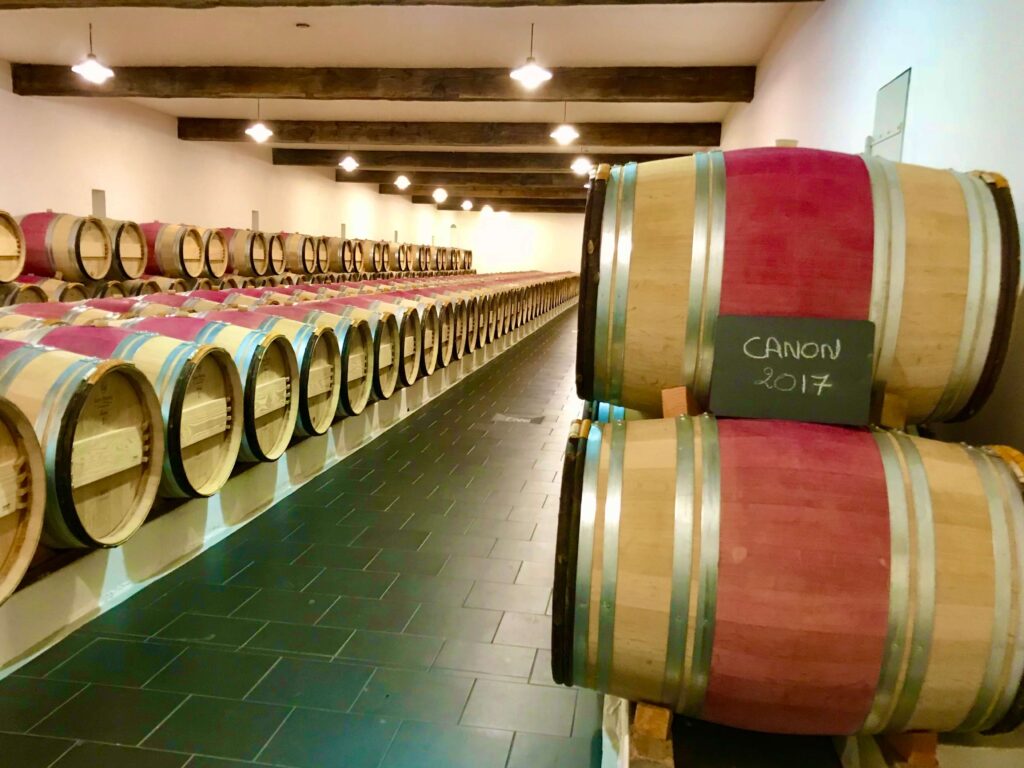
Then there is the conversion. Canon is certified organic from the 2024 vintage — a real commitment in an oceanic climate where a wet spring turns mildew into an existential threat, and one that demands far more passes through the vines than conventional farming. Rauzan-Ségla certified with 2023. For an estate of this profile to accept that risk, in an appellation where a lost crop is a lost fortune, is worth noting.
The blends have stayed close to the plantings: 78 percent Merlot to 22 percent Cabernet Franc in 2024, 76/24 in 2025. Canon was reconfirmed as Premier Grand Cru Classé B in the 2022 classification.
The Wine
What Canon does that almost nothing else in Saint-Émilion does is combine flesh and transparency at the same time. The nose is red-fruited and floral — strawberry, raspberry, morello, violet and lilac — with the darker cherry and graphite notes arriving later, in bottle, rather than being manufactured up front. The palate is where the site announces itself: a chalky, faintly saline drive running the length of the wine, tannins of an almost improbable fineness, and an acid line that holds even in the solar vintages. It is usually medium- to full-bodied and never heavy.
The wines are also built for decades. Canon at fifteen years is a different and better proposition than Canon at five.
Croix Canon, from the former Matras holdings, is not a leftovers wine. It is a genuinely separate expression — earlier-drinking, more immediately fruit-forward, but grown on the same plateau and made with the same restraint. Berliquet, next door, carries a heavier clay imprint and shows correspondingly more power and a louder Cabernet Franc voice; since 2019, a portion has been aged in amphorae. It should be considered alongside Canon, not inside it.
The Verdict
Canon has been a great terroir for two and a half centuries and a great wine for rather less time than that, and the gap between those two facts is the most instructive thing about the estate. Sites do not make wine. People with patience and capital and a clear idea of what a place is supposed to taste like make wine, and it took a fashion house thirty years and two directors to prove it here.
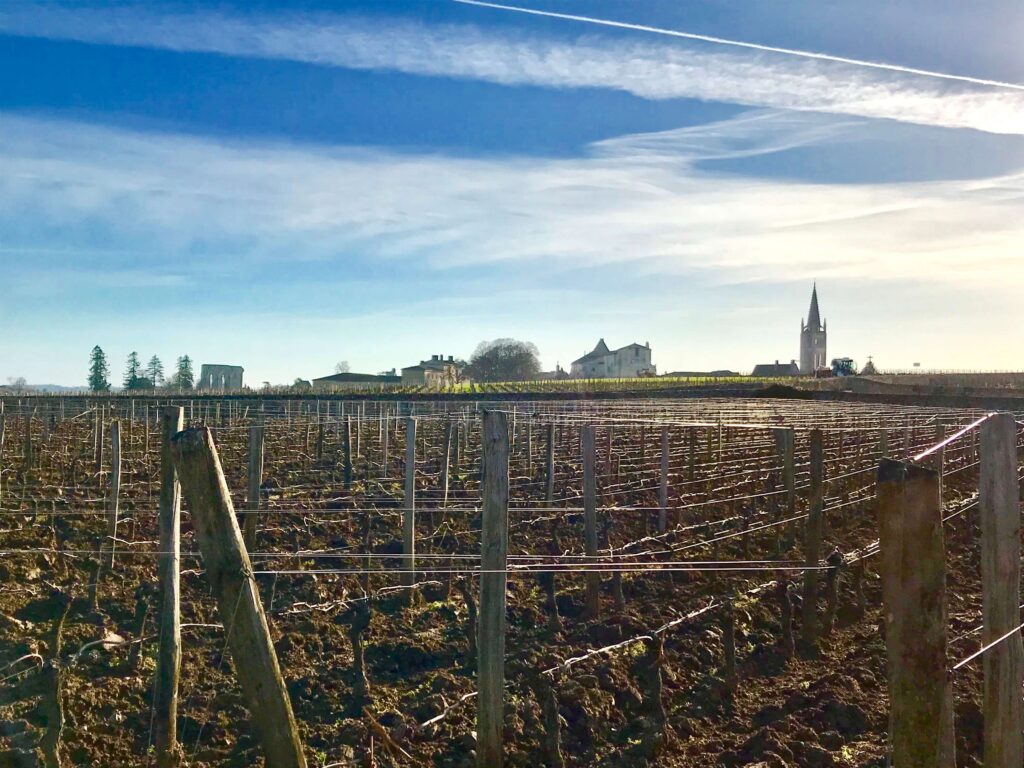
What we have now is a first growth operating at the top of its ability, on the best ground in the appellation, farmed organically, run by people who understand that the job is to get out of the limestone’s way. On the plateau, in a warming climate, that is close to an unassailable position.
I would not want to be competing with it.
Winery Information
Region: France, Bordeaux, Saint-Émilion
Address: 99 Ramonet, 33330 Saint-Émilion, France
Open for Tastings: No
Major Grapes: Cabernet Franc, Merlot
Vineyard Size: 84 acres
Own Winery: Yes
DTC Mailing List: No
Vineyard Sustainability: Organic
Year Established: 1760
Owner: Alain and Gérard Wertheimer, owners of Chanel
Winemaker: Nicolas Audebert (Head Winemaker & General Director)
Website: https://www.chateaucanon.com/en
Most Recent Reviews for this Winery
Published: July 2026