Pinot Noir Just Sang to Me: A Chat with Pinot Pioneer Lane Tanner
The unincorporated town of Nipomo is located along California’s Central Coast, between Paso Robles and Santa Barbara. It’s probably best known for Jocko’s, the popular steakhouse famous for its no-frills interior, Martinis so big they have their own tides, and Migrant Mother, the iconic Depression-era photograph shot by American photographer Dorothea Lange in Nipomo in 1936.
It’s also the home of Pinot Noir pioneer, Lane Tanner.
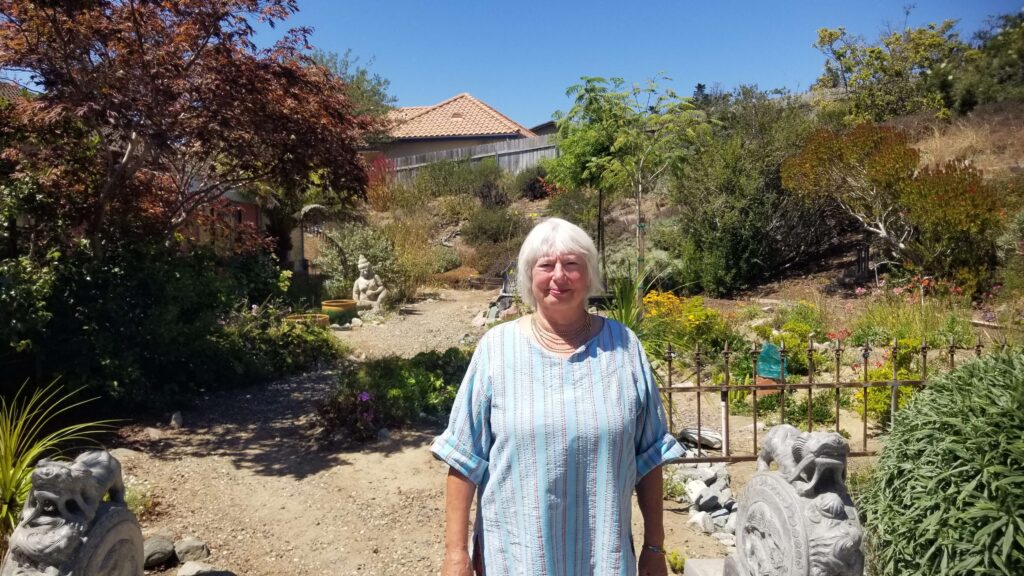
On a bright summer day, I pull up to Tanner’s modest one-story pink house where she’s waiting outside to greet me. I follow her into her kitchen, and we take a seat across from each other at a table beside a large window overlooking her backyard. Along a shelf below the window is a collection of large rocks and geodes. “Sometimes people will ask me, ‘What type of rock is that?’ and I say, ‘I don’t know. It’s just a beautiful rock!’ They are artwork. Beautiful things.” She explains that her stepdad was a “rockhound” and the one who gave her a love of rocks.
She has prepared a salad with tomatoes from her garden for our lunch. At 70 years old, Tanner is energetic, present, and bright-eyed. She opens a Lumen Pinot Noir; a Santa Barbara County producer she made wine for until she retired in 2023.
For all her success under her eponymous label, Lane Tanner, her entry into the wine business was entirely unplanned. Having earned her degree in Chemistry and a secondary degree in Microbiology from San Jose State, Tanner first worked in field operations performing water pollution studies for environmental impact reports. For a time, she says, it was fun. “I got to go all over the United States on field operations in helicopters and fixed-wing planes. It was super interesting, but it wasn’t what I wanted to do. And I had no life; no boyfriend, no close friends, no home.” What she really wanted was to “be a real scientist.” So, Tanner moved back home to Kelseyville in Northern California and took up residence on her mom’s couch with a plan to eventually move to San Francisco and return to the sciences. Instead, she heard about a job bottling wine for a winery in Konocti. “I thought it sounded fun,” she says.
It was 1979 when then-Konocti Winery winemaker, Bill Pease, after learning about Tanner’s background in chemistry, asked her if she’d stick around after bottling ended to help them out with lab analysis. Tanner needed the work, so she accepted the position. “I figured he’d give me a book or some kind of lab manual,” she says, laughing. None ever came.
While waiting for Pease to arrive for her first day of lab work, in walked Konocti’s consulting winemaker at the time, Andre Tchelistcheff, the legendary Russian-born winemaker often referred to as the Dean of American Winemaking and the father of California wine. Tchelistcheff, who died in 1994 at 93 years of age, trained in France as an enologist and became a much sought-after consulting winemaker in the ’70s and ’80s.
When Pease introduced Tanner to Tchelistcheff as their new enologist, she tells me, “I had never even heard that word before. Andre goes, ‘Well, that’s great. Let’s have Lane taste with us.’” She’d had more experience with cold margaritas than wine but says that she’s always been good at mimicking. “When Tchelistcheff picked up his glass and swirled it, I did the same.”
Up until that moment, Tanner had never considered her heightened sense of smell and taste as anything but an inconvenience. “I have a certain type of autism that was a real problem when I was a child,” she tells me. “I couldn’t talk, and I was highly sensitive to taste, smell, and sound. For a long time, it was a curse. I would smell stuff that nobody else seemed to smell, and I would taste things in food that were unpleasant, but everyone would tell me were fine.” On family trips to Fisherman’s Wharf, she would vomit from the smell of dead fish while everyone else was ordering more crab and fish to eat. “All of a sudden, this old guy is totally thrilled with all my answers and comments about what we were tasting,” she says now of Tchelistcheff’s reactions that pivotal day. “From 8:00 AM that morning to 1:00 PM that afternoon, I went from not knowing anything about wine to becoming an enologist…still not knowing anything about wine!”
She stayed on as the enologist but quickly learned that there were aspects of the wine business she didn’t like at the time: “sampling fruit under a blazing hot sun. All the manual labor.” So, she made a deal with Pease, her boss, asking him to retire her as soon as he could. But when Tchelistcheff found out she was asking to be let go, he asked her if she’d consider staying in the industry. “At that point I knew what a god that man was and I couldn’t say no,” she says. When he alerted her to a job opening for an enologist at Firestone Winery in Santa Barbara, Tanner applied, got the job, and moved to Solvang, a small Danish town in the then-emerging Santa Barbara wine country. It was 1980, and there were about 15 wineries in Santa Barbara County back then.
Because Firestone Winery had the region’s only analytical wine lab at the time, Tanner met most of the region’s winemakers shortly after her move, as she received the samples they were dropping off to have tested. It was at Firestone that she first began to learn about the concept of terroir. Tasting each sample that was dropped off, she began to draw correlations between some sites and the varieties grown there. The more successful wines seemed to be from sites where the varieties planted there were suited to the site’s soil profile and climate.
It wasn’t until winemaker Ken Brown asked Tanner to join the team at Zaca Mesa Winery that she really began to enjoy the wine industry. At Zaca Mesa, she not only performed her duties as enologist, but was tasked with ordering all manner of supplies for the cellar and was invited to taste and help make decisions when it came to blending. “They took me seriously,” she says.
When Tanner began exploring Pinot Noir fruit from the Sierra Madre Vineyard in the Santa Maria Valley AVA of Santa Barbara County, the trajectory of her career shifted as she became obsessed with this small, mysterious, discerningly temperamental grape. “It’s my favorite vineyard of all time,” she says with longing in her voice. “There was a whole Mediterranean thing going on there.” She describes sunny days tempered by a coastal fog that would drift in around 4:00 PM and settle into the vineyard until 9:00 AM the next morning. Cool days would be followed by warmer nights; the reverse of the type of diurnal swings often associated with other regions. She describes it as magical, although she tells me that Sierra Madre Vineyard no longer exists. It was sold to a vegetable farmer. “That’s okay because I got to play with it my whole career. Pinot Noir just sang to me, and I’ve never found a grape that reacts to my body chemistry the way that Pinot Noir does. My body just relaxes with Pinot Noir. I can’t explain why that is.”
While at Zaca Mesa Winery, Tanner began dating restaurateur and winemaker Frank Ostini, who is known for his iconic Santa Barbara County restaurant, The Hitching Post. So, when Ostini asked Tanner to make some wines exclusively for The Hitching Post, she founded her own wine company with The Hitching Post as her main customer. Ostini wanted a wine that would go with his specialty, Santa Maria-style barbecue. Tanner elected not to use any new oak in the wines she made for Hitching Post, as, she reasons, the “meats already had that oak flavor,” as they were, and still are, grilled over an open flame built around oak. “To this day, I don’t like new oak in a wine.”
It was 1984, and Tanner was a full-fledged winemaker. She recalls the first time she saw Ostini do a punch-down. “The cap was so hard that he stripped down to his tighty-whities and jumped in. And I thought, holy moly! I’d never seen anyone do that before. It was a super fun time,” she says. “We were young and didn’t really know what we were doing. We just banded together. None of us had kids. Some of us were married, some of us weren’t, and we were all just starting out. Among the handful of winemakers making wine in Santa Barbara County at the time was Jim Clendenen, whom she and Ostini would “hang out with all the time.” Clendenen would go on to be a global sensation and a legendary producer of Pinots and Chardonnays under his Au Bon Climat label.
She and Ostini eventually married. They remain close friends, although the marriage didn’t work out. “He was very Catholic and wanted children, and I never did. After a few years, he realized I wasn’t going to change.” Their parting was completely amicable, she tells me, and recounts Ostini giving her nine barrels full of Pinot Noir when they parted ways. “I had no idea what I was going to do.”
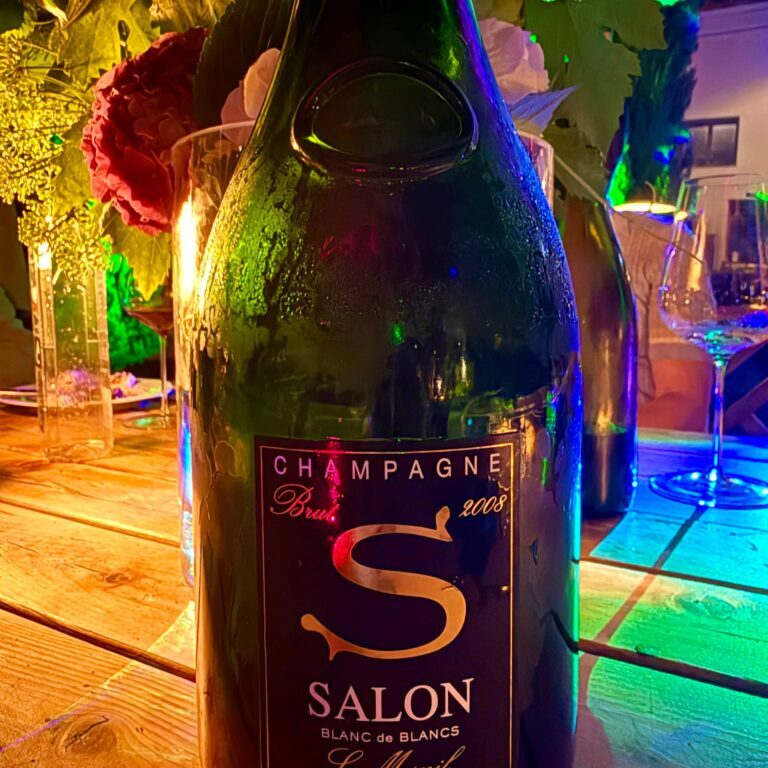
Then, one fateful evening, she met the U.S. distributor at the time for Salon Champagne. He was familiar with the wines she had made for The Hitching Post, and after learning she had 9 barrels of Pinot Noir and wasn’t sure what to do next, he offered her a proposal. She would bottle the wine and sell it to him, and he would give her one check a year. He would then sell her wines while representing Salon. “He was telling me what my future would be and I thought it was so bizarre.” He had one condition, though: she would have to name her wines Lane Tanner. “I looked at him and said, ‘I can’t do that, and that’s how the Lane Tanner label happened, and it’s bizarro! I’m so lucky. I’m blessed. There’s no other way around it.”
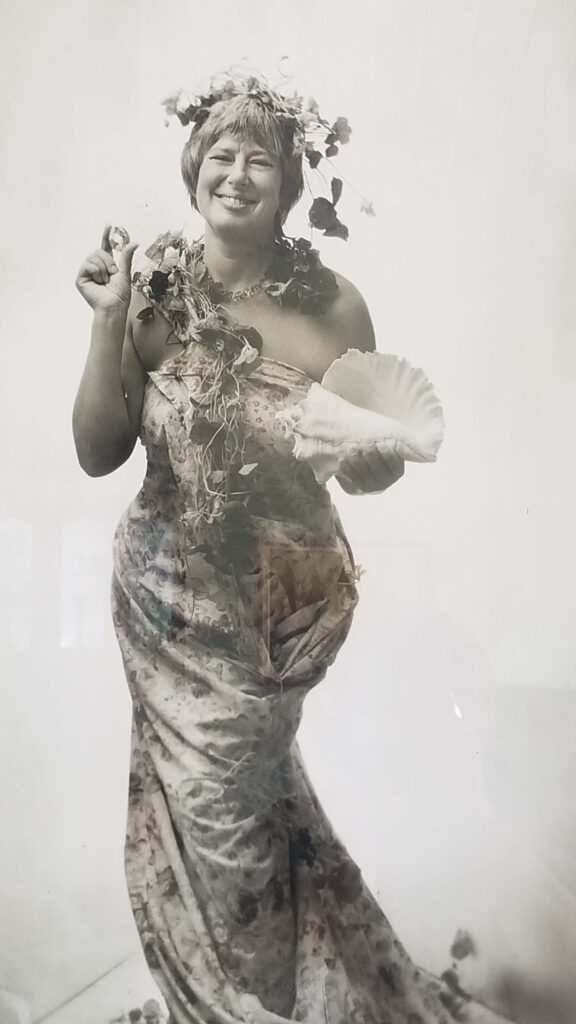
It was 1989, and Tanner bottled 225 cases of wine (all 9 barrels) under the Lane Tanner label. She had immediate success with her brand, so when the distributor she had been with sold their book to the Henry Wine Group, a larger distributor based in the Bay Area, she found that her good fortune just continued. The Henry Wine Group was ordering a pallet of wine at a time from Tanner, who eventually topped off her annual case production at 1,000 cases. “That’s a good living,” she says. “And I didn’t borrow any money, didn’t have a business partner, didn’t have a tasting room or winery building. I simply wanted to make wine and sell it. My needs have always been small. I’ve never needed a huge house. This house cost me less than $ 300,000.00 when I bought it. Everything I have is used because I love used stuff. I’m very comfortable with used things. You feel the story of everything you own. My father loved antiques, so I grew up being comfortable around old things. I’ve always lived within my means, too. My whole life has been a fun game of staying within my means. I made money, but I never made a lot of money. But I never had any debt, either. I’ve never been in debt my whole life.”
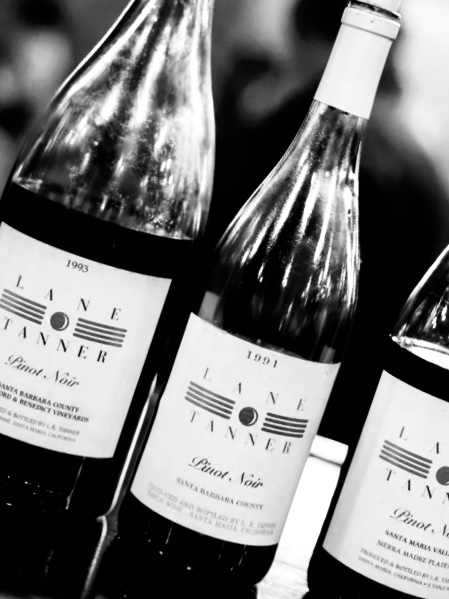
When I ask Tanner what she loved most about being a winemaker, she’s got a long list. Mostly, she loved the diversity of it. “During harvest you’re working 24/7. You don’t have time for anything else because all you’re doing is focusing on harvest. Everything else goes away. You get totally buff because you’re doing all this manual labor. You’re dirty. You’re sticky. You go home and sleep like a log. It’s amazing. It’s like a big, long party because of the intensity of it. I was done with harvest a lot sooner than everyone else because I was making only Pinot Noir.”
After harvest, she would get “seriously depressed,” she tells me; something she didn’t enjoy at all, but when November and December rolled around, she would go on vacation to decompress. Come January, she would attend events. “I’d be invited on these all-expenses-paid trips to attend these big wine auctions, and I’d wear evening gowns and jewels and meet people that I would never have met in my normal life. And I’d eat food that I never would have even thought about eating. And there was hobnobbing and just being in people’s homes, these huge mansions. Following events season, she’d hit the road to support sales, traveling throughout the United States hosting winemaker dinners prepared by chefs she had previously only seen on television. “As you drift into that nirvana of good food, wine, and conversation, well, there’s just nothing like that. And these chefs knew my name,” she says, giggling. And then she’d return home for harvest again. “At least in the 90s, it was the most fun, amazing job you could ever have.”
When speaking about the wines she’s made over the years, Tanner says, “I think of them as my children. I was involved in their lives when they were born—when the grapes came in, and then throughout the whole process of making them. I touched them constantly. They became very personal to me.”
Tanner plucks a couple of bottles of her wine out of her cellar for us. “I drink pretty much nothing but old pinot noirs that I’ve made because, let’s be honest, I made wines for myself.” She tells me she always picked early because she wanted “scintillating flavors. I didn’t like those jammier flavors. With Pinot Noir, if you capture it during that scintillating phase, you end up with a lower alcohol wine, which ages better. Also, your pHs hit at about 3.4, and Pinot Noirs will age forever at a pH of 3.4. That’s a magic number for Pinot Noir.”
Because Tanner is allergic to sulfur, she instead didn’t remove CO2 from fermentation, leaving it in to help preserve the wine and enhance flavors. As a result, her wines have a frizzante character. “Just a little frizzante on the palate lifts everything,” she says. “And the wine will keep forever.”
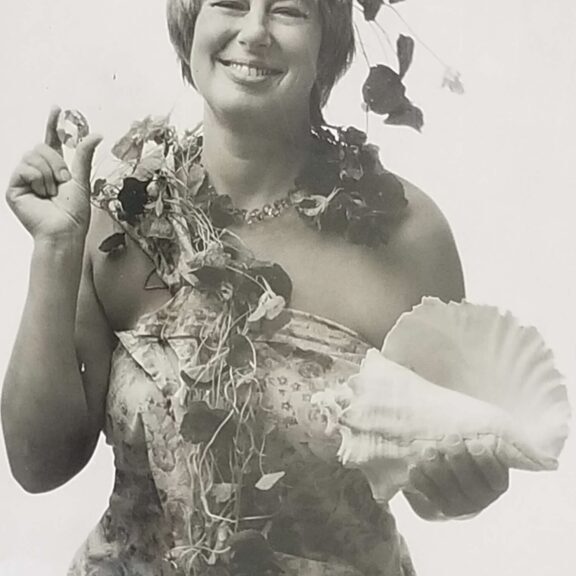
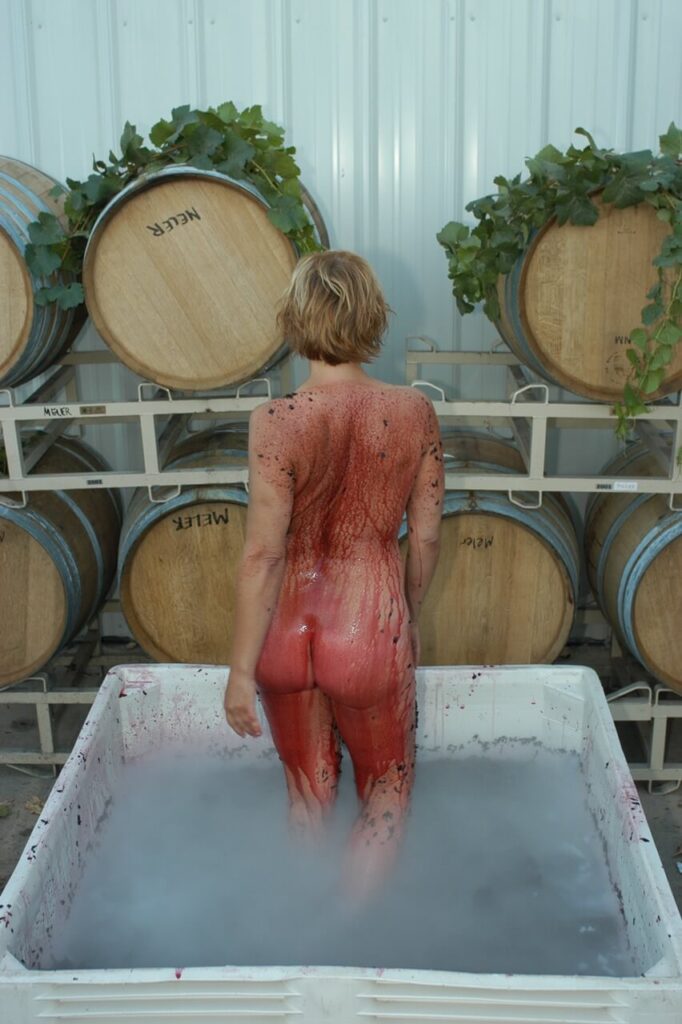
Over lunch, Tanner tells me that she always wanted to be photographed naked in Pinot Noir must. So, when she was forty-five years old, after having been dumped by a guy she’d been seeing for a long time, her wish came true. “At the time, I thought, ‘I’m not getting any younger, and I’ll probably never be this skinny,’ so I got these pictures taken of myself naked in my own Pinot Noir must. I went behind a building, and a gentleman who had been photographing me my whole career, he and his wife came, and we drank lots of champagne, and I posed in all kinds of ways in Pinot Noir. I used these photos on my business cards for years.”
When I ask Tanner if it was hard sticking to her winemaking style, even when trends shifted, she says, “Well, you have to, don’t you? Don’t you have to be true to yourself? And because I wasn’t working for someone else trying to make a huge amount of money in the wine business, I just made the kinds of wines that I wanted to drink. I just had to find people who appreciated that type of wine, and I did.”
Although the film “Sideways” brought attention to California Pinot Noir and Santa Barbara County, Tanner says the film dealt a horrible blow to her and other small producers. “Suddenly, everyone wanted to make Pinot Noir, so that drove up the cost of fruit, and there was less fruit available to producers like me. Or you’d make a sales call, and the buyer would say that he found a cheaper Pinot Noir, just because there was so much being made. They were flooding the market with Pinot Noir. I’d hear, ‘The guy who just came in before you will give me a case free if I buy two cases,’ and I couldn’t compete with that. And then more people with a lot of money came into the area. And distributors weren’t helping to build brands, and suddenly, you’d find yourself barely breaking even. Nowadays, there’s just too much wealth in the industry, too much regulation, too much competition, and not enough love.”
It was around 2005 that Tanner became disillusioned with owning her own brand. A grape contract that she had relied on, which was supposed to be a 20-year agreement with a 3-year evergreen contract built in, was dissolved when the original owner of the contract died and a family member assumed his role. After that, Tanner lost heart. When I tell her that I’m sorry she had to go through that, she says, “Don’t be sorry. Think of all the great things that happened to me. I’m fine,” breaking into an easy smile.
Tanner’s last vintage under her own label was 2009. “I was totally burned out.” By then, her relationship with her distributor had soured. Not knowing how to sell through that final vintage of ‘09s, she came up with a creative plan. She approached the wine buyer for Trader Joe’s at the time, whom she knew. “I talked to him pretty extensively about my 09s and convinced him to buy my whole vintage. Trader Joe’s gave me two checks…two really big checks!” She didn’t want to sell her label because it had her name on it. “It seemed creepy to sell my name,” she says.
At that time, she stepped away and started a business that she says “failed horribly.” Because she loved antiques, she had an idea of filming people with the things they love so that when they passed, family members would have an idea of what mattered to their loved one, and what it might be worth. “Nobody wanted it,” she says of the idea.
When Will Henry, whose father had founded the Henry Wine Group, approached Tanner about being the winemaker for his Santa Barbara County-based wine brand, Lumen, she declined at first. But when he sweetened the deal by offering her a partnership in Lumen, she accepted. And while Tanner is still a partner at Lumen, she retired as winemaker in 2023. “I still get a pension as his business partner, though, which is nice of him, as he didn’t have to do that.”
Today, Tanner cultivates gourmet mushrooms. “It’s been so fun. I needed to have something to do, and this is the first thing I’ve picked for myself. And it involves a lot of my science background. You want to see the whole deal?” She asks. And before I respond in the affirmative, she’s already up and out of her chair, eager to share what she’s been up to.
“You start with a liquid culture, which I buy on the internet. When you order a mushroom culture— and there are zillions of different types of mushrooms—you get a syringe with 10 MLS of a liquid culture.” We start weaving our way through her modest, one-story home where there is space in nearly every room dedicated to some aspect of mushroom cultivation. “I’ve rearranged my whole house for this, but I just love it so much!”
I follow her into what looks like an indoor greenhouse. “This is my clean room, where the liquid culture becomes a mother culture.” The scientist in her is on full display here as she next shows me a container of whole oats, which she will boil gently to “plump them up” and then pressure cook them as a form of pasteurization before allowing them to dry. There are lab hoods, HEPA filters, stir plates, and white jumpsuits. We continue to wind our way in and out of various rooms and spaces within those rooms, in which these cultures are raised.
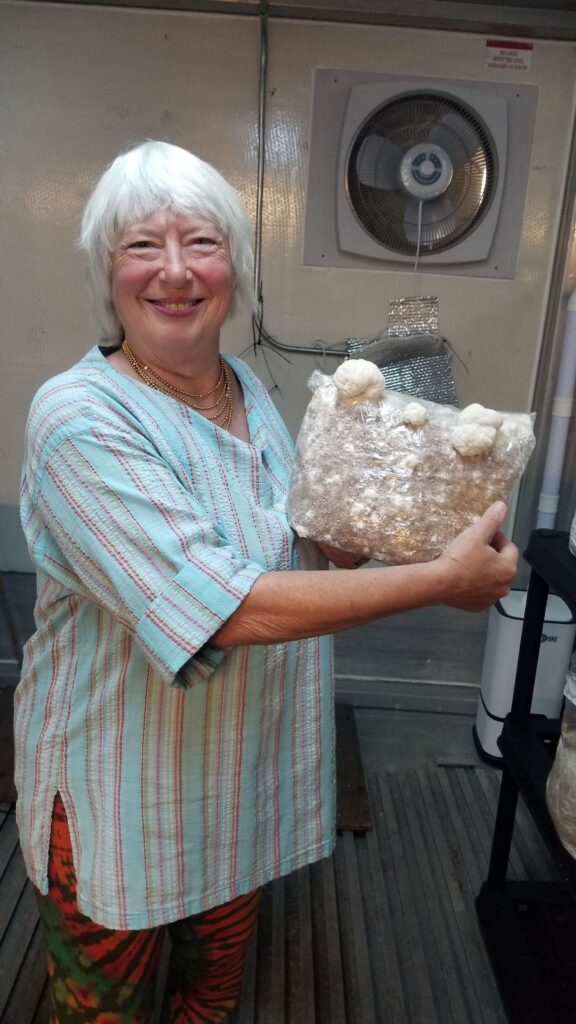
We eventually make our way into a shipping container parked alongside her home. It’s been retrofitted and outfitted into a grow room for her “blocks,” where her mycelium grows. She calls it her “fruiting” room. “These are my babies,” she says, pointing out Lion’s Mane, Blue Oysters, King Oysters, and so on, as a humidifier works in the background. “They all have different flavors and different consistencies. With Lion’s Mane, I have to be careful with how much of it I eat, because if I eat too much, it will really energize me and then I can’t sleep!”
She says the feeling of successfully growing a mushroom is akin to the “rush” of making wine. “And I’m finding all of these great recipes for mushrooms. And I like giving mushrooms to friends or exchanging them for other vegetables. I totally love it, and I’ll never do it for money.”
When she’s not growing mushrooms, she volunteers with Womenade, a San Luis Obispo County nonprofit that raises funds for families experiencing unexpected hardship, assisting them with rent, school supplies, and funds for food, clothing, transportation, utilities, etc. Her favorite program happens on the first Saturday of every month, when she and a couple of other volunteers from Womanade visit a local laundromat and buy everyone’s washer and dryer runs for the day. Armed with rolls of quarters, they feed the washers and dryers all day long. “It’s a really positive thing. You walk out feeling good.”
I ask Tanner if she has any advice for young people wanting to get into the wine business. Specifically, I tell her, I’d like to know what advice she has for winemakers like her, who really care about the environment, who prioritize vine health, who make wines of natural balance and don’t add any additives to their wines. “I’d tell them, ‘don’t do it.’ If you really love wine, make it at home, for yourself or your friends. I think everyone should do that. But don’t go into the wine business. It’s all wealthy people now who think they want to get into the wine business, but what they really want is the lifestyle, so they build these expensive wineries and huge tasting rooms. It’s hard to compete with that kind of thing if you’re a small, independent winemaker. Or wineries are owned by corporations who don’t care about people. And distributors don’t care anymore. For them, it’s just a product SKU. There’s no love in it anymore. The wine business is becoming like the medical care business. Everything has become a machine to see how much money they can get out of each one of us.”
When I ask her what she thinks of the current neo-prohibitionist trend of opining that wine is bad for you, she says, “Everybody that I know is taking at least one to five to seven medications, and I don’t take any medications. Zero. But I drink wine.” And even though she doesn’t drink as much wine as she did when she was younger, she still enjoys a glass or two of Pinot Noir with dinner. “I like a little buzz at the end of the night.”
Tanner sends me home with a small paper bag of Blue Oysters. That evening, I prepare them by dry-heating them in the old cast iron skillet that once belonged to my mother-in-law, adding butter as they’re cooking, just as Tanner recommended. They’re delicious.